
The Netflix Fortitude movie lawsuit is not an AI case
The $105 million Netflix lawsuit over the missing Nicolas Cage film 'Fortitude' is not an AI case and does not belong in an AI-risk briefing: no AI tool, fabricated citation, or sanction is implicated. This record classifies Op-Fortitude Ltd. v. Netflix (C.D. Cal.) as a contract and conversion dispute over a missing film drive, with all substantive facts flagged as alleged until a court order appears.
- Jurisdiction
- C.D. Cal.
- Court
- U.S. District Court for the Central District of California
- Judge
- Andre Birotte Jr.
- AI tool named
- No AI tool
- Ruling date
- Jul 29, 2026
- Source document
- View primary court order ↗
- Last verified
- Aug 1, 2026
Lex Machina Review is an independent risk-tracking and reference resource. Nothing on this site is legal advice, and using it does not create an attorney-client relationship. Every record is reviewed against primary sources but may not reflect the most current status of a matter — always verify directly against the cited court order, rule text, or a licensed attorney before relying on it.
Companion explanation — secondary to the source document above
As last checked on August 1, 2026, the Netflix Fortitude movie lawsuit does not belong in an AI-risk briefing. The docket identifies Op-Fortitude Ltd. v. Netflix, Inc., No. 2:26-cv-08384, in the Central District of California, filed July 29, 2026, assigned to Judge Andre Birotte Jr. and Magistrate Judge Steve Kim, with nature of suit 190 and diversity jurisdiction under 28 U.S.C. § 1332. The docket entries available at that point are ministerial: complaint, civil cover sheet, notice of interested parties, summons request and issuance, ADR notice, magistrate consent notice, and judge assignment. There is no answer, motion, order, ruling, sanction, AI tool, or fabricated citation on the reviewed docket snapshot.[1]
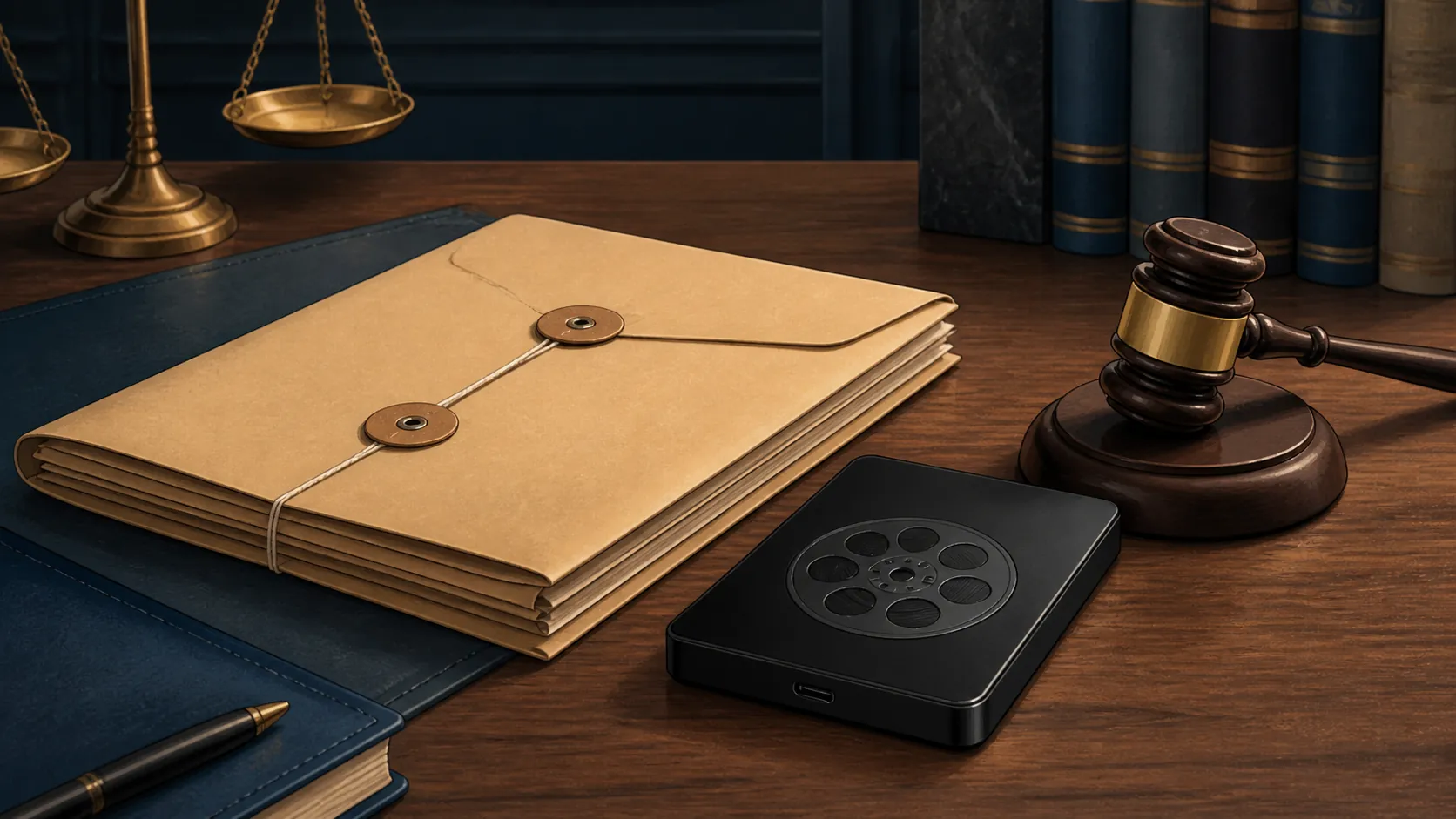
That status label matters more than the size of the demand. The complaint, as reported, asserts conversion, breach of bailment, and breach of implied contract over a missing drive containing an unreleased Nicolas Cage film called Fortitude, and seeks at least $105 million.[2][3] Those are serious allegations, but they are not AI-filing allegations.
Why this is outside the AI-case category
A legal AI-risk record needs an AI-relevant event: a filing generated or checked by an AI tool, a hallucinated citation, a court order discussing AI use, a sanctions motion, a verification failure, or some comparable litigation-control issue. This record has none of those markers as of the current check.
| Classification question | What the reviewed record shows |
|---|---|
| Is there an AI tool at issue? | No reviewed docket entry or cited report identifies an AI tool used in the filing or dispute.[1][2][3] |
| Is there a fabricated citation or hallucinated authority? | No motion, order, or sanction entry exists on the docket snapshot, and the complaint is reported as a property-and-contract dispute rather than a citation-integrity dispute.[1][2] |
| Has the court made a substantive finding? | No. The available docket entries are ministerial as of August 1, 2026.[1] |
| What is the actual legal theory being reported? | Conversion, breach of bailment, and breach of implied contract concerning an allegedly missing unencrypted DCP drive.[2][3] |
For contrast, a genuine AI-risk entry usually has a court-facing verification failure or an order that changes the litigation record. A record like the Philadelphia AI sanction matter or a Connecticut AI verification workflow belongs in that lane because the AI or verification issue is the litigation-risk event. The Netflix/Fortitude dispute may be useful to entertainment, IP, chain-of-custody, and contract readers. It should not be cross-filed as an AI hallucination or AI-sanction item unless the docket later creates that issue.
What the lawsuit is actually about
The complaint narrative centers on a physical media handoff. According to the reported allegations, an associate producer, Daniel Haido, hand-delivered an unencrypted digital cinema package of Fortitude to Netflix for a June 16 screening. After the screening, the plaintiffs allegedly sought pickup between June 17 and June 25. On June 25, Netflix Director of Original Film Sean Berney allegedly emailed about stolen drives.[3][4]

That is the operative story for classification purposes: who had the drive, what duties allegedly attached to custody, whether pickup was mishandled, and what loss allegedly followed. The complaint’s legal labels fit that framing. Conversion asks whether property was wrongfully exercised over or deprived. Bailment asks whether property was delivered for a purpose and not returned as required. Implied contract asks whether conduct created enforceable obligations even without a fully express written agreement. None of those theories requires an AI fact to be present.
The film details explain why the story traveled so quickly, but they do not move the legal-risk category. This is the Nicolas Cage Fortitude film tied to Operation Fortitude, not the older television title that can also surface in searches for “Fortitude.” The keyword ambiguity is real, and it is enough to justify a classification note. It is not enough to import AI-risk tags.
The $105 million figure is a demand, not a finding
The complaint reportedly seeks at least $105 million, but the court has not found that Netflix owes that amount.[2] The same caution applies to the viral supporting figures. Reports describe an 82% “top-two box” test score and a $112.5 million revenue estimate calculated as 2.5 times a $45 million budget, but those figures are complaint allegations and party-side valuation material, not judicial findings.[4][5]
This distinction is not pedantry. A Monday-morning briefing that says “Netflix lost a $105 million case” is wrong on the current record. A briefing that says “a producer sued Netflix, alleging a missing unencrypted DCP destroyed or impaired a film valued at $105 million or more” is closer to what the sources support.

Party statements stay attributed
The public record also includes dueling statements that should not be blended into a neutral fact paragraph. Netflix has reportedly argued that the plaintiffs did not use industry-standard safeguards, and Reuters reported Netflix’s position that Afram’s lawyers demanded $165 million for the film.[2] Plaintiffs, in turn, have reportedly said Netflix requested the unlocked copy and knew the drive was unencrypted.[5][6]
Both sides may later test those positions through pleadings, motions, discovery, or settlement posture. For now, they remain party positions. The docket does not yet supply a judicial filter for which version is credited, rejected, narrowed, or legally irrelevant.
Where this sits with the existing Fortitude records
Readers looking for the basic docket-watch treatment should use Netflix $105M Lawsuit Details Are Filed, Outcome Pending. Readers checking filer identity should use Who filed the Netflix $105 million lawsuit?. For the plain-English dispute narrative, use Why Netflix Faces a $105M Lawsuit Over a Missing Film.
This companion note answers the taxonomy question those records do not need to repeat: the case can be tracked as reported/alleged litigation, but it should be kept out of the AI-incident bucket. The same source-separation discipline applies in other “not an AI case” records, including the James Duckett Florida dual-court integrity crisis classification note, and in claim-to-source review work such as the Dennehy murder case legal-impact verification record.
Status rule for future updates
Keep Op-Fortitude Ltd. v. Netflix in reported/alleged status unless a substantive court order appears. An answer may clarify defenses, and a motion may frame legal issues, but neither should be treated as a finding. A motion ruling, discovery order, sanctions order, or other merits-adjacent order can upgrade only the facts it actually decides.
If a later filing introduces an AI tool, a fabricated citation, an AI-use disclosure, or a sanctions issue, the classification can be revisited. On the record reviewed as of August 1, 2026, the clean label is simpler: reported contract, conversion, and bailment dispute over a missing film drive; not an AI case.
References
- Op-Fortitude Ltd, a United Kingdom company v. Netflix, Inc., a Delaware corporation — PACER Monitor
- Producer sues Netflix for $105 million over missing Nicolas Cage movie — Reuters, July 30, 2026
- Missing Nicolas Cage Film Spurs $105 Million Netflix Lawsuit — Bloomberg Law
- Netflix sued for $105M by billionaire movie producer after his unreleased Nicolas Cage thriller goes missing — Page Six, July 30, 2026
- Netflix sued for $105M as Nicolas Cage WWII thriller goes missing, exposing leak risks — Fox Business
- Producer sues Netflix over lost unreleased Nicolas Cage movie — Los Angeles Times, July 30, 2026
Related records
Tool profile
How Meta's AI Spending Reshapes Law Firm ProfitabilityGoverning regulation
Browse the obligations tracker →Preventive workflow
Browse verification workflows →
Report a correction or tip
Spotted an outdated figure, a misstated fact, or a ruling this case record should reflect? Public comments are disabled for this content given the professional cost of a misreported case outcome, penalty amount, or rule text — use the structured correction channel instead.
Report a correction or tip for this record →