
The Nevada Colorado River Water Cuts Lawsuit, by the Docket
State of Nevada v. Burgum gives water-law and administrative-law practitioners the verified case facts behind the Colorado River cut headlines: parties, docket number, recusal history, pleaded NEPA claims, and near-term deadlines, all traced to the PACER-sourced docket and RECAP complaint. It also separates the 50,000 acre-foot 2027-2028 reduction from the worst-case 213,556 acre-foot figure that applies over the full 2027-2036 horizon.
- Jurisdiction
- US-NV
- Court
- U.S. District Court for the District of Nevada
- Judge
- Gloria M. Navarro
- AI tool named
- None
- Ruling date
- Aug 25, 2026
- Source document
- View primary court order ↗
- Last verified
- Aug 28, 2026
Lex Machina Review is an independent risk-tracking and reference resource. Nothing on this site is legal advice, and using it does not create an attorney-client relationship. Every record is reviewed against primary sources but may not reflect the most current status of a matter — always verify directly against the cited court order, rule text, or a licensed attorney before relying on it.
Companion explanation — secondary to the source document above
Case record
| Field | Verified record |
|---|---|
| Caption | State of Nevada, Colorado River Commission of Nevada, and Southern Nevada Water Authority v. Secretary Doug Burgum, et al. |
| Docket | No. 2:26-cv-02665-GMN-NJK |
| Court | U.S. District Court for the District of Nevada |
| Judicial assignment | Judge Gloria M. Navarro; Magistrate Judge Nancy J. Koppe |
| Prior assignment | Judge Jennifer A. Dorsey recused on August 25, 2026 |
| Status | Pending as of the August 26, 2026 docket update |
| Challenged action | The August 21, 2026 Record of Decision adopting the 2027–2036 Decision Framework and 2027–2028 Operating Guidelines |
| Immediate deadlines | Certificate of Interested Parties due September 3, 2026; proof of service due November 22, 2026 |
The controlling case identifier is No. 2:26-cv-02665-GMN-NJK. The docket places State of Nevada, the Colorado River Commission of Nevada, and the Southern Nevada Water Authority on the plaintiff side. The defendants are Secretary Doug Burgum, the U.S. Department of the Interior, the Bureau of Reclamation, and Commissioner Aubrey Bettencourt. The action is pending in the District of Nevada. [1]
There is a small but real date problem in the public record. The CourtListener docket header identifies August 23, 2026, while docket entry #1 identifies August 24; contemporaneous wire coverage also reports August 24. The discrepancy should be preserved rather than silently resolved. It does not change the case number, the parties, or the fact that a complaint is now on file.
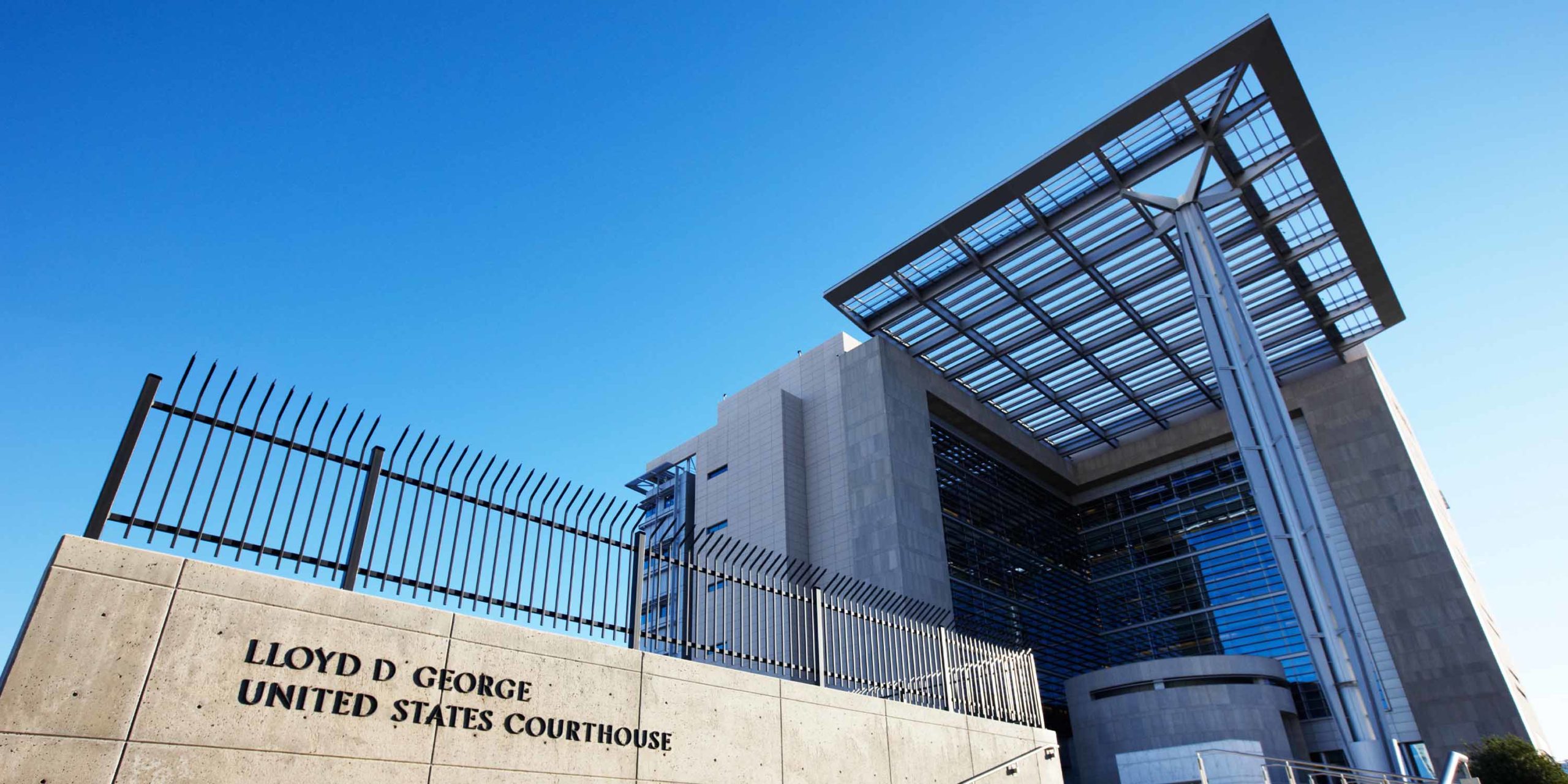
The assignment history moved quickly. Judge Jennifer A. Dorsey recused on August 25. On August 26, the case was randomly reassigned to Judge Gloria M. Navarro, with Magistrate Judge Nancy J. Koppe assigned as the magistrate judge. The next docket markers are operational rather than merits-related: the Certificate of Interested Parties is due September 3, and proof of service is due November 22. [1]
Those entries establish the present procedural edge. They do not establish that Nevada has obtained relief, that the federal agencies have answered, or that any court has accepted the complaint's account of the Colorado River rules. The case remains a newly filed federal action.
What Nevada is challenging
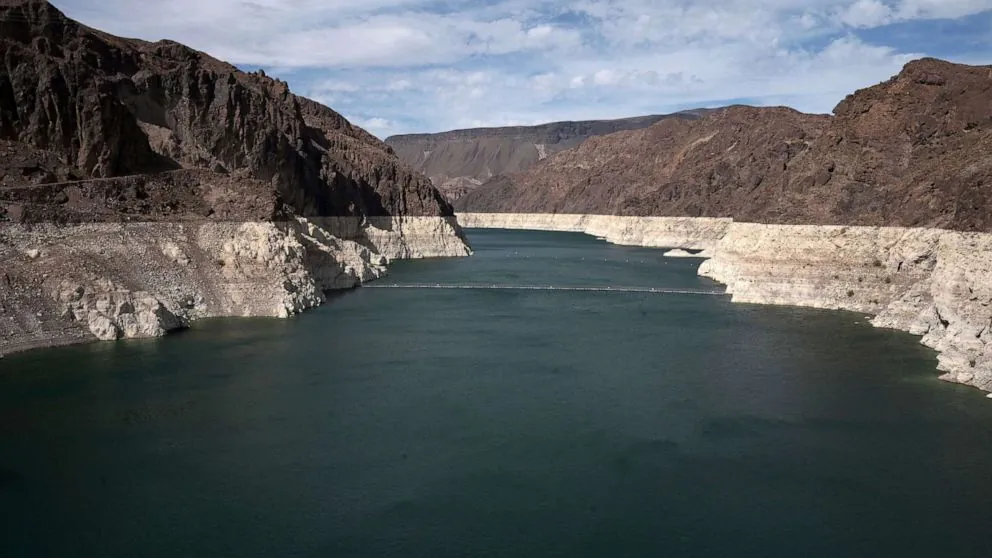
The challenged government action is the Department of the Interior's August 21 Record of Decision. The decision adopts a Decision Framework for Colorado River operations from 2027 through 2036 and operating guidelines for 2027 and 2028. The Bureau of Reclamation describes the action as the framework for managing post-2026 operations in the basin. [2][3]
That timing matters. The lawsuit is directed at a finalized administrative decision and its operating framework, not at an abstract dispute over drought policy. Nevada's filing follows the August 21 decision and seeks to prevent the adopted plan from controlling the relevant operating periods.
The complaint's legal theories and requested relief
The docket classifies the case as an environmental matter and identifies federal-question jurisdiction. The complaint was entered by attorney Sarah Bordelon, carries no jury demand, and reportedly runs 31 pages. The claims and requested relief described here are allegations from the filing and document summaries; they are not findings by the District of Nevada. [1][4]
At the center is a National Environmental Policy Act theory. The filing reportedly contends that the federal government did not satisfy NEPA review requirements before adopting the post-2026 framework and the near-term operating guidelines. The docket identifies the statutory reference as 42 U.S.C. § 4321. [1][4]
The complaint also pleads Administrative Procedure Act theories and invokes what it describes as the governing Law of the River. In practical terms, those theories put the agencies' decision-making process, the legal framework used to allocate and operate the river, and the relationship between the adopted plan and existing federal obligations into dispute. The filing reportedly asks the court to set aside the plan and enjoin its implementation. [2][4]
The Law of the River reference is not a shortcut to a merits result. It is a framework for the parties' legal arguments, not a ruling that one side's interpretation controls. For broader context on the pre-filing questions of standing and who might sue, see the earlier Colorado River litigation-risk record. The related compact-call analysis and discussion of Lake Mead water rights address adjacent issues without changing what this complaint has—or has not yet—established.
The two reduction figures describe different periods
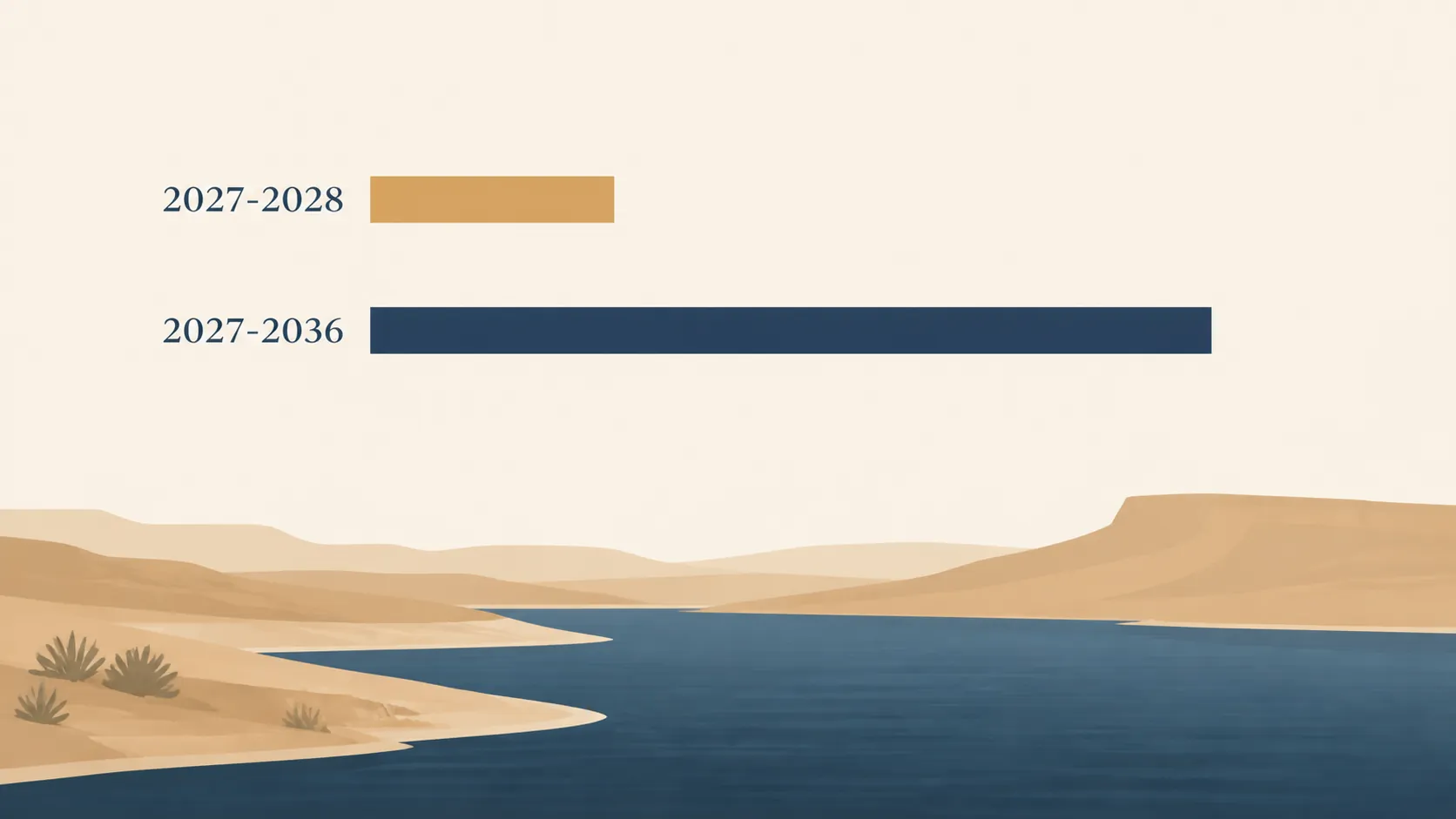
The headline figures become misleading when their time periods are collapsed. The near-term figure is a 50,000 acre-foot reduction for 2027–2028, described as approximately 17 percent of Nevada's allocation. The larger figure is a worst-case reduction of up to 213,556 acre-feet over the 2027–2036 horizon. It is not an additional 213,556 acre-feet cut during 2027 and 2028. [3][5]
| Figure | Compliance period | What it describes |
|---|---|---|
| 50,000 acre-feet | 2027–2028 | The near-term reduction, reported as approximately 17% of Nevada's 300,000 acre-foot allocation |
| Up to 213,556 acre-feet | 2027–2036 | The reported worst-case reduction over the full ten-year framework, leaving less than 86,500 acre-feet and representing more than 70% of the allocation |
The sources also use different hydrology baselines and time windows, so those figures should not be blended into a single basin-wide narrative. The Interior Department has described average inflows of 12.9 million acre-feet for 2000–2024 and consumptive use of 13.1 million acre-feet for 2020–2024; other coverage uses different historical periods and averages. Those variations are part of the surrounding policy argument, not a basis for rewriting the complaint's two disputed compliance periods. [3][7]
The parallel litigation picture is broader than this caption. Readers tracking Arizona exposure can turn to the Phoenix water-supply lawsuits, while the adjacent dispute over Mexicali's Colorado River rights is discussed here. Neither changes the procedural status of State of Nevada v. Burgum.
Where the case stands now
As of the August 26 docket update, the case has a complaint, a new judicial assignment, and two concrete near-term filing dates. It does not yet have a merits ruling. The Certificate of Interested Parties due September 3 and proof of service due November 22 are the next visible markers in the docket record. [1]
That is enough to answer the immediate lawsuit-details question: the parties and forum are identifiable, the assignment history is documented, the challenged August 21 action is specified, and the complaint's NEPA, APA, and Law of the River theories are pleaded claims seeking to set aside and enjoin the plan. The two reduction figures can also be reported accurately, provided their 2027–2028 and 2027–2036 periods stay attached to them. What happens to those claims remains for the case, not the headline, to determine.
References
- State of Nevada v. Burgum docket, CourtListener
- State of Nevada v. Burgum, Complaint, RECAP
- P26 Record of Decision Final, Bureau of Reclamation
- Interior Department Finalizes Plans for 2027–2028 Colorado River Operations, U.S. Department of the Interior
- Nevada Files Lawsuit Against Department of the Interior Over Colorado River Operations Record of Decision, Office of the Governor of Nevada
- Nevada files lawsuit against federal government over Colorado River water cuts, 8 News Now
- Nevada's Colorado River suit previews future water scarcity wars, Bloomberg Law
Related records
Tool profile
Browse tool evaluations →Governing regulation
Browse the obligations tracker →Preventive workflow
Browse verification workflows →
Report a correction or tip
Spotted an outdated figure, a misstated fact, or a ruling this case record should reflect? Public comments are disabled for this content given the professional cost of a misreported case outcome, penalty amount, or rule text — use the structured correction channel instead.
Report a correction or tip for this record →