
Why the Pan Am 103 Lockerbie case needed five forums
The Pan Am 103 bombing produced not one but five interlocking legal forums, and new litigation is still running as of Q3 2026. The full picture requires reading all five — the 1991 indictments, UN sanctions, the ICJ Montreal Convention cases, the Scottish trial at Camp Zeist, and the US prosecution of Abu Agila Mas'ud — each with its own legal basis, outcome, and live status.
- Jurisdiction
- US federal
- Court
- U.S. District Court for the District of Columbia
- AI tool named
- No AI tool named
- Ruling date
- May 26, 2026
- Source document
- View primary court order ↗
- Last verified
- Aug 4, 2026
Lex Machina Review is an independent risk-tracking and reference resource. Nothing on this site is legal advice, and using it does not create an attorney-client relationship. Every record is reviewed against primary sources but may not reflect the most current status of a matter — always verify directly against the cited court order, rule text, or a licensed attorney before relying on it.
Companion explanation — secondary to the source document above
Last verified: August 4, 2026, 00:00 UTC. Legal-background review: Miriam Vale. This explainer is for legal and historical information only, not legal advice. It prioritizes primary court, government, and institutional records where available; secondary sources are used where they are the clearer public record for dates, reported outcomes, or compensation history.
The Pan Am 103 Lockerbie bombing killed 270 people. The investigation that followed recovered 319 tons of wreckage over 845 square miles and involved more than 10,000 interviews in 16 countries.[1] Those numbers explain the scale of the case, but not its legal shape.
The common confusion is understandable: one aircraft, one bombing, one case. The record is not built that way. The Pan Am 103 Lockerbie bombing legal case is intelligible only if five forums are kept separate at the start: the 1991 US and Scottish indictments, the UN Security Council sanctions track, the International Court of Justice Montreal Convention cases, the Scottish High Court trial at Camp Zeist, and the later US federal prosecution of Abu Agila Mas’ud. A chronology helps, but this article is not a re-run of the Lockerbie bombing trial timeline. The point here is jurisdiction: who had power to decide what, on which legal basis, and what remains open in August 2026.

The forum map
| Forum | Legal basis | What that forum could decide | Principal result | Status as of Q3 2026 |
|---|---|---|---|---|
| US and Scottish criminal indictments, 1991 | Domestic criminal charges brought by US and Scottish authorities after the investigation | Whether to accuse named suspects and seek their surrender for prosecution | The 1991 indictments named Abdelbaset al-Megrahi and Al Amin Khalifa Fhimah and created the surrender impasse that drove later proceedings.[2] | Closed as an indictment phase; its branches led to Camp Zeist and later US proceedings |
| UN Security Council sanctions track | Security Council resolutions and sanctions pressure after Libya did not surrender the two accused | Whether international sanctions would be used to press Libya to comply with surrender demands | A sanctions sequence followed the extradition impasse and became one of the central pressure mechanisms.[3] | Closed as a sanctions track, but legally important to the ICJ dispute |
| International Court of Justice: Libya v. UK and Libya v. US | 1971 Montreal Convention, including Article 14(1) jurisdiction | Whether the ICJ had jurisdiction over Libya’s treaty claims and whether those claims were admissible; not, in the end, the criminal guilt of any accused person | Libya filed applications on March 3, 1992; provisional measures were refused on April 14, 1992; preliminary objections were rejected on February 27, 1998; the cases were discontinued with prejudice on September 10, 2003.[4] | Closed without a merits judgment |
| Scottish High Court sitting at Camp Zeist | Scots criminal law, with the Scottish court physically seated in the Netherlands | Whether the two accused tried there were criminally guilty under Scots law | The accused were handed over on April 5, 1999; Megrahi was convicted and Fhimah was reported by the BBC as not guilty; Megrahi’s appeal was refused in 2002.[2] | Trial and first appeal closed; later Scottish review and appeal proceedings form a related but separate post-conviction record |
| US federal prosecution of Abu Agila Mas’ud | US federal criminal statutes cited in the December 21, 2020 complaint, including 18 U.S.C. § 32(a)(1)-(a)(2) and § 844(i) | Whether Mas’ud can be tried and, if tried, whether the government can prove the charged offenses in US federal court | Mas’ud entered US custody in December 2022, was arraigned in February 2023, and remained in active pretrial litigation after a May 26, 2026 partial dismissal opinion and July 2026 docket activity.[5] | Live |
The map matters because none of these forums was a synonym for the others. An indictment did not impose sanctions. A Security Council resolution did not convict anyone. An ICJ jurisdiction ruling did not decide the bombing case on the merits. A Scottish murder conviction did not exhaust every possible US charge against a different alleged participant. Compensation agreements did not convert civil payment into a single criminal judgment.
The 1991 indictments started the legal split
The 1991 US and Scottish indictments are often treated as the opening of “the Lockerbie trial.” They were not the trial. They were charging instruments issued by two domestic systems, aimed at two named Libyan suspects, and they put the next question in play: where, and under whose law, would the accused be tried?
That distinction is not pedantic. Once Libya did not surrender Megrahi and Fhimah to either the United States or the United Kingdom, the case moved out of ordinary bilateral criminal cooperation and into international pressure. The sanctions track and the ICJ track were both responses to that impasse, but they pulled in different directions: one used Security Council authority to press for surrender; the other asked the ICJ to interpret treaty obligations under the Montreal Convention.
Security Council pressure and the Montreal Convention collided without merging
The sanctions sequence is the first place where the case stops looking like a conventional transnational prosecution. The United States and the United Kingdom wanted Libya to surrender the accused. Libya resisted that demand and relied on the 1971 Montreal Convention framework, which deals with unlawful acts against civil aviation and includes mechanisms for prosecution or extradition. The Security Council, meanwhile, became the institution through which sanctions pressure was applied.[3]

Libya filed its ICJ applications on March 3, 1992. That date is a hinge, not a decorative milestone. Libya was not asking the ICJ to try Megrahi or Fhimah. It was asking the Court to adjudicate treaty disputes arising under the Montreal Convention. The cases therefore sat beside the criminal accusations rather than inside them.[4]
The Court refused provisional measures on April 14, 1992. That refusal did not end the cases. Six years later, on February 27, 1998, the ICJ rejected preliminary objections and held that it had jurisdiction under Article 14(1) of the Montreal Convention; it also rejected admissibility objections.[4] The precise point is worth preserving: the Court kept the treaty cases alive at the preliminary-objections stage.
That is different from saying the ICJ decided Libya’s treaty claims on the merits. It did not. The cases were discontinued with prejudice on September 10, 2003.[4] Any account that jumps from the 1998 judgments to a supposed ICJ merits ruling has skipped the procedural posture that gives the decisions their legal significance.
What the 1998 judgments did do was identify the pressure point between treaty litigation and Security Council action. Libya’s position depended on Montreal Convention rights and obligations. The opposing position relied heavily on the effect of Security Council resolutions adopted after the surrender dispute hardened. The Court’s preliminary-objections rulings did not dissolve that conflict into a neat hierarchy for all purposes; they allowed the cases to proceed far enough that the relationship between those legal sources could not be dismissed as non-justiciable at the threshold.
The Lockerbie ICJ cases are therefore not authority for a criminal conviction, and they are not an ICJ merits judgment on responsibility for the bombing. They matter because they show how a treaty dispute can remain justiciable while Security Council measures are shaping the diplomatic and coercive environment around the same factual crisis.
Camp Zeist was a Scottish criminal trial, not an international tribunal
The eventual trial compromise is easy to mislabel. The Scottish High Court sat at Camp Zeist in the Netherlands, but it did not become a Dutch court or an ad hoc international criminal tribunal. It was a Scottish court applying Scots law in a specially arranged location. The geography was unusual; the legal identity of the court was not.
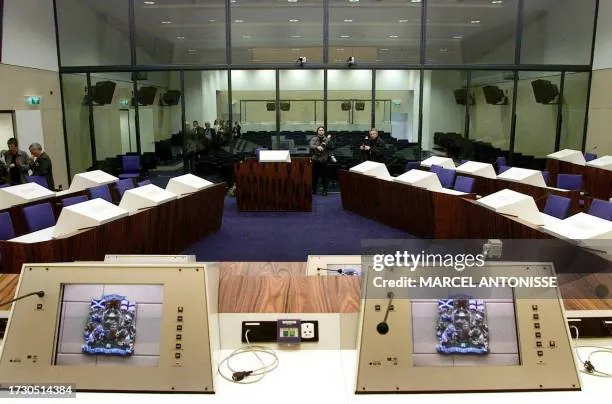
The two accused were handed over on April 5, 1999. The BBC records the eventual verdicts as Megrahi convicted and Fhimah not guilty, followed by the refusal of Megrahi’s appeal in 2002.[2] That wording should not be casually changed. In Scots criminal law, “not guilty” and “not proven” are not interchangeable labels, and a source that reports one should not be silently rewritten into the other.
The trial was substantial by any ordinary measure. A sourced compilation records a 36-week proceeding, 84 court days, about 230 witnesses, 10,232 transcript pages, and an estimated trial cost of about £60 million.[6] Those figures help explain why Camp Zeist dominates public memory. They do not make it the whole legal case.
Megrahi’s later Scottish Criminal Cases Review Commission-related proceedings belong in the same Scottish legal family, but they answer a narrower post-conviction question. The Scottish Courts and Tribunals Service records SCCRC referrals dated June 28, 2007, and March 11, 2020; in January 2021, a five-judge court refused the posthumous appeal.[7] Readers who want that evidentiary and appellate record should use the separate Pan Am 103 conviction appeals explainer rather than expecting the Camp Zeist summary to carry every later Scottish proceeding.
Civil compensation ran beside the public-law and criminal tracks
The compensation history is often compressed into one settlement number, usually $2.7 billion. That headline is real enough when attributed, but it hides tranche structure and separate legal predicates. Lawfare describes a $2.7 billion settlement structure and an August 2008 Tripoli agreement connected to a $540 million final tranche.[3] Kreindler & Kreindler, counsel for families in the civil litigation, also describes Libya paying $2.7 billion to families and separately notes a July 1992 willful-misconduct verdict against Pan Am and a 1996 Foreign Sovereign Immunities Act amendment.[8]
That civil lane should not be mistaken for a sixth forum equivalent to the five public-law and criminal forums above. It had its own claims, parties, leverage, and payment consequences. It also mattered intensely to families who had already been forced to follow a criminal case, sanctions diplomacy, treaty litigation, and post-conviction proceedings across different systems. The detailed payment record belongs in the site’s Pan Am 103 victims compensation file.
Mas’ud keeps the US criminal chain open
The current live proceeding is not an appeal from Camp Zeist. It is a US federal prosecution of Abu Agila Mas’ud, also known in the DOJ case caption as Abu Agela Masud Kheir Al-Marimi. The DOJ USAO-DC case page, updated July 21, 2026, identifies the December 21, 2020 criminal complaint under 18 U.S.C. § 32(a)(1)-(a)(2) and § 844(i), Mas’ud’s entry into US custody in December 2022, his February 2023 arraignment, a May 26, 2026 partial dismissal opinion, and continuing July 2026 docket entries.[5]
That posture matters more than any neat phrase such as “the new Lockerbie trial.” The live US case has its own defendant, statutes, motions, evidentiary disputes, and docket. It may draw on the same historical investigation and some of the same factual universe, but it is not legally absorbed into the Scottish conviction.
As of the August 4, 2026 verification date, the public docket record should be treated carefully. A July 2026 report in The National placed jury selection on August 25, 2026, and discussed baggage-policy evidence issues.[9] Other public summaries have circulated late-August dates, but the DOJ tracker is the safer current-status anchor; it confirms active docket movement through July 2026 without turning every press-reported trial date into a final court setting.[5]
For the live docket snapshot, see Where the Pan Am 103 prosecution stands before trial. For the confession and suppression fight, see the Mas’ud confession analysis. For the 2024 rulings and procedural setting, see the 2024 legal developments record. Those records can change more quickly than this forum explainer.
What each forum could not do
A cleaner explanation of the Pan Am 103 legal case comes from the limits, not only the results. The 1991 indictments could accuse; they could not force a completed trial while the suspects remained outside the charging states’ custody. The Security Council could impose pressure; it could not itself adjudicate individual guilt. The ICJ could decide treaty jurisdiction and, had the cases continued, treaty merits; it did not conduct a criminal trial and never reached the merits. Camp Zeist could decide the guilt of Megrahi and Fhimah under Scots law; it could not adjudicate every possible accused participant or every civil claim. The Mas’ud prosecution can decide the pending US charges against Mas’ud if the case reaches that point; it cannot retroactively become the ICJ case, the sanctions case, or the Scottish appeal.
This is also why popular retellings can become misleading even when their individual facts are mostly right. A television comparison or documentary recap may track the bombing narrative well enough, but legal consequences depend on forum and procedural posture. The site’s Netflix comparison deals with that representational problem. This record deals with the legal machinery.
Read together, the five forums show why the case resisted a single label. The ICJ’s February 27, 1998 preliminary-objections judgments explain the pressure point between Montreal Convention litigation and Security Council action. Camp Zeist explains how a Scottish criminal trial could be seated in the Netherlands without becoming an international tribunal. The civil settlement history explains why compensation must be attributed by tranche and source. The Mas’ud docket means the legal chain remains open as of August 2026.
References
- Pan Am 103 Bombing, FBI.
- Lockerbie bombing: Timeline, BBC.
- Reflections on Three Decades of U.S. Efforts to Resolve the Lockerbie Bombing, Lawfare.
- Questions of Interpretation and Application of the 1971 Montreal Convention arising from the Aerial Incident at Lockerbie (Libyan Arab Jamahiriya v. United Kingdom), International Court of Justice.
- Attack on Pan Am Flight 103, U.S. Attorney’s Office for the District of Columbia, July 21, 2026.
- Pan Am Flight 103 bombing trial, Wikipedia.
- Megrahi judgment, Scottish Courts and Tribunals Service, January 15, 2021.
- Libya Pays $2.7 Billion to Families of Pan Am Flight 103, Kreindler & Kreindler.
- Lockerbie bomber movie Pan Am, The National, July 2026.
Related records
Tool profile
How Meta's AI Spending Reshapes Law Firm ProfitabilityGoverning regulation
Browse the obligations tracker →Preventive workflow
Browse verification workflows →
Report a correction or tip
Spotted an outdated figure, a misstated fact, or a ruling this case record should reflect? Public comments are disabled for this content given the professional cost of a misreported case outcome, penalty amount, or rule text — use the structured correction channel instead.
Report a correction or tip for this record →