
Why dropping the Reflecting Pool case is not an exoneration
The government's July 31 motion to dismiss United States v. Hearn concedes the felony evidence collapsed and seeks dismissal without prejudice, leaving finality to the judge while a parallel ethics complaint keeps the matter live. The analysis reads the motion as a blame-shifting request rather than a finding of innocence, and explains why the docket — not the 'charges dropped' headlines — controls what happens next.
- Jurisdiction
- US-DC
- Court
- D.C. Superior Court
- AI tool named
- none
- Ruling date
- Jul 31, 2026
- Source document
- View primary court order ↗
- Last verified
- Aug 2, 2026
Lex Machina Review is an independent risk-tracking and reference resource. Nothing on this site is legal advice, and using it does not create an attorney-client relationship. Every record is reviewed against primary sources but may not reflect the most current status of a matter — always verify directly against the cited court order, rule text, or a licensed attorney before relying on it.
Companion explanation — secondary to the source document above
Risk Digest status control: last verified Aug. 2, 2026, UTC. This is legal-risk analysis, not legal advice. It relies on reported quotations from the July 31 motion to dismiss in United States v. Hearn because the primary motion PDFs were not independently crawled for this article. For the live docket posture, use the site’s docket-status verification record before citing the case as dismissed.
The useful sentence is not “the Reflecting Pool vandalism case was dropped.” The useful sentence is narrower: on July 31, 2026, the government asked the D.C. Superior Court to dismiss the indictment against David Hearn without prejudice, after conceding that the factual basis for the felony damage theory had collapsed; as of Aug. 2, the judge had not yet ruled, and an Aug. 5 status hearing remained on the calendar.
That distinction matters because a prosecutor’s request is not the same thing as a court’s order, and a dismissal without prejudice is not an acquittal. If another same-site record appears to say the court already granted dismissal without prejudice, treat that as docket-dependent and timestamp-dependent. The current control point for this article is Aug. 2, 2026: motion filed, dismissal requested, final court action still to be verified.
What the motion appears to concede
The government’s reported concessions are unusually concrete. NBC reported that the U.S. Attorney’s Office said it “first became aware” of evidence about botched installation only after indictment, following a July 17, 2026 visit to the drained Reflecting Pool and the receipt of 695 MB of Interior Department material. NBC also reported the government’s statement that, had the Interior Department been forthcoming with information “clearly in its possession,” prosecutors would not have sought a grand jury indictment.[1]
CNBC reported the same central explanation: the damage was attributed in the motion to flawed installation by contractor Atlantic Industrial Coatings and to a rushed effort to complete the project before events associated with the America 250 celebration around Independence Day 2026.[2] Law Dork, reading the filing as a document with consequences beyond Hearn’s case, highlighted the government’s further concession that it was difficult to attribute widespread damage to vandalism, let alone prove that fact beyond a reasonable doubt.[3]
Those concessions do not say Hearn was innocent. They say the government no longer had the proof structure it used to justify a felony charge. That is a different statement, and in criminal procedure it is the kind of difference that controls what can happen next.
| Issue | What the reported motion does | What it does not do |
|---|---|---|
| Felony damage theory | Concedes serious difficulty proving that widespread pool damage was vandalism beyond a reasonable doubt. | Does not make a judicial finding that no vandalism occurred. |
| Source of damage | Points to flawed contractor installation and a rushed project timeline as the explanation for widespread damage. | Does not adjudicate civil responsibility for the contractor, DOI, or any other entity. |
| Government fault | Faults DOI for not producing information the government says DOI possessed. | Does not itself resolve whether prosecutors satisfied all disclosure, verification, or supervisory duties. |
| Procedural end point | Requests dismissal without prejudice. | Does not finally terminate the prosecution unless and until the court grants dismissal, and even then without-prejudice dismissal leaves theoretical re-filing space. |
Why “without prejudice” keeps the headline from closing the case
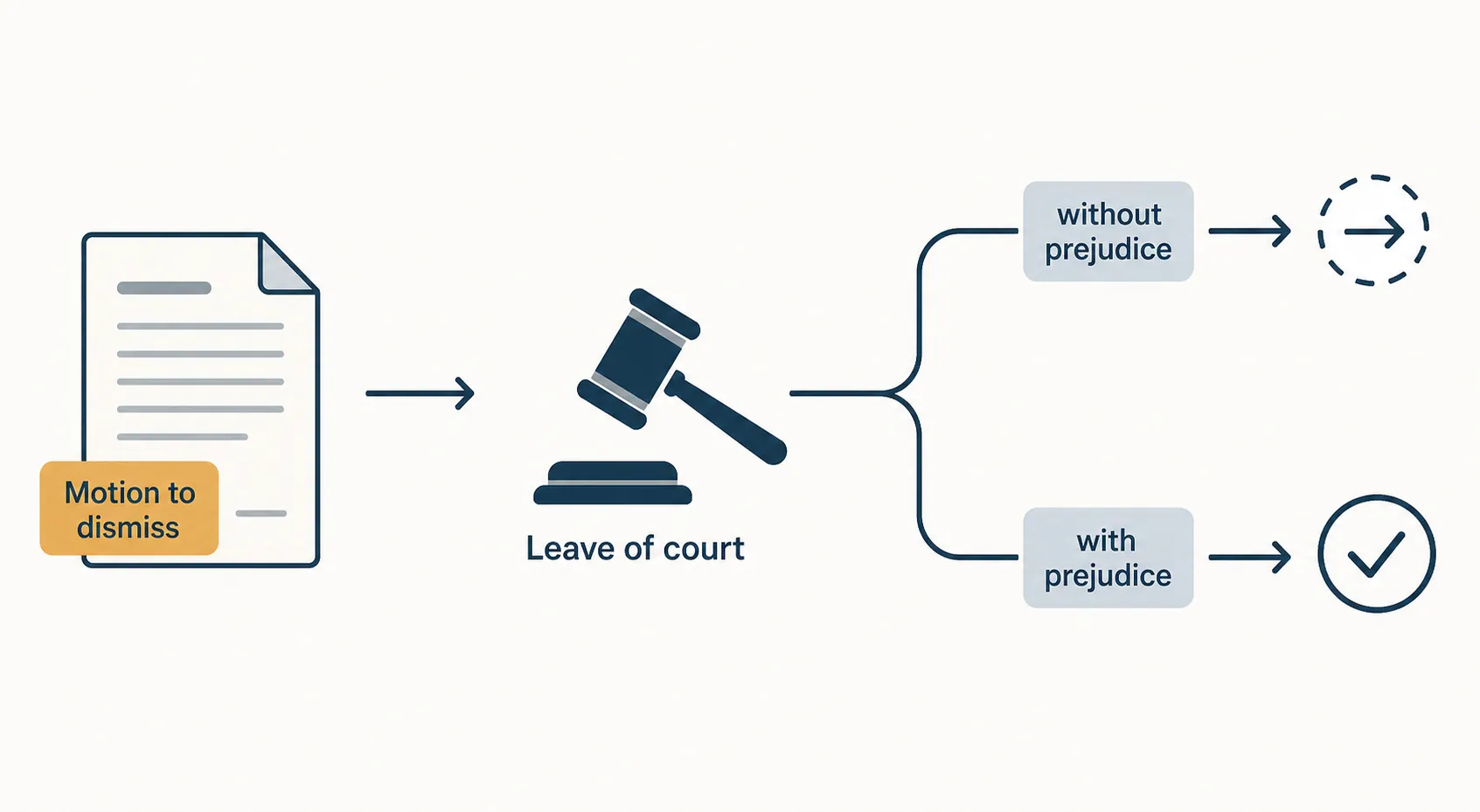
A dismissal with prejudice would bar the government from bringing the same charge again. A dismissal without prejudice leaves the government room, at least in theory, to re-file if it can lawfully do so and if the facts and limitations period permit. That does not mean re-filing is likely. It means the motion was drafted to preserve prosecutorial options rather than to surrender them.
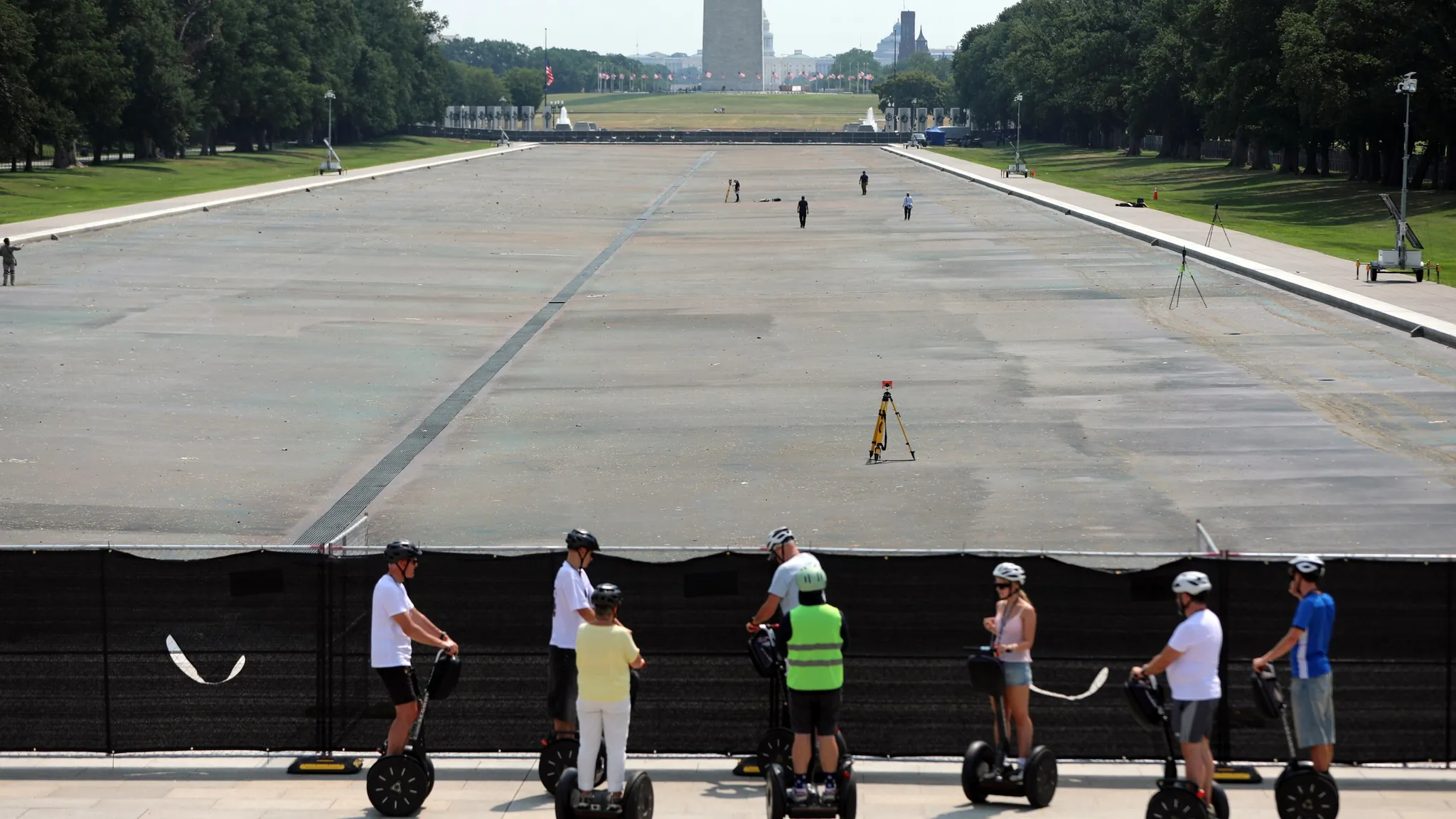
The judge’s role is therefore not decorative. CBS reported that the government moved to dismiss and that a status hearing was set for Aug. 5; CBS also reported that the judge had earlier warned the government it was “operating at its own peril” by draining the pool before the defense could have an expert inspect it.[4] Those details place the July 31 filing in a live courtroom sequence, not in a completed press release.
For federal criminal cases, Rule 48(a) generally requires “leave of court” before the government may dismiss an indictment, information, or complaint. Stanford Law Review Online’s discussion of Rule 48(a) explains the leave-of-court framework and the tension between prosecutorial charging authority and judicial supervision of dismissal requests.[6] That framework is useful background, but it should not be over-read here. Hearn’s case is in D.C. Superior Court, and the governing D.C. rule and local standard should be verified by licensed counsel before anyone asserts the exact controlling test.
The practical point is still plain enough for readers tracking the docket: a prosecutor can ask; the court acts. Until the court acts, the docket posture is a pending motion. If the court grants the request without prejudice, the criminal case may be over for the moment without producing the kind of final adjudication that “exoneration” implies.
The blame allocation is the legal engine
The motion, as reported, does more than confess evidentiary weakness. It shifts responsibility. The government’s quoted position is that DOI had information in its possession that, if produced earlier, would have changed the charging decision. That is the sentence defense lawyers, agency counsel, and ethics watchers will keep returning to because it relocates the error from “the vandal caused the damage” to “the charging process proceeded without agency-held information that contradicted the damage theory.”
There are at least two separate questions inside that relocation. One is factual: what actually damaged the pool liner, and when did the relevant government actors know it? The other is institutional: when a prosecutor relies on an agency’s damage account, what verification is required before converting that account into a felony indictment?
This is where the case fits the site’s broader verification file without becoming an AI case. The problem is not machine-generated hallucination. The problem is reliance on a damage narrative that later collided with primary or agency-held information. The same discipline discussed in the site’s records on unverified Reflecting Pool sources and verification before citing Hearn as dismissed applies here in a non-AI setting: primary records, docket posture, and agency documents matter more than a confident shorthand.
The case was already weakening before July 31
The dismissal motion did not arrive in a vacuum. Before the government filed it, the case had already absorbed several blows. AP reported that a grand-jury witness conceded there was substantial pre-existing damage and could not attribute any repair cost to Hearn.[5] NBC separately reported similar pressure on the government’s damage theory in the grand-jury record.[1]
The defense also filed a July 27 challenge raising alleged grand-jury irregularities, and the judge’s warning about draining the pool added another practical problem: once the physical scene changed, the defense’s ability to test the government’s damage theory became harder. CBS’s report on the motion tied those events to the government’s later request to dismiss.[4]
The Atlantic’s reconstruction adds an earlier factual marker: it described pre-existing damage evidence, including a June 11, 2026 National Park Service engineer email.[7] That does not by itself resolve the criminal case, but it helps explain why the government’s later statement about contractor installation and rushed completion became so consequential.
Some background figures should be handled carefully. Reported contractor cost numbers vary, including figures in the $13.1 million to $16.4 million range; The Atlantic identified a USAspending award citation, CONT_AWD_140P2026C0028, but the conflicting dollar figures should not be laundered into one confident amount.[7] Counts of other people charged, arrested, or cited also vary by outlet. For this analysis, those counts are secondary. The dispositive problem is the government’s proof against Hearn, not the size of the surrounding protest docket.
Disclosure duties do not disappear because DOI is blamed
Blaming DOI may explain how prosecutors say the indictment happened. It does not answer every disclosure question. If agency-held material contradicted the damage theory, the remaining analysis is not limited to whether DOI was forthcoming. It also includes how the prosecution team defined its information universe, what it asked for, what it reviewed before indictment, and how quickly it corrected the record once the contradiction surfaced.
Those are not all the same question. A prosecutor may have been misled by an agency and still have duties to investigate, disclose, or reassess. An agency may have failed to produce important records and still leave open separate questions about supervisory review inside the U.S. Attorney’s Office. The July 31 motion, as reported, narrows the prosecution’s position; it does not adjudicate the office’s professional obligations.
That is also why this article is not just another version of the site’s case-collapse explainer or its earlier charging-discretion analysis. The added point here is dismissal mechanics and blame allocation: what the government’s own filing gives up, what it tries to preserve, and what it pushes onto DOI.
The ethics track remains separate
A criminal dismissal motion does not dispose of a professional-responsibility complaint. The late-July ethics complaint against U.S. Attorney Jeanine Pirro, filed with the Attorney Grievance Committee, is a separate accountability track.[8] Its viability, scope, and timing are not controlled by whether the government can still prosecute Hearn.
Law Dork reported that Michael Bromwich, a former DOJ Inspector General and Steptoe senior counsel, entered an appearance hours before the dismissal filing, and framed the motion as an “opening, not a closing salvo.”[3] That is the right caution for this posture. The criminal motion may reduce Hearn’s immediate exposure, but it increases pressure on the government’s internal account of how the indictment was obtained.
The ethics question should not be inflated into a ready-made finding of misconduct. A complaint is an allegation, not discipline. But the complaint matters because the July 31 motion supplies the kind of government-authored admissions that grievance lawyers, defense counsel, and oversight actors can test against charging records, agency communications, and disclosure timelines.
What lawyers should verify before repeating “case dropped”
- Whether the D.C. Superior Court has granted the July 31 motion, and if so, the exact wording of the order.
- Whether dismissal was granted without prejudice or with prejudice.
- Whether the Aug. 5 status hearing remained on, was vacated, or produced additional findings.
- Whether the court made any finding about prosecutorial conduct, disclosure obligations, or preservation of the drained-pool evidence.
- Whether any related misdemeanor cases, citations, or parallel matters were dismissed on the same or different grounds.
This is the same verification habit that sanctions cases have made familiar in other contexts: the lawyer or analyst who signs, cites, or repeats a procedural claim owns the check. The site’s AI-sanctions records on personal verification as a nondelegable duty and verification safeguards involve different facts, but the professional reflex is the same. A docket event is not whatever the headline says it is.
Where the July 31 motion leaves Hearn
The motion substantially improves Hearn’s position. It records the government’s loss of confidence in the felony damage theory, attributes widespread damage to non-vandalism causes, and says prosecutors would not have sought the indictment if DOI had produced information the government says DOI already possessed. Those are not small concessions.
They are also not an exoneration order. The filing does not acquit Hearn, does not make a judicial finding of innocence, does not finally resolve professional-responsibility questions, and does not by itself bar re-filing if dismissal is granted without prejudice. The court’s order, not the government’s press-cycle retreat, supplies finality.
As of Aug. 2, 2026, the Reflecting Pool vandalism case is best described as a prosecution whose factual premise broke, whose dismissal was requested without prejudice, and whose consequences now run through the judge, the docket, and a separate ethics track.
References
- Trump administration drops Reflecting Pool case blaming damage on botched installation — NBC News — https://www.nbcnews.com/news/us-news/trump-administration-drops-reflecting-pool-case-blaming-damage-botched-rcna590303
- Trump Pirro Reflecting Pool Olympian David Hearn — CNBC — July 31, 2026 — https://www.cnbc.com/2026/07/31/trump-pirro-reflecting-pool-olympian-david-hearn.html
- Jeanine Pirro’s motion to dismiss the Reflecting Pool case — Law Dork — Aug. 2, 2026 — https://www.lawdork.com/p/jeanine-pirro-motion-to-dismiss-reflecting-pool
- DOJ moves to dismiss David Hearn Reflecting Pool vandalism charges — CBS News — https://www.cbsnews.com/news/doj-dismiss-david-hearn-reflecting-pool-vandalism-charges/
- Reflecting Pool Olympian Trump grand jury — AP — https://apnews.com/article/reflecting-pool-olympian-trump-grand-jury-b2f8b76d678e09438811c3c87233d0df
- Why Rule 48(a) Matters — Stanford Law Review Online — 2020 — https://review.law.stanford.edu/wp-content/uploads/sites/3/2020/06/73-Stan.-L.-Rev.-Online-Frampton.pdf
- Reflecting Pool case David Hearn — The Atlantic — July 2026 — https://www.theatlantic.com/politics/2026/07/reflecting-pool-case-david-hearn/688151/
- Pirro Ethics Complaint — LDAD — July 2026 — https://ldad.org/wp-content/uploads/2026/07/Pirro-Ethics-Complaint.pdf
Related records
Tool profile
Browse tool evaluations →Governing regulation
Browse the obligations tracker →Preventive workflow
Browse verification workflows →
Report a correction or tip
Spotted an outdated figure, a misstated fact, or a ruling this case record should reflect? Public comments are disabled for this content given the professional cost of a misreported case outcome, penalty amount, or rule text — use the structured correction channel instead.
Report a correction or tip for this record →