
RFK Jr.'s Merck Conflict Was Rerouted, Not Removed
A verified status record on the RFK Jr.-Merck conflict: whether the January 2025 transfer of Kennedy's 10% Gardasil fee stake to his adult son at Wisner Baum actually resolved it, and why Merck's June 2026 settlement reopened Senate scrutiny. Confirmed facts, disputed claims, and the August 11, 2026 response deadline are flagged with primary sources.
- Jurisdiction
- US federal
- Court
- No court
- AI tool named
- No AI tool implicated
- Ruling date
- Jul 28, 2026
- Source document
- View primary court order ↗
- Last verified
- Aug 2, 2026
Lex Machina Review is an independent risk-tracking and reference resource. Nothing on this site is legal advice, and using it does not create an attorney-client relationship. Every record is reviewed against primary sources but may not reflect the most current status of a matter — always verify directly against the cited court order, rule text, or a licensed attorney before relying on it.
Companion explanation — secondary to the source document above
Status record: August 2, 2026
| Item | Current record |
|---|---|
| Category | Risk-digest conflict and disclosure record, not a vaccine-safety explainer. |
| Live deadline | Kennedy’s response to the July 28, 2026 Senate inquiry is reported due August 11, 2026. The reported letter has 21 questions and was sent by Sens. Elizabeth Warren, Angela Alsobrooks, Richard Blumenthal, and Andy Kim. [1] |
| Fee-chain point | The January 2025 amended ethics agreement reportedly moved Kennedy’s Gardasil-related 10% referral-fee entitlement to a non-dependent adult son, identified in press reporting and by the senators as Conor Kennedy, an associate at Wisner Baum. [2] |
| What is not confirmed | There is no adjudicated finding, as of August 2, 2026, that the arrangement violates or satisfies 18 U.S.C. § 208. |
| Disputed money point | The senators allege the son could stand to gain millions; Kennedy posted on August 1 that he has “never received a penny” from the cases and that neither his son nor anyone else in his family has; Wisner Baum has also denied that Kennedy or his family received proceeds. These are interested-party statements and allegations, not findings. [1][3] |
| Source-confidence flags | This record has not independently checked the original July 28 Senate letter or the OGE amended-agreement PDF. Quotations and descriptions of those documents are therefore tied to the news reports and the senators’ release cited here. |
The shortest accurate answer to “RFK Jr. Merck lawsuit conflict of interest explained” is this: the relevant conflict was not simply a stock holding or an old client matter that disappeared on appointment. It was a contingent 10% fee interest in Gardasil litigation referred to Wisner Baum, the plaintiffs’ firm where Kennedy’s adult son worked, and the January 2025 amendment reportedly assigned that interest to the son rather than eliminating the economic route altogether. [2]

That distinction matters because Kennedy, as HHS secretary, retained authority over systems that can affect the litigation environment around vaccines: the Vaccine Injury Compensation Program, the Advisory Commission on Childhood Vaccines, public communications about Gardasil, and immunization-schedule decisions. The record does not yet answer the legal question. It does show why “divestiture” is too blunt a label for what happened.
For readers tracking comparable federal-conflict mechanics, the useful cross-reference is the site’s § 208 disclosure record, not the broader vaccine-policy docket.
The fee interest did not start with the Senate letter
The first number to keep separate is NPR’s January 2025 figure: Kennedy’s federal ethics disclosures showed $856,559 in referral fees from Wisner Baum between 2023 and December 21, 2024. NPR tied that figure to Wisner Baum referral fees reported in OGE filings, not to a future Gardasil settlement distribution. [4]
CBS reported a broader figure in a different window: Kennedy had made nearly $2.5 million in referral fees from law firms since 2022, including Wisner Baum. That is not the same measurement as the NPR figure and should not be blended into a single “Merck lawsuit” number. [5]
The operative January sequence is narrower and more important. STAT reported that Kennedy’s original ethics agreement, signed January 21, 2025, allowed him to keep a 10% contingency-fee interest in cases he had referred to Wisner Baum. The later amended agreement, dated January 31 and reported as filed February 1, changed the handling of the Gardasil interest by transferring it to a non-dependent adult son. [2]
| Date or window | What the record says | Why it matters |
|---|---|---|
| 2023 through Dec. 21, 2024 | Kennedy reported $856,559 in referral fees from Wisner Baum in OGE filings, per NPR. [4] | This is backward-looking income, not proof of any payment from the June 2026 Merck settlement. |
| Since 2022 | CBS reported nearly $2.5 million in referral fees from law firms, including Wisner Baum. [5] | Different source window; useful for scale, but not interchangeable with the NPR figure. |
| Jan. 21, 2025 | Original ethics agreement reportedly preserved a 10% contingency-fee entitlement for referred cases. [2] | This is the point at which the conflict was visible in the ethics paperwork. |
| Jan. 31, 2025 | Amended agreement reportedly assigned the Gardasil interest to Kennedy’s non-dependent adult son. [2] | This is the mechanical substitution at the center of the current dispute. |
| July 28, 2026 | Four senators sent a 21-question inquiry alleging an unresolved loophole and seeking answers by August 11. [1] | This is the live procedural event, not a completed adjudication. |
The adult son is identified by Reuters, STAT, Fierce Pharma, and the Senate materials as Conor Kennedy, an associate at Wisner Baum. That identification matters because the transfer was not to a blind trust, a charity, or a buyer outside the litigation ecosystem; it was to a family member working at the firm that held the referred cases. [1][2][3]
Why the transfer may not end the conflict question
The legal spine is 18 U.S.C. § 208. The statute reaches an executive-branch officer’s own financial interest and imputes certain interests, including those of a spouse, minor child, general partner, organization in which the officer serves in specified roles, or prospective employer. It does not list an adult son as such. [6]
That statutory boundary is why the record should not be overstated. The present materials support a serious conflict concern and a live inquiry; they do not support saying a tribunal has found a § 208 violation. If the only question were whether an adult son’s interest is automatically imputed under the words of § 208, the statute’s text gives the government an argument Kennedy’s defenders will use. [6]
The concern does not stop there, because the transfer sits beside retained official authority. NPR reported Kathleen Clark’s criticism that Kennedy’s ethics arrangement was inadequate, and CBS reported her view that the arrangement was very unusual. The critique is not that § 208 expressly says “adult son”; it is that the arrangement left a foreseeable family-linked economic pathway while Kennedy kept control over agencies and processes that could affect the value and settlement posture of the Gardasil docket. [4][5]
The reported ethics terms also matter on duration. Kennedy accepted a one-year cooling-off period for certain matters but declined the four-year ban senators demanded. Reports also describe refusals to recuse from Gardasil-related communications and VICP decisions. That is the part a conflicts reviewer has to put next to the assignment document, because divestiture of a fee interest and recusal from official levers are different controls. [1][4][5]
The same recusal-mechanics problem appears in other live ethics inventories, including the site’s records on Todd Blanche’s confirmation-delay ethics issues and Todd Blanche ethics proceedings. The common lesson is not that all recusals are equivalent; it is that the carveout line often carries more weight than the public label on the agreement.
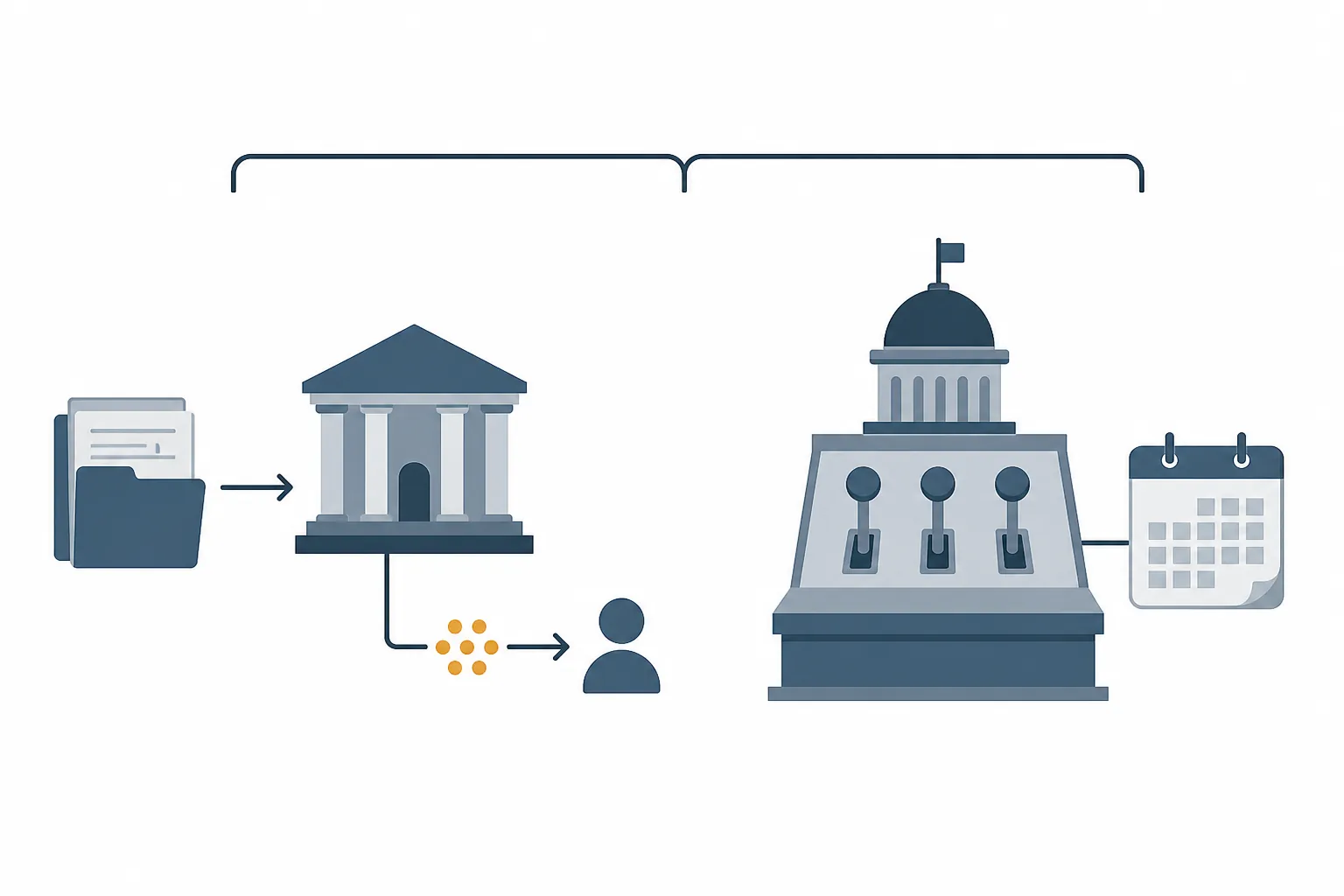
Merck’s June 2026 settlement is the trigger, not the proof
Merck’s reported June 2026 settlement reopened the file because it created the obvious distribution question: if more than 200 Gardasil suits settled for approximately $50 million, did Kennedy’s transferred interest produce or preserve a family benefit? The available reports say Merck admitted no liability and described the settlement as not material. [7][8]
That does not make the settlement a payoff to Kennedy, and the record should not call it one. It means the old contingent-fee paperwork became newly consequential. A contingency interest can sit quietly until a settlement event gives it a number; the current record is about whether that number did, or could, reach the family circle after the January assignment.
The underlying litigation history is also easy to overstate. Reuters reported in January 2025 that Kennedy had played a key role in a vaccine case against Merck and had been listed as attorney of record in some cases. Claims Journal later reported settlement details and described Robi v. Merck, case number BC628589, as part of the settlement universe, while other uncrawled local reporting has been described as treating Robi differently. For this record, Robi’s exact disposition remains a docket-confirmation item. [9][8]
Loose phrasing such as “settled with Merck” needs a subject. The available materials support saying Merck settled more than 200 Gardasil suits. They do not support asserting a separate HHS-Merck settlement, and this record does not treat opinion-page shorthand to that effect as verified.
What the senators are asking, and what Kennedy and Wisner Baum deny
The July 28 letter is reported to have been sent by Warren, Alsobrooks, Blumenthal, and Kim and to contain 21 questions. Reuters described the senators as pressing Kennedy over whether his family could profit from the Merck settlement. Fierce Pharma reported the same inquiry as fresh scrutiny of Kennedy’s Gardasil litigation ties after the Merck settlement. [1][3]
The senators’ framing is a loophole allegation: Kennedy allegedly transferred the financial interest to his son while keeping authority over decisions that may affect Gardasil litigation and vaccine-injury economics. The Alsobrooks press release characterizes the investigation as questioning whether Kennedy’s family is profiting from alleged bogus vaccine claims; that is the senators’ language, not an adjudicated description of the litigation merits. [10]
Kennedy’s response, as reported, is categorical on receipt of money. On August 1, 2026, he posted that he had “never received a penny” from the cases and that neither his son nor anyone else in his family had received money. Wisner Baum has also said, in substance, that at no time did Kennedy or his family receive proceeds from the Gardasil settlement. [1][3]
Those denials belong in the same paragraph as the allegation because they are part of the live record. They do not resolve the record. The statements come from interested parties and address receipt of money; the Senate inquiry also asks about entitlement, assignment, expected proceeds, firm accounting, and Kennedy’s official-role boundaries. A payment denial and a conflict-control analysis are related, but they are not the same document.
Blumenthal’s participation is also consistent with his broader “loophole” focus in financial-regulatory disputes, discussed separately in the site’s CLARITY Act crypto loopholes record. That parallel is procedural rather than substantive: the question here is not crypto policy, but whether formal compliance left the operative beneficiary path intact.
Why VICP and the immunization schedule are in the file
This record does not need a Gardasil merits trial inside it. The conflict question is about who had a financial interest and what official levers remained in the same person’s hands.
KFF Health News has reported on the structure and litigation consequences of the Vaccine Injury Compensation Program, including the fact that no vaccine-injury lawsuit has won a judgment in regular court since the program’s creation in 1986. That context helps explain why settlement economics and regulatory positioning matter even when no one is proving vaccine science in the conflict record. [11]
If HHS or its related bodies alter the vaccine-injury process, public communications, advisory structures, or schedule treatment, that can affect the background against which plaintiffs, defendants, insurers, and counsel evaluate cases. It is enough to say those levers are relevant to the conflict analysis. It is not necessary, or supported by this record, to predict what HHS will do next.
Readers following the same regulatory ecosystem may want the separate record on CDC vaccine-autism revision litigation and the site’s note on RFK Jr.’s polio-vaccine legal controversy. Those are adjacent dockets, not substitutes for the Gardasil fee-chain documents.
What can be said now
As of August 2, 2026, the verified posture is limited but meaningful. Kennedy did not simply keep the same Gardasil referral-fee interest in the same form after the ethics amendment. The reported January 31 amendment moved that 10% interest to a non-dependent adult son at Wisner Baum. That move may matter under § 208 because an adult son is not automatically imputed in the same way as a spouse or minor child. [2][6]
The same move also did not erase the economic pathway from the Gardasil litigation to Kennedy’s family circle. It rerouted the pathway to a family member at the firm while Kennedy retained authority over HHS-linked systems that can shape vaccine litigation conditions. That is analysis from the document chain, not a finding by OGE, a court, or the Senate.
The next verification event is Kennedy’s August 11, 2026 response deadline. The record should also be updated if the original July 28 Senate letter, the OGE amended-agreement PDF, firm accounting information, or docket-confirmed settlement materials become available. Until then, the clean formulation is: rerouted conflict, disputed proceeds, no adjudicated § 208 finding.
References
- US lawmakers press Health Secretary Robert F. Kennedy Jr over vaccine settlement, Reuters, July 29, 2026.
- RFK Jr. amends ethics agreement, will divest financial stake in Gardasil litigation to his son, STAT, January 31, 2025.
- RFK Jr.'s Gardasil litigation ties subject to fresh lawmaker scrutiny after Merck settlement, Fierce Pharma.
- RFK Jr. makes millions from vaccine lawsuits. He'd oversee a compensation program for vaccine injuries, NPR, January 22, 2025.
- RFK Jr. tells senators he will give away some vaccine lawsuit fees, but keep others, CBS News.
- 18 U.S. Code § 208 - Acts affecting a personal financial interest, Cornell Legal Information Institute.
- RFK Jr.'s Gardasil litigation ties subject to fresh lawmaker scrutiny after Merck settlement, MedPage Today.
- Merck Settles Over 200 Gardasil Vaccine Injury Cases, Claims Journal, June 5, 2026.
- Kennedy played key role in vaccine case against Merck, Reuters, January 18, 2025.
- Alsobrooks, Warren, and Senators Investigate RFK Jr.’s Unresolved Financial Conflicts, Question Whether His Family is Profiting from Bogus Vaccine Claims, Office of Senator Angela Alsobrooks.
- Vaccine Court Cases Moved to Civil Lawsuits, Lawyers, Merck HPV, RFK Allies, HHS, KFF Health News.
Related records
Tool profile
How Meta's AI Spending Reshapes Law Firm ProfitabilityGoverning regulation
Browse the obligations tracker →Preventive workflow
Browse verification workflows →
Report a correction or tip
Spotted an outdated figure, a misstated fact, or a ruling this case record should reflect? Public comments are disabled for this content given the professional cost of a misreported case outcome, penalty amount, or rule text — use the structured correction channel instead.
Report a correction or tip for this record →