
Amazon's $220B AI Spend Buys Compute, Not Legal Accuracy
Amazon's July 30 decision to raise 2026 AI capital spending to roughly $220 billion buys compute and AWS capacity, not legal-AI correctness. Independent benchmarks still find roughly one in four to one in six legal answers with unsupported citations, so legal teams and tool buyers should budget manual verification as a permanent structural cost.
- Tool
- Claude-based legal tools
- Benchmark source
- Stanford RegLab/Stanford HAI; HAQQ; Vals AI VLAIR
- Hallucination rate
- ~1 in 4 to 1 in 6
- Test methodology
- Legal research accuracy benchmarks across legal-specific tools and general chatbots; HAQQ graded 3,000 answers across 10 frontier models; Vals AI compared AI output to a lawyer baseline.
Amazon’s July 30, 2026 earnings update changed the procurement conversation for any legal team evaluating Claude-based tools on AWS. The company raised its 2026 capital-spending plan from roughly $200 billion to roughly $220 billion, with CNBC reporting that most of that money is going toward AI infrastructure. In the same report, AWS revenue grew 37% year over year to $42.2 billion, and AWS backlog reached $496 billion.[1]
Those are not cosmetic numbers. They tell a buyer that Amazon is trying to make more AI capacity available, that cloud demand is already committed in large blocks, and that the infrastructure behind Anthropic’s Claude family is becoming less of a speculative promise and more of a supply-chain commitment. For a law firm CIO or innovation committee, that matters. More capacity can mean better availability, more enterprise deployments, and fewer excuses when a pilot becomes a firmwide rollout.

But the filing question is narrower: does this spending make an AI-generated legal answer safe to rely on without manual citation review? The evidence does not support that conclusion. Amazon’s spend buys compute, chips, and cloud capacity. It does not, by itself, buy filing-grade legal correctness.
What the $220 billion figure actually supports
The cleanest reading of Amazon’s 2026 capex trend is operational. AWS is expanding the factory floor for AI: data centers, networking, accelerators, and the supporting services that allow enterprise customers to run large models at scale. That is useful evidence if the question is whether a vendor building on AWS and Claude can plausibly support heavy usage across a large organization.
The Anthropic relationship strengthens that capacity story. CNBC reported in April 2026 that Anthropic committed to spend more than $100 billion on AWS over 10 years, with Amazon investing $5 billion immediately and up to $20 billion more, on top of $8 billion already invested.[2] Amazon’s own announcement described the expanded relationship as including up to 5 gigawatts of Trainium capacity and said more than 100,000 organizations were running Claude on AWS.[3]
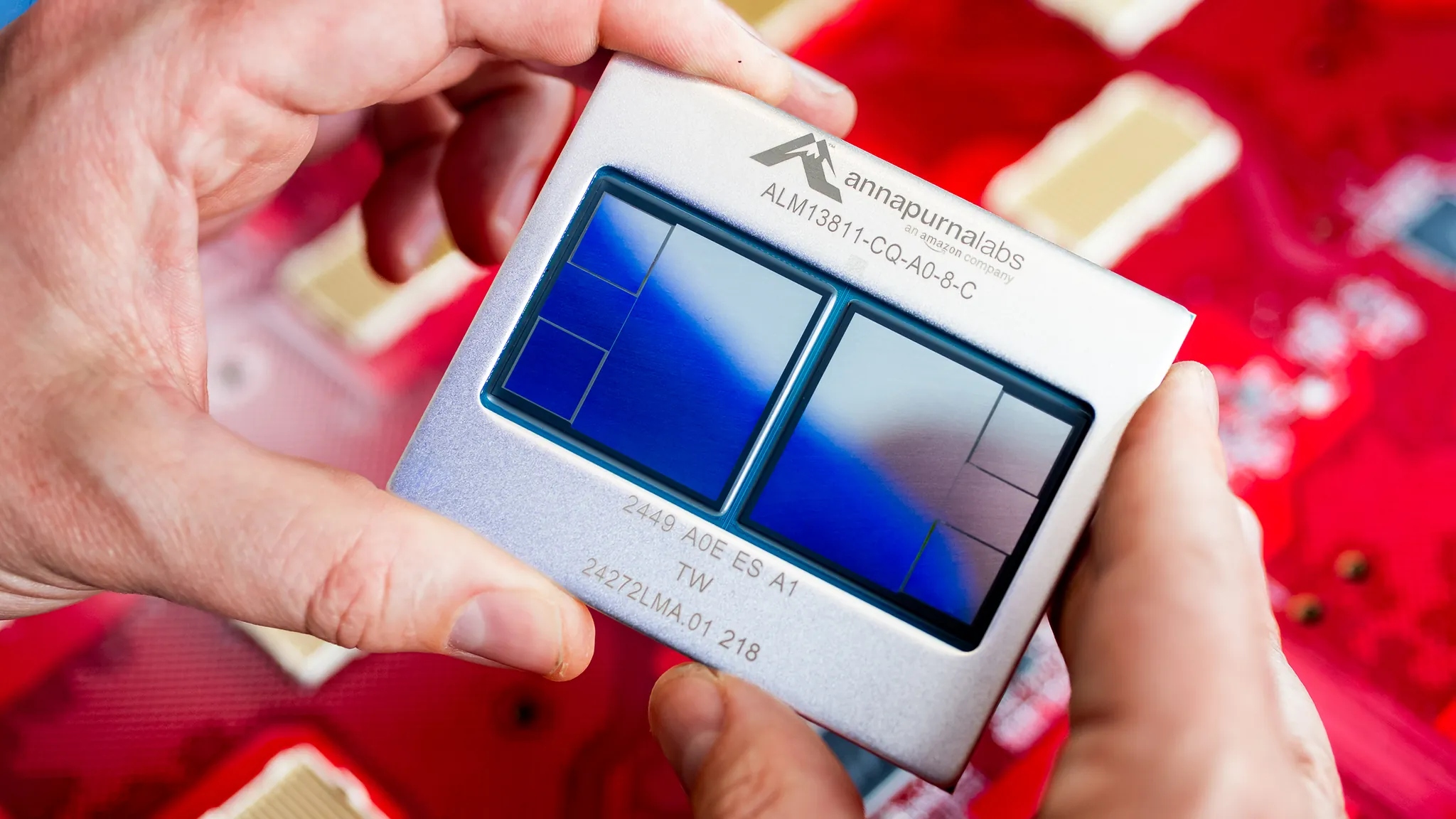
Those figures are important, but they answer a capacity question. They do not answer whether a Claude-based legal research product will identify controlling authority, avoid citing nonexistent cases, distinguish dicta from holdings, and resist overstating what a cited case actually says. A law firm can be impressed by the infrastructure commitment and still require a separate reliability showing before allowing generated citations into a brief, memo, client alert, or board-facing risk analysis.
That separation is where many AI procurement conversations become too loose. A model can be easier to deploy and still need checking. A vendor can run on a more capable cloud stack and still return an unsupported proposition. A benchmark win can be real while the remaining error rate is still too high for an associate to treat the output as ready for filing.
The benchmark record does not collapse into the capex story
The governing legal-tech issue is not whether Claude or Claude-based systems are strong models. Some benchmark evidence points in that direction. The issue is whether their remaining failure modes are acceptable in legal work without human verification. On that question, the available benchmark record is stubbornly inconvenient.
The canonical baseline remains the Stanford RegLab and Stanford HAI study published in 2024 and updated in May 2024. It found that Lexis+ AI and Ask Practical Law AI produced incorrect answers more than 17% of the time, Westlaw AI-Assisted Research more than 34% of the time, and general-purpose chatbots at substantially higher rates, between 58% and 82% depending on the system and task.[4] Those are not 2026 numbers, and they should not be treated as a current product scorecard. They remain useful because they framed the basic professional problem: even legal-specific systems can fail often enough that a lawyer cannot outsource citation judgment to the interface.
A newer signal comes from HAQQ’s June 2026 benchmark, which is vendor-published and should be read with that caveat. HAQQ disclosed a benchmark of 3,000 graded answers across 10 frontier models and reported that 24% of answers cited or applied law that did not support the claim. In that same benchmark, Claude Opus 4.8 led the overall ranking with a score of 30.02 out of 35.[5]
That pairing is the part worth sitting with. The leading model in a legal benchmark can coexist with a material rate of unsupported citation or legal-application failure across the benchmark. This is not a contradiction. It is how relative performance and professional sufficiency can diverge. A system may be the best available model in a tested group and still produce enough unsupported legal output that a filing lawyer must check every authority.
Vals AI’s VLAIR work points in the same direction but needs careful phrasing. LawNext reported in October 2025 that AI systems scored around 80% against a 71% lawyer baseline in Vals AI’s legal research benchmark, and that legal-specific AI led general ChatGPT systems on authoritativeness, 76% to 70%.[6] Those numbers support a claim about comparative benchmark performance. They do not establish that legal AI output is citation-safe without review. The more precise product-by-product figures on live benchmark pages should be rechecked at the time of any procurement memo before being repeated as current scores.
For teams trying to reconcile these numbers, the useful exercise is not to average them into a single accuracy percentage. The tests differ by task design, grading rules, retrieval environment, model version, and what counts as an error. A benchmark that measures overall legal research accuracy is not the same as one that specifically grades whether a cited authority supports the legal claim. The distinction matters because the partner signing a brief is not exposed to an abstract benchmark score. She is exposed to the particular sentence that cites the wrong case, overstates the holding, or relies on an authority that does not exist.
For a fuller treatment of why incompatible accuracy numbers should not be flattened into a single buying metric, see the guide to legal AI accuracy benchmarks. The short version for this procurement question is simpler: leaderboard strength is not the same thing as a no-review workflow.
Guardrails help, but they do not transfer the lawyer’s duty
Amazon is not ignoring hallucination risk. AWS announced Automated Reasoning checks in Bedrock Guardrails, describing them as a way to use formal logic to validate generated responses against customer-defined policies and reporting up to 99% verification accuracy in that context.[7] That is a serious mitigation category, especially for organizations that can define bounded rules, policy statements, or factual constraints with enough precision for formal checking.
It is also not the same as proving that a legal research answer is correct. Formal verification works best where the claim can be reduced to defined rules and checked against a controlled policy base. Litigation research often asks something messier: whether a jurisdiction recognizes an exception, whether a case has been limited, whether a parenthetical fairly captures the holding, whether a procedural posture changes the force of the quoted language. Some of that can be helped by retrieval, citation checking, structured workflows, and guardrails. None of the materials above supports treating those controls as a substitute for lawyer review.
The practical procurement question should therefore be framed in terms of residual risk. If a tool reduces first-draft time but leaves a meaningful share of citations requiring human confirmation, the buyer has not eliminated the work. The buyer has moved it. Someone still has to pull the case, read the relevant passage, check the treatment, confirm the proposition, and decide whether the citation belongs in the document.

The verification tax shows up in staffing, not in the model announcement
Once a firm accepts that AI output remains review-bound, the budget conversation changes. The relevant cost is not only the subscription price, the token price, or the cloud platform behind the tool. It is the time of the associate, KM lawyer, research attorney, litigation support professional, or risk manager who must convert a plausible answer into a defensible one.
That cost is easy to understate because it arrives late in the workflow. A partner sees a polished draft by late afternoon. The verification burden lands on the person asked to make sure the authorities are real, current, and accurately described before the document leaves the building. If the cited case is wrong, the model vendor does not sign the filing. The lawyer does.
That is why infrastructure scale should not be booked as a full productivity gain. Some of the gain may be real, especially for drafting, summarization, issue spotting, and research triage. But unsupported citation rates in the one-in-four to one-in-six range, depending on the benchmark and product class, are not a rounding error in legal work. They are a workflow design constraint.
The same point applies to task-cost modeling. If a model produces a strong first pass but the reviewer must spend material time validating each legal proposition, the apparent automation savings shrink. The prior record on Opus task costs and verification overhead is the right companion to this capex story: the invoice for AI use is not just compute. It is compute plus review.
Adoption has outrun governance
The verification problem becomes operationally serious because legal AI use is no longer confined to supervised pilots. The 8am 2026 Legal Industry Report, discussed by the ABA, reported that 69% of legal professionals used generative AI personally, up from 31%, while 54% of firms had no responsible-AI training plan.[8]
That gap is where bad workflows form. Lawyers and staff experiment because the tools are available and useful. Firms delay policy because the tools are changing. Vendors talk about model quality because quality is improving. Meanwhile, the actual control point—the moment when someone decides whether a cited authority supports a sentence—may remain informal, undocumented, and unevenly staffed.
Court consequences are not hypothetical in the broader sanctions record. The running analysis of the AI hallucinations sanctions trajectory tracks why verification discipline has become a professional-responsibility issue, not merely a product-quality concern. A concrete sanction record such as David R. Cooper’s sanction status is a useful reminder of the endpoint: bad citations become court problems.
This is also why prior AWS and Anthropic coverage should be read as procurement context, not reassurance that the reliability question has been settled. The earlier analysis of AWS AI investment and legal-tech buyer risk and the review of Amazon Quick for Legal risk cover adjacent parts of the same buying problem. The sibling hyperscaler comparison on Alphabet AI investment and legal-tech risk is useful for the same reason: hyperscaler capex helps explain where the platforms are going, but it does not certify the legal answer sitting in a draft brief.
How to brief the July 30 capex change inside a firm
For a partner briefing or legal-ops procurement note, the July 30 Amazon update should be stated in two columns rather than one narrative.
| What the evidence supports | What it does not support |
|---|---|
| Amazon is materially expanding AI infrastructure spending, with 2026 capex guidance raised to roughly $220 billion. | The spending does not prove that Claude-based legal tools are safe for unreviewed legal citation use. |
| AWS has large and growing committed demand, including reported Q2 2026 AWS revenue growth and backlog. | Backlog and revenue do not measure whether a cited case supports a legal proposition. |
| Anthropic’s AWS relationship creates a large capacity path involving AWS spend commitments, Trainium capacity, and broad reported Claude deployment. | Vendor and platform scale do not transfer Rule 11, professional-conduct, or client-duty consequences away from the lawyer. |
| Benchmark evidence shows frontier and legal-specific systems can perform strongly on legal research tasks. | The same benchmark universe still leaves enough unsupported citation risk to require manual verification. |
| AWS guardrails and automated reasoning are meaningful controls for bounded verification problems. | They are not a general guarantee that open-ended legal analysis is correct. |
The buying implication is not to reject AWS-based or Claude-based legal tools. It is to price them honestly. A pilot should measure not only answer quality and drafting speed, but also the reviewer time required to validate authorities. Training should specify who checks citations, what sources count as verification, when AI-assisted work may be sent to a client, and what must happen before anything is filed.
Amazon’s $220 billion spending plan is meaningful evidence of capacity and enterprise availability. Anthropic’s AWS commitments matter. AWS guardrails matter. None of the cited materials supports treating Claude-based legal tools as citation-safe without manual review. Until independent benchmarks show unsupported legal citations have been driven down to a professionally acceptable level, verification time belongs in the cost model, the training plan, and the pre-filing workflow.
References
- Amazon (AMZN) Q2 earnings report 2026, CNBC, July 30, 2026.
- Amazon to invest up to $25 billion in Anthropic as part of AI infrastructure deal, CNBC, April 20, 2026.
- Amazon invests additional $5 billion in Anthropic AI, About Amazon.
- AI on Trial: Legal Models Hallucinate in 1 out of 6 (or More) Benchmarking Queries, Stanford HAI, May 2024.
- Best AI for Legal Work Benchmark, HAQQ, June 2026.
- Vals AI’s Latest Benchmark Finds Legal and General AI Now Outperform Lawyers in Legal Research Accuracy, LawNext, October 2025.
- Minimize AI hallucinations and deliver up to 99% verification accuracy with Automated Reasoning checks, now available, AWS.
- 8am Legal Industry Report, American Bar Association, March/April 2026.
Chronological incident history
No sanction cases have named this tool in the tracked record set to date. This does not imply the tool is safe — see Risk Digest for ongoing monitoring.
← Compare peer toolsReport a correction or tip
Spotted an outdated figure, a misstated fact, or a ruling this tool profile should reflect? Public comments are disabled for this content given the professional cost of a misreported case outcome, penalty amount, or rule text — use the structured correction channel instead.
Report a correction or tip for this record →