
Can Grok Voice Think Fast 2.0 Be Trusted for Legal Work?
This evaluation translates xAI's Grok Voice Think Fast 2.0 launch benchmarks into legal risk signal, showing why speed and speech quality metrics don't measure legal accuracy and what verification obligations any deployment triggers.
- Tool
- Grok Voice Think Fast 2.0
- Benchmark source
- xAI launch benchmarks
- Hallucination rate
- Not measured / undisclosed
- Test methodology
- Vendor-reported launch performance metrics on speed, speech quality, transcription speed, and tool call latency.
- Test date
- Jul 29, 2026
The useful question about Grok Voice Think Fast 2.0 in legal work is not whether the voice model feels fast enough for lawyers. It almost certainly does. The useful question is whether a lawyer can later show what was captured, what was reviewed, what was withheld from the vendor, and what was independently verified before anyone relied on the output.
This is a tool-reliability evaluation, not legal advice. The xAI launch figures discussed here were last checked on August 2, 2026, and should be treated as vendor-reported unless and until independent tests reproduce them. No published legal-domain benchmark for Grok Voice Think Fast 2.0 itself was found in the research record, and no confirmed sanctions case naming Grok as the implicated tool was found in the crawled hallucination-case record.
That framing matters because the launch numbers are genuinely notable. xAI announced Grok Voice Think Fast 2.0 on July 29, 2026, reporting a 0.70-second time to first audio, an 82.9% Artificial Analysis Speech-to-Speech Quality Index score compared with 75.7% for Grok Voice 1.0, a τ-voice score of 56.5%, claimed transcription speed advantages over Deepgram Nova 3 and ElevenLabs Scribe v2, and tool calls that usually execute before the end of the agent's first sentence.[1] The developer documentation also describes Grok Voice as the current voice interface for audio input and output through xAI's API.[2]
Those are product-performance facts. They are not legal-reliability facts. A voice assistant can be quick enough to keep a deposition-prep call moving and still produce a summary that drops a qualification, mislabels a client instruction, or converts a tentative legal theory into something that reads like a conclusion.
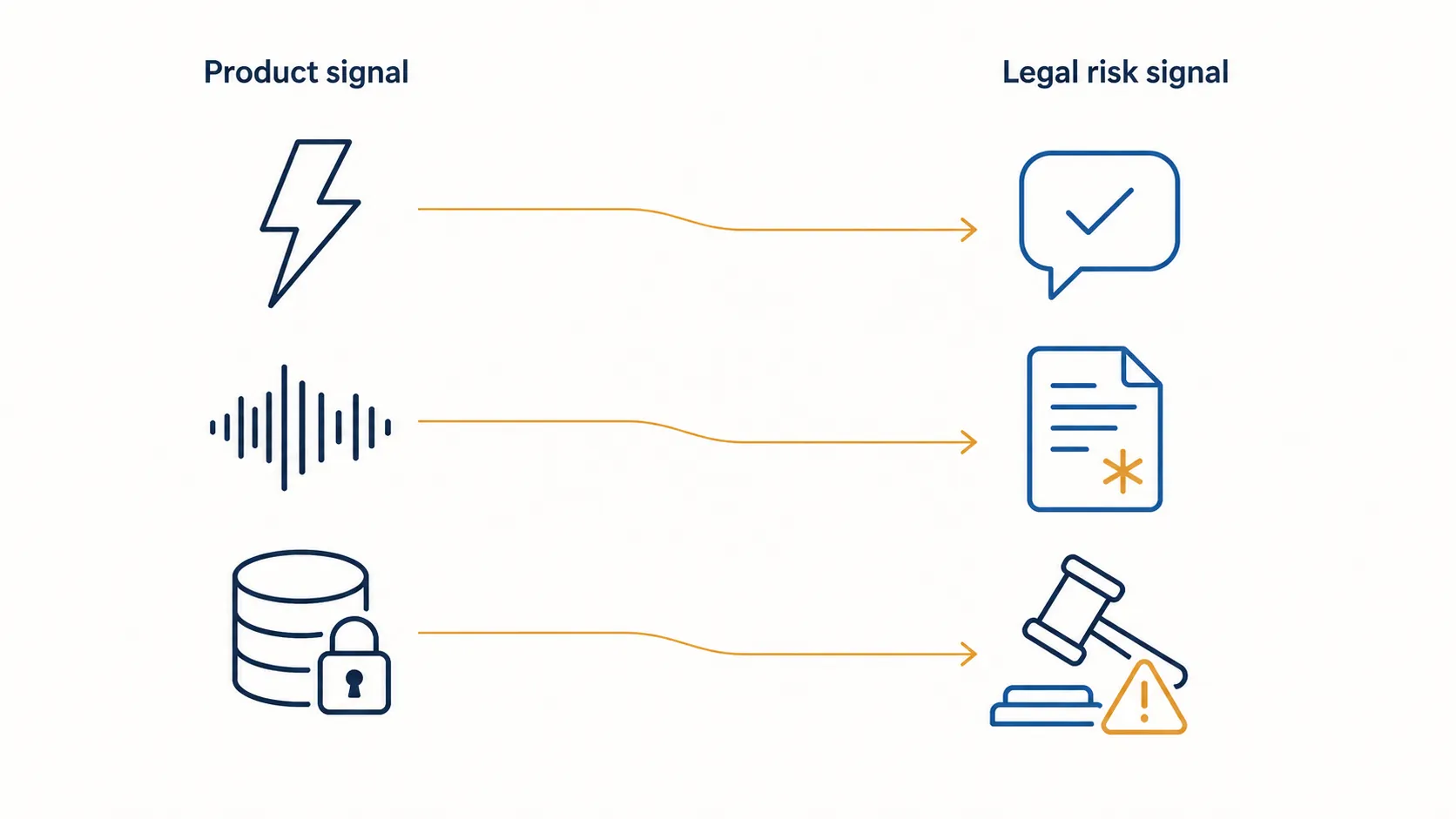
What xAI Measured, and What a Law Firm Still Has to Measure
| Launch or documentation signal | What it may help | Legal risk signal |
|---|---|---|
| 0.70-second time to first audio | Conversational flow in dictation, intake, and hands-free note capture | Latency does not test legal correctness, completeness, privilege handling, or citation accuracy. |
| 82.9% speech-to-speech quality index, vendor-reported | Cleaner spoken interaction and fewer interruptions | Better speech quality may improve capture, but it does not make an AI summary authoritative. |
| Claimed faster transcription, including stronger noisy-environment performance | Intake calls, field notes, and quick meeting records | A faster transcript still needs review against the audio before reliance. |
| Tool calls that can execute during the first spoken sentence | Scheduling, CRM updates, retrieval, routing, and agentic workflows | A wrong premise can move into downstream systems faster unless tool permissions are gated. |
| Default API retention and ZDR limits | Vendor-side operations and enterprise configuration | Retention, deletion, and conversation-history settings trigger confidentiality and privilege analysis before use. |
For ordinary consumer software, the first two columns may be enough to justify a pilot. For legal work, the third column is where deployment lives or dies. A firm does not merely need a voice model that hears accurately; it needs a workflow that can prove the client consented to the recording, the right people had access, retained data was understood, and the final work product was not treated as self-authenticating.
The data-handling details are not fine print. xAI's security FAQ states that API inputs and outputs are retained for 30 days encrypted by default, while its release materials state that Zero Data Retention disables voice-agent conversation history.[3][4] A firm evaluating a privileged intake or strategy-call use case has to decide whether that default retention period is acceptable, whether ZDR is available for the intended configuration, and what operational evidence would show the setting was actually enabled.
The August 5, 2026 migration and pricing change also belongs in the legal checklist, not just the procurement spreadsheet. xAI said requests to grok-voice-latest would migrate to Think Fast 2.0 and that pricing would move from $0.05 to $0.08 per audio minute.[1] A silent model change can matter if a firm has validated a workflow against one behavior profile and then continues using a floating alias without documenting the change.
The Professional-Responsibility Problem Starts Before the Transcript
NYC Bar Formal Opinion 2025-6 is the practical anchor for voice AI in legal work. Issued December 22, 2025, it addresses AI tools used to record, transcribe, and summarize conversations with clients, and it requires lawyers to notify clients and obtain informed consent before using AI to record a client conversation. It also requires lawyers to independently review AI-generated transcripts or summaries before relying on them.[5]
The same control logic appears in the ABA 512 verification obligations: using an AI tool as a draft or research aid does not move the lawyer's duty of competence and review to the vendor.
That means the first legal-control point is not the model's accuracy score. It is consent. If Grok Voice is present on a client call, the lawyer should not be improvising after the fact about whether the client understood that an AI system was recording, transcribing, or summarizing the conversation. The file should show what the client was told, what use was authorized, and whether the authorization covered storage, later review, or summaries circulated inside the firm.
The second control point is confidentiality. Model Rule 1.6 concerns are not solved by calling a tool a transcription aid. If privileged facts, settlement posture, immigration history, medical details, trade secrets, or employee allegations are spoken into a third-party voice system, the firm has to understand retention, access, deletion, training use, security, and whether the selected configuration fits the matter. A general promise that the vendor encrypts retained data is useful, but it is not the same thing as a matter-specific privilege analysis.
The third control point is review. The NYC Bar opinion cites cases including Mata v. Avianca and Benjamin v. Costco in discussing why lawyers cannot rely on AI output without independent verification.[5] In a voice workflow, that obligation reaches beyond fake case citations. It includes checking whether the transcript actually captures the client's words, whether the summary adds legal conclusions the client never adopted, and whether omissions would matter to advice, pleadings, negotiation posture, or an internal investigation record.
A fast voice model may reduce the time between conversation and usable draft. It does not reduce the duty to compare the draft against the source. The person who will feel that distinction most sharply is usually not the lawyer who approved the tool, but the associate, paralegal, or knowledge-management lawyer asked to reconstruct the record when a disputed summary, bad citation, or privilege question appears months later.
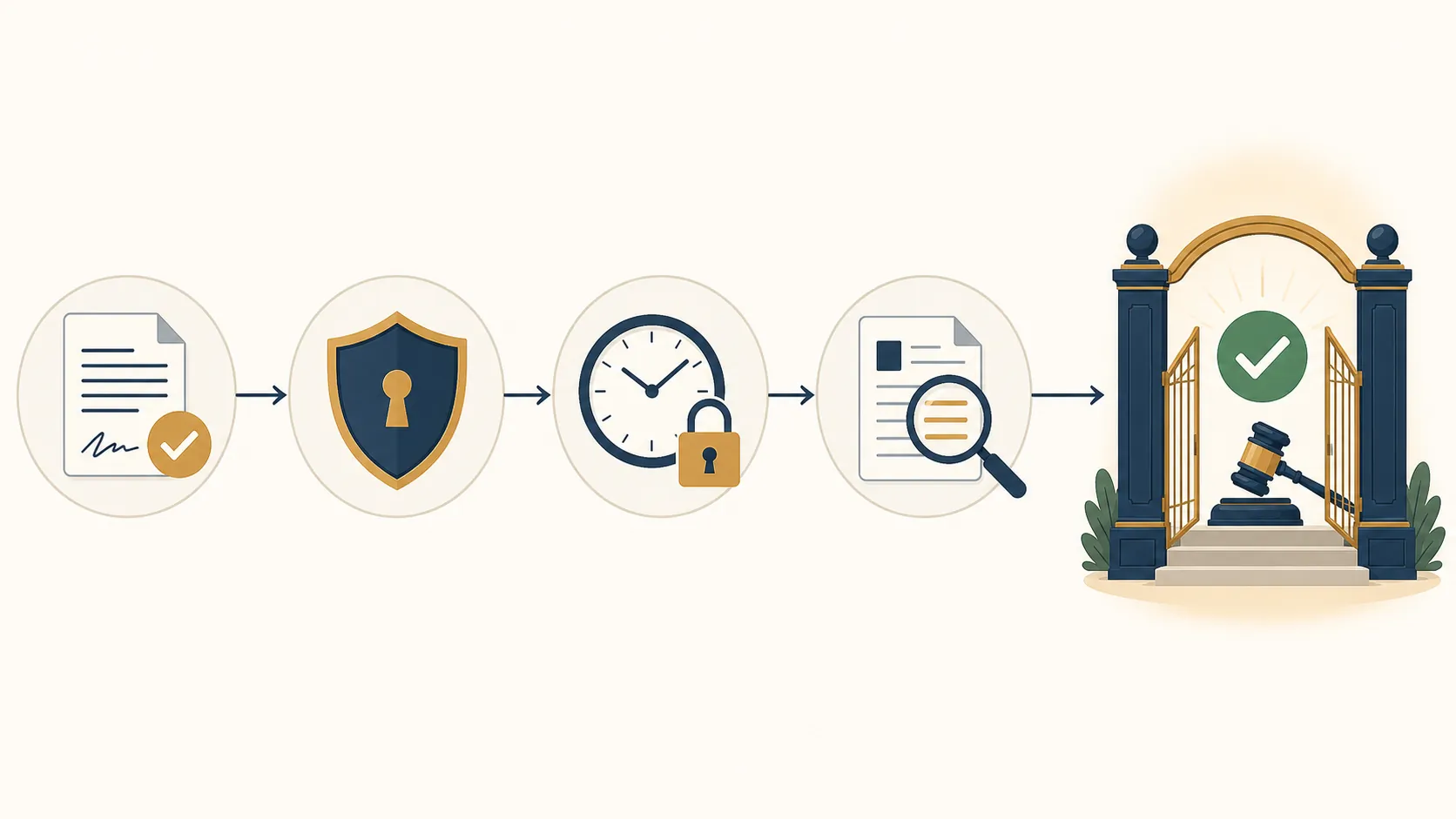
Use Cases That Can Fit, and the One That Should Not
The strongest legal use cases for Grok Voice Think Fast 2.0 are voice capture and workflow acceleration, not legal authority. Dictation, first-pass intake triage, internal meeting capture, issue spotting for later review, and hands-free task routing are plausible candidates if the firm treats the AI output as a draft record. A related voice-assistant AI risk assessment for lawyers belongs in the same procurement file because the operational failure modes are similar: a convenient interface can blur the line between capture, suggestion, and reliance.
A safer intake workflow, for example, would keep the voice model in a constrained role. The client is notified before recording. The matter team confirms whether privileged or unusually sensitive facts should be excluded from the tool. The transcript is checked against the audio. Any summary is labeled draft until reviewed. No deadline, advice, filing position, or citation moves forward merely because the voice model placed it in a clean paragraph.
Meeting capture can fit the same pattern. A partner may want a quick outline of action items after a strategy call. That is a legitimate productivity use. But the reviewed record should distinguish speaker statements from AI inference: the client said X; outside counsel recommended Y; the AI inferred Z. If the tool cannot preserve that distinction reliably, the summary should not become the matter record.
The use case that does not fit the current evidence is legal research authority. Nothing in xAI's launch benchmark establishes that Grok Voice Think Fast 2.0 can find controlling law, characterize precedent, or generate citation-safe text for a brief. Fast speech output can make an answer feel settled before anyone has done the slower work that makes it usable in court.
The Independent Legal-AI Record Points in a Different Direction
The independent legal-AI record does not test Grok Voice Think Fast 2.0 directly, so it cannot be used to say that this voice model hallucinated at any particular rate. It can, however, answer a narrower and more important deployment question: whether frontier-model output should be treated as citation-safe without review. The answer is no.
Haqq's June 2026 legal benchmark tested 3,000 legal answers and found that 24% cited or applied law that did not support the claim. The same report included a Grok 4.3 example involving a mischaracterization of CBS v. Ziff-Davis, but that is evidence about Grok 4.3 in a legal-answer benchmark, not evidence about Grok Voice Think Fast 2.0's speech layer.[6]
Stanford RegLab research, as covered by the Thomson Reuters Institute, reported hallucination rates of about one in three for Westlaw AI-Assisted Research and more than one in six for Lexis+ AI in the evaluated tasks.[7] Those are legal-market tools with legal content and legal retrieval systems, which makes the lesson uncomfortable but useful: even legal-specialized systems require verification.
Vals AI's VLAIR benchmark, as covered by LawNext, reported authoritativeness scores of 70% for generalist AI and 76% for legal AI, with multi-jurisdiction tasks dropping by roughly 11 points.[8] That coverage should not be overread as a final measurement for Grok Voice. It does reinforce the same procurement point: benchmarks need to be matched to the task the firm actually plans to delegate.
This is where a prior benchmark-methodology evaluation is a useful comparison point: benchmark scores become a procurement and filing risk judgment only when the tested task resembles the lawyer's use case, the source materials are known, and the firm can describe what human review remains before filing or advice.
Sanctions Cases Make Speed Look Different
The sanctions record is not a Grok Voice record. It is a record of what happens when lawyers let AI-generated legal material reach an adversary, a court, or a client without the verification that professional responsibility already requires.
The AI Hallucination Cases Database records sanctions and discipline examples including Ledoux v. Outliers, with a $3,000 sanction; In re Rosslyn, with $29,877; and Kaur v. Desso, with a $1,000 sanction plus a CLE requirement.[9] LawNext also covered Noland v. Land of the Free, in which the court imposed a $10,000 sanction and addressed 21 fabricated quotations out of 23, including the wrinkle that lawyers may be faulted for failing to detect fake material served by an opponent.[10]
Those cases do not mean every AI voice transcript is dangerous. They mean the filing consequence is predictable when AI output is treated as if fluency were proof. A tool-call system that can retrieve, summarize, schedule, or update records during the first spoken sentence deserves stricter gates, not looser ones, because the mistaken output may travel farther before a lawyer reads it.
For firms building a verification layer, the relevant internal resources are not inspirational AI policies. They are checkable workflows: who compares the transcript to the audio, who checks citations in primary law, who approves matter-record summaries, who reviews privileged content before vendor submission, and who signs off before anything leaves the firm. That is the point of both sanctions escalation and the non-delegable verification duty and AI verification workflow SOPs.
A Deployment Threshold for Grok Voice Think Fast 2.0
A firm can pilot Grok Voice Think Fast 2.0 for low-risk legal voice workflows only if it can answer a few concrete questions before the first real client matter enters the system.
- Consent: Is the client notified, and does the file show informed consent for AI recording, transcription, or summarization?
- Scope: Is the model limited to capture, triage, or drafting support rather than legal authority or citation generation?
- Confidentiality: Are retention, deletion, ZDR availability, access controls, and vendor data handling approved for the matter type?
- Transcript review: Who compares the transcript and summary against the audio before reliance?
- Citation review: If any legal proposition appears, who verifies it in primary authority before advice, filing, or client delivery?
- Change control: Does the firm know when a floating model alias, pricing term, or retention setting changes?
If those controls exist, the model's speed and speech quality can have real value. Lawyers dictate while moving between meetings. Intake staff get a quicker first pass. A litigation team receives a rough meeting outline before memories cool. None of those benefits requires pretending the voice model is a legal researcher.
If those controls do not exist, the same launch strengths become risk multipliers. Low latency makes the system easier to trust conversationally. Better speech quality makes the draft look cleaner. Faster transcription makes the unreviewed record arrive sooner. Tool calls can move an error into another system before anyone has paused to check the premise.
Grok Voice Think Fast 2.0 can be trusted for legal work only in that narrower sense: as a fast voice-capture and drafting aid inside a consented, confidential, independently reviewed workflow. It should not be trusted as a legal research authority, citation source, or filing-ready summarizer merely because it speaks quickly.
References
- Introducing Grok Voice Think Fast 2.0, xAI, July 29, 2026
- Voice, xAI Docs
- Security, xAI Docs
- Release Notes, xAI Docs
- Formal Opinion 2025-6: Ethical Issues Affecting Use of AI to Record, Transcribe and Summarize Conversations with Clients, New York City Bar Association, December 22, 2025
- Best AI for Legal Work Benchmark, Haqq, June 2026
- GenAI hallucinations: Legal research tools still need human oversight, Thomson Reuters Institute
- Vals AI's Latest Benchmark Finds Legal and General AI Now Outperform Lawyers in Legal Research Accuracy, LawNext, October 2025
- AI Hallucination Cases Database, Damien Charlotin
- A New Wrinkle in AI Hallucination Cases: Lawyers Dinged for Failing to Detect Opponent's Fake Citations, LawNext, September 2025
Chronological incident history
No sanction cases have named this tool in the tracked record set to date. This does not imply the tool is safe — see Risk Digest for ongoing monitoring.
← Compare peer toolsReport a correction or tip
Spotted an outdated figure, a misstated fact, or a ruling this tool profile should reflect? Public comments are disabled for this content given the professional cost of a misreported case outcome, penalty amount, or rule text — use the structured correction channel instead.
Report a correction or tip for this record →