
Your ICE airport rights depend on the legal regime
Airport stops now follow one of two legal tracks — CBP admissibility inspection or ICE enforcement arrest — each with different rights, limits, and remedies. This verified record separates the two regimes, flags enforcement figures as confirmed or reported, and maps source-backed steps for before, during, and after detention.
- Applicable role
- Immigration attorneys and pro se travelers
- Workflow stage
- Pre-filing
- Primary source
- 8 U.S.C. 1225; INA 287(a)(2), INA 236(a)
Category: verification-workflows. Last verified: Aug. 26, 2026. Legal-background review: editorial immigration-law review completed for this record. This article is general legal information, not legal advice for any traveler’s case.
When someone says “ICE detained him at the airport,” the first useful question is not whether the airport was frightening. It usually was. The useful question is procedural: was the traveler in CBP admissibility inspection after arriving from abroad, or was this an ICE enforcement arrest connected to airport travel, including a domestic flight? Those two tracks carry different authorities, rights limits, timelines, and remedies.

That distinction is now harder to dismiss as lawyerly housekeeping. NILC’s July 2026 community alert says TSA sends ICE lists of people flying through U.S. airports several times a week, including names, photos, and other details; NILC also notes that because TSA and ICE are both inside DHS, Privacy Act sharing restrictions do not apply in the same way they would between separate agencies. The same alert ties the current risk environment to a New York Times report from Dec. 12, 2025. [1]
So the phrase “ICE detained at the airport” has a built-in trap. A traveler in CBP inspection at an international arrival is not in the same legal posture as a person arrested by ICE after a TSA data tip or at a domestic airport gate. A family member who mislabels the track may call the wrong office, expect the wrong hearing, or miss the narrow window for preserving the right record.
The two airport regimes
| Question to answer first | CBP admissibility inspection | ICE enforcement arrest |
|---|---|---|
| Where does it usually start? | International arrival, pre-admission, port-of-entry inspection. | Airport enforcement action, including domestic-flight contexts now reported in 2025–2026. |
| Which agency is driving the encounter? | CBP decides inspection, admissibility, secondary inspection, device search, withdrawal, parole, or expedited-removal processing. | ICE initiates an arrest or detention under immigration enforcement authority. |
| Core legal frame | Admission and expedited-removal rules, including 8 U.S.C. 1225 and related port-of-entry procedures. | INA 287(a)(2) arrest authority and INA 236(a) detention authority, as discussed in the 2026 domestic-airport enforcement analysis by Cyrus D. Mehta and Kaitlyn Box. [2] |
| Rights posture | Rights are reduced at the border. Judicial review may be sharply limited, especially in expedited removal. | The person is in enforcement custody. Bond, custody review, immigration-court process, habeas, and counsel access questions become central, depending on the person’s status and charge. |
| Most important family task | Identify whether the traveler is still with CBP, whether any papers were signed, and whether expedited removal, withdrawal, parole, or deferred inspection was used. | Identify the arresting agency, detention location, A-number, charging document, bond decision, and deadline-sensitive custody remedies. |
CBP inspection is not merely “ICE at the airport” with a different badge. CBP’s job at the port of entry is to inspect applicants for admission. That is why the most damaging paper in an international-arrival case may be a sworn statement, an expedited-removal order, a withdrawal form, or an I-407 for a lawful permanent resident. The traveler may have very limited practical leverage while still in the inspection stream.
Expedited removal is the clearest example of the reduced-rights side of the map. The American Immigration Council explains that expedited removal allows immigration officers to order certain noncitizens removed without a hearing before an immigration judge, with narrow exceptions and limited review. [3] That is a different legal universe from a post-arrest bond strategy.
ICE enforcement arrest starts from a different premise. Cyrus D. Mehta and Kaitlyn Box describe the domestic-airport arrests as resting on INA 287(a)(2), which permits warrantless arrest in specified immigration circumstances, and INA 236(a), which governs detention pending a removal decision. [2] Once that is the track, the immediate questions shift: where is the person booked, what document charges removability, whether a bond determination has been made, and whether a habeas or emergency custody filing is realistic.
The companion article What Are Your Rights During ICE Detention at US Airports in 2026? gives the step-by-step airport checklist. This record does something narrower: it classifies the legal regime first, because the checklist is only useful after the agency and posture are correct.
Read the airport arrest numbers by source, not by headline
The 2025–2026 record contains several airport-enforcement numbers that sound similar and count different things. They should not be merged into one total. Some figures come from official CBP statistics. Some come from FOIA-linked datasets. Some are reported from internal records that need rechecking against the original document before republication.

| Record | What it counts | Status as of Aug. 26, 2026 | Why it matters |
|---|---|---|---|
| TSA passenger-list sharing with ICE several times a week | Lists of people flying through U.S. airports, including names, photos, and details, as described by NILC based on the current disclosure record. | Confirmed through NILC’s July 29, 2026 alert, citing the Dec. 12, 2025 New York Times report. [1] | Shows why domestic airport travel can become an immigration-enforcement contact even before a traveler reaches the gate. |
| May 2025 TSA-ICE memorandum of agreement | A previously undisclosed TSA-ICE data-sharing agreement released after litigation and FOIA pressure. | Confirmed as released July 28, 2026 by American Oversight. [4] | Supplies the documentary basis for treating data-sharing as part of the airport-risk environment, not just anecdote. |
| More than 31,000 traveler records shared and more than 800 ICE arrests following TSA tips | A reported internal-document count, attributed to Reuters reporting from Apr. 7, 2026 and summarized by later sources. | Reported, not independently confirmed here; cited through WBAL and American Oversight summaries. [4][5] | Useful for risk framing, but not interchangeable with FOIA airport-arrest counts. |
| 568 airport-linked ICE arrests from Jan. 20, 2025 to Mar. 10, 2026 | WBAL and the Deportation Data Project’s FOIA-linked airport-arrest dataset across 16 airports. | Confirmed as a published dataset/reporting claim with stated caveats; 108 arrests in the comparable prior period; O’Hare had 220 mentions versus 5 in the earlier comparison. [5] | Stronger than a rumor, but still limited by dataset scope, airport coverage, and baseline caveats. |
| CBP FY2025 secondary inspection and device-search figures | CBP processed more than 419 million travelers, referred 11,612,366 travelers, or 3%, to secondary inspection, and conducted 55,318 device searches, less than 0.01% of arrivals; 92% were basic manual searches. | Official CBP statistics, last modified Aug. 4, 2026. [6] | These numbers describe CBP border inspection and device searches, not ICE domestic-airport arrests. |
| Belmonte Cardozo border-device-search update | Fourth Circuit treatment of manual phone searches at the border as routine and permissible without warrant or individualized suspicion; forensic searches still require suspicion under Kolsuz, and domestic-investigation searches require a warrant under Aigbekaen. | Reported by EFF in July 2026 after the Fourth Circuit’s July 13, 2026 decision. [7] | Keeps phone-search advice tied to the border-search doctrine rather than general Fourth Amendment assumptions. |
The denominator matters. CBP’s device-search count sits against hundreds of millions of processed travelers and belongs to the border-search context. [6] The 568 figure belongs to a FOIA-linked airport-arrest dataset with named limits. [5] The 800-plus figure is a reported TSA-tip arrest count routed through secondary reporting. [4][5] Treating all three as the same kind of number makes the public record less usable for attorneys and less safe for travelers.
The same caution applies to claims that enforcement expanded beyond people with final removal orders. The Immigration Policy Tracking Project summarized New York Times reporting that ICE arrests at airports included foreign citizens with visa overstays and pending-status contexts, and described activity across at least 15 airports; Mehta and Box likewise discuss arrests of people authorized to remain or with active applications. Those are important reported developments, but the airport, person, status, and charging document still have to be verified case by case. [2][8]
For a narrower claims ledger, use the site’s confirmed-vs-reported ICE airport detention record. For the passenger-list and screening architecture from the data-systems angle, use What AI knows before an ICE airport arrest.
Before travel: prepare for classification, not comfort
Pre-travel preparation should make the first classification easy for the person outside the airport. A traveler may be unable to explain the difference between secondary inspection, ICE custody, deferred inspection, parole, or transfer while sitting in a small room with a dying phone. The outside contact needs enough information to reconstruct the track.
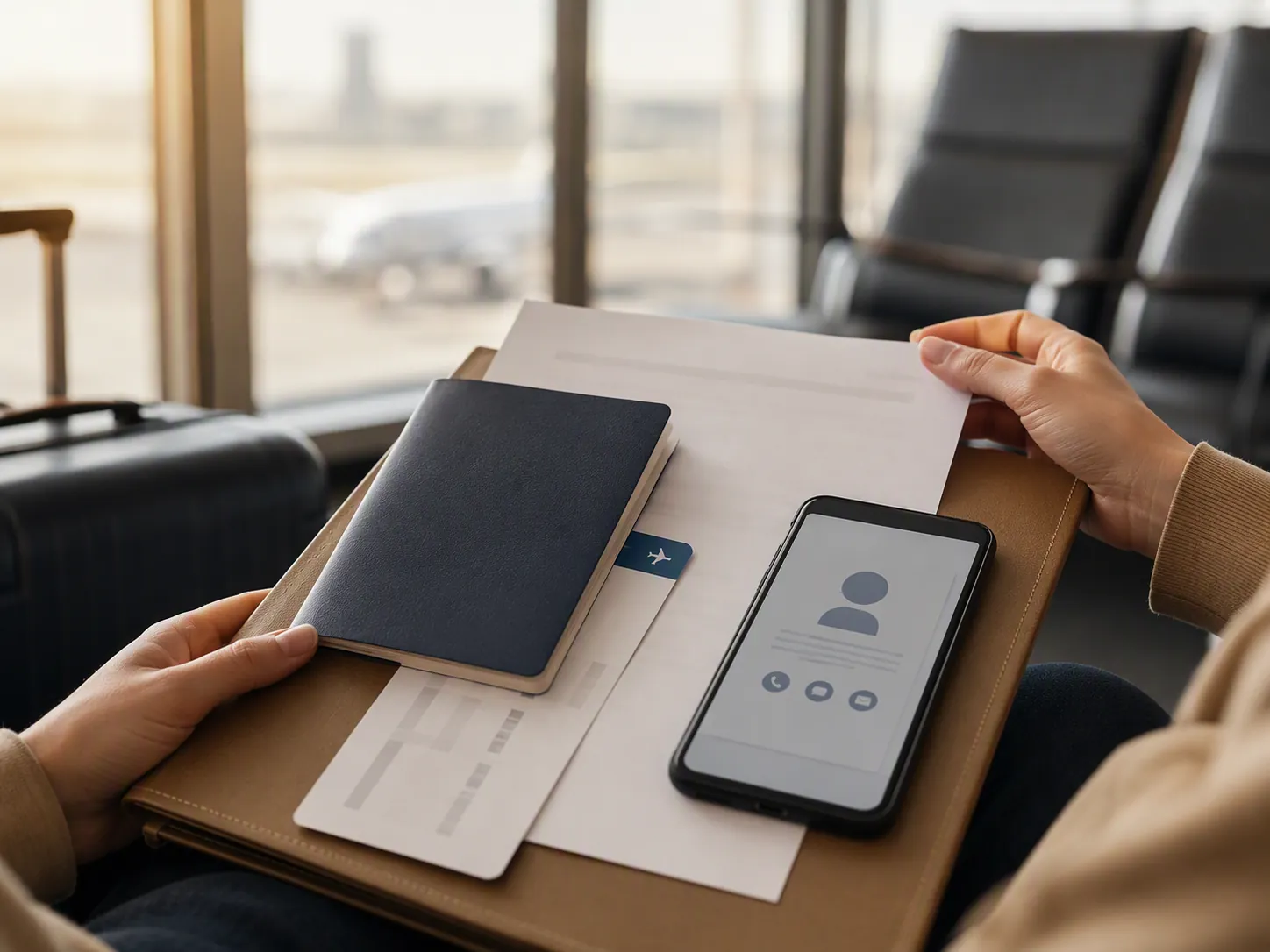
- Carry counsel and emergency-contact information on paper, not only in a locked phone.
- Leave a copy of the itinerary, passport biographic page, visa, green card, work authorization, parole document, approval notice, receipt notice, court notice, and any prior removal-order documents with a trusted contact.
- Write down the most likely risk branch before travel: international arrival inspection, domestic airport ICE arrest risk, expired visa, pending adjustment, advance parole, TPS, DACA, LPR returning from travel, or prior immigration contact.
- Tell the outside contact what to ask in the first call: Which agency? Which airport? International arrival or domestic flight? Was a form signed? Was there a receipt, A-number, booking number, bond amount, or detention facility name?
- Do not rely on status alone as the safety plan. The current disclosure record supports a real TSA-to-ICE data-sharing risk, including for people who believed their pending application or current authorization made travel routine. [1][2][4]
Travelers with expired visas or overstays need more specific screening than this record can responsibly compress into one paragraph. Use the site’s expired-visa airport arrest deep dive before deciding whether domestic or international airport travel is tolerable.
During the encounter: preserve the agency trail
At the airport, the traveler’s useful statements are simple because the legal classification work will happen afterward. Ask which agency is stopping you. Ask whether you are free to leave. Ask to speak with a lawyer. Do not sign a form you do not understand. Do not guess about old travel dates, entries, addresses, employment, criminal history, or immigration filings. If officers take a phone or search it, remember whether this happened at the border-inspection stage or after an enforcement arrest.
The device-search distinction is not cosmetic. CBP reports that in FY2025, 92% of its device searches were basic manual searches, while advanced searches require reasonable suspicion and senior-manager approval under CBP policy. [6] EFF’s July 2026 analysis of U.S. v. Belmonte Cardozo says the Fourth Circuit treated a manual, by-hand phone search at the border as routine and allowed without a warrant or individualized suspicion, while forensic searches and domestic-investigation searches remain governed by different rules. [7]
That does not mean a traveler should argue doctrine with an officer in secondary inspection. It means the record should not later say only “they searched his phone.” The useful record says who searched it, when, whether it was manual or forensic if known, whether the traveler was seeking admission, and whether the questioning concerned admissibility or a domestic investigation.
Do not paste AI-drafted rights scripts into a traveler’s notes and assume that solves the problem. If a script is wrong about the border/enforcement distinction, it can make the traveler sound more confident while making the record worse. The site’s ICE know-your-rights sanction-risk note explains why generated legal language needs human review before anyone relies on it.
The LPR branch: I-407 is not a casual airport form
Lawful permanent residents need a separate warning because an airport officer may present Form I-407, Record of Abandonment of Lawful Permanent Resident Status. NILC’s July 2026 green-card-holder guidance warns that CBP may pressure an LPR to sign abandonment papers, but only an immigration judge can revoke permanent residence. The same guidance says ICE must make a bond determination within 48 hours and that the detainee can seek a bond hearing and habeas relief. [9]
Signing an I-407 is different from losing status after the government proves abandonment or removability before an immigration judge. The practical advice is therefore blunt: an LPR who does not intend to abandon residence should not sign an I-407 merely to end the airport encounter faster. The outside contact should ask whether any abandonment paper was offered, signed, refused, or withheld.
If the person has been transferred from CBP inspection into ICE custody, the next file is no longer just an airport-inspection file. It is a detention file. Bond timing, custody classification, immigration-court jurisdiction, and habeas feasibility become live questions. For the broader post-detention remedies layer, use the site’s ICE detention without warrant remedies record.
After detention: build the chronology before choosing the remedy
The first post-detention document should be a chronology, not a grievance letter. It should start with the flight type and airport, then list every known agency contact in order: TSA screening or gate contact, CBP secondary inspection, ICE arrest, local law-enforcement involvement if any, transfer, detention facility, bond decision, and court notice.
| If the record shows | Likely next record to obtain | Why |
|---|---|---|
| International arrival, CBP secondary inspection, no ICE booking information | CBP paperwork, sworn statement, expedited-removal paperwork, withdrawal document, parole or deferred-inspection notice, device-search receipt if any. | The remedy analysis depends on admissibility processing and border-inspection limits. |
| ICE agents arrested the traveler at or after domestic airport screening | A-number, I-213 if available through counsel, Notice to Appear, custody determination, detention-facility location, bond amount or no-bond reason. | The next move is usually custody and removal-defense triage, not port-of-entry inspection review. |
| LPR was asked to sign abandonment | Copy of I-407 if signed or offered, CBP notes if obtainable, entry history, proof of U.S. residence ties, counsel notes on whether the traveler intended abandonment. | The legal issue may be abandonment pressure rather than ordinary admission refusal. |
| Phone or laptop was searched | Agency identity, search timing, whether at border or after arrest, whether manual or forensic if known, receipt or notice, questions asked during the search. | Border-search doctrine and domestic-investigation doctrine are not the same. |
A public case can be useful as a timeline exercise without turning it into the whole story. In March 2025, The Guardian reported that Rasha Alawieh, a Brown University kidney-transplant specialist, was deported to Lebanon after being stopped at Boston Logan Airport; the report described a court order and a dispute over whether officials complied with it. [10] The point here is not to generalize from one case. It is to show why the agency sequence, legal posture, and remedy posture must be separated before anyone tells a family what can happen next.
The same discipline applies to shorter local reports. NBC Boston reported in July 2026 that ICE arrested two people at Logan Airport in targeted operations. [11] That kind of report may confirm that an airport enforcement action occurred, but it rarely supplies the full legal posture. Counsel still needs the charging basis, custody location, and whether the arrest followed TSA data sharing, another database hit, an outstanding order, or a separate investigation.
What this record supports
The verified record supports a limited but important conclusion. Airport rights in 2026 depend first on whether the traveler is in CBP admissibility inspection or ICE enforcement custody. The border track carries diminished rights and sharply different review paths. The ICE enforcement track raises arrest authority, custody, bond, and habeas questions. TSA-to-ICE data sharing means airport travel can expose even authorized or pending-application travelers to enforcement attention. [1][2][4]
The most dependable protection is therefore not confidence that a single document or status label will prevent detention. It is preparation that lets the traveler and outside contact identify the agency, preserve the documents, avoid harmful signatures, and move quickly to the right remedy record once the legal regime is known.
References
- Community Alert: Immigration Arrests at Airports, NILC, Jul. 29, 2026.
- ICE Targets Noncitizens at Domestic Airports Even When They Are Authorized to Remain, Cyrus D. Mehta & Kaitlyn Box, Aug. 2, 2026.
- Expedited Removal, American Immigration Council.
- Previously Undisclosed TSA-ICE Agreement Reveals How DHS Turned Routine Airport Screening into Immigration Enforcement, American Oversight, Jul. 28, 2026.
- Data: ICE arrests at airports jump more than 5-fold under Trump, WBAL / Deportation Data Project, Jul. 31, 2026.
- Border Search of Electronic Devices, U.S. Customs and Border Protection, last modified Aug. 4, 2026.
- Fourth Circuit Says Border Agents Can Search Your Phone By Hand, No Suspicion Required, Electronic Frontier Foundation, Jul. 2026.
- Reported ICE Arrests Foreign Citizens with Visa Overstays at Airports, Immigration Policy Tracking Project, Jul. 28, 2026.
- Green Card Holders: Know Your Rights & Risks During the Second Trump Administration, NILC, Jul. 8, 2026.
- Brown University doctor deported to Lebanon despite judge’s order, The Guardian, Mar. 17, 2025.
- ICE arrests 2 in targeted operations at Boston Logan Airport, NBC Boston, Jul. 17, 2026.
Grounded in
This procedure is grounded in 8 U.S.C. 1225; INA 287(a)(2), INA 236(a), independent of any single documented case. See the Regulation tracker for the governing text.
Cases this step would have prevented
No cases have been explicitly linked to this checklist yet. See Risk Digest for documented incidents generally.
← Back to WorkflowsReport a correction or tip
Spotted an outdated figure, a misstated fact, or a ruling this workflow checklist should reflect? Public comments are disabled for this content given the professional cost of a misreported case outcome, penalty amount, or rule text — use the structured correction channel instead.
Report a correction or tip for this record →