
ChatGPT for Legal Work: The Complete Ethics and Risk Framework for Attorneys in 2026
A single authoritative reference for practicing attorneys, in-house counsel, and legal ops leaders on the complete ethics and risk framework for using ChatGPT in 2026. Covers the current legal status across 35+ state bar guidances, the six ethical pillars from the ABA Model Rules, a sanctions escalation timeline, a practical Prompt→Verify→Audit workflow, and a ready-to-use firm policy template.
Executive Summary: The State of ChatGPT in Legal Practice (2026)
By mid-2026, the question is no longer whether attorneys can use ChatGPT in their practice — it is how they can do so without violating their ethical duties. The answer, distilled from more than 35 state bar guidances and two landmark ABA opinions, is straightforward: ChatGPT is not prohibited, but every existing ethical rule applies to its use with full force. The tool is a nonlawyer assistant under Model Rule 5.3, not a replacement for professional judgment.
The urgency of getting this right is underscored by adoption data. According to the Clio Legal Trends Report, 79% of legal professionals have used AI tools, yet 44% of firms still lack formal AI governance policies. That gap between usage and governance is where sanctions, malpractice exposure, and privilege waivers live.
The core thesis is simple: the real risk is not the tool itself but the failure to implement verification workflows, data safeguards, and firm policies. Every state bar that has addressed the question — from Florida Opinion 24-1 to Texas Opinion 705 to the ABA Formal Opinion 512 — has converged on the same principles: competence requires understanding the technology, confidentiality requires protecting client data, supervision requires verifying outputs, and candor requires disclosing AI use where courts mandate it.
This framework is designed for practicing attorneys, in-house counsel, managing partners, and legal ops leaders who need a single authoritative reference. It does not duplicate the site's existing glossary entries on AI hallucination or ABA Model Rule 1.1, nor the consumer-focused Free AI Lawyer workflow guide. Instead, it synthesizes those resources into an operational ethics framework for the professional reader.
The Six Ethical Pillars: How ABA Model Rules Apply to ChatGPT
ABA Formal Opinion 512, issued in 2024, provides the foundational framework for evaluating generative AI under the Model Rules. It does not create new duties — it maps existing ones onto a new technology. Six rules form the core of that mapping, and every attorney using ChatGPT should understand how each one applies.
| Model Rule | Core Requirement | ChatGPT-Specific Risk |
|---|---|---|
| 1.1 Competence | Maintain the legal knowledge, skill, thoroughness, and preparation reasonably necessary for the representation. | Failure to understand how ChatGPT generates outputs — including its tendency to hallucinate — violates the duty of technological competence. |
| 1.6 Confidentiality | Make reasonable efforts to prevent the inadvertent or unauthorized disclosure of information relating to client representation. | Inputting client confidential information into consumer ChatGPT may expose data to model training, third-party access, or breach of confidentiality. |
| 1.4 Communication | Keep the client reasonably informed about the status of the matter and promptly comply with reasonable requests for information. | Using AI without client knowledge or consent may violate the duty to communicate material developments in the representation. |
| 1.5 Fees | Charge reasonable fees and expenses; disclose the basis of fees in writing. | Billing for time "saved" by AI without disclosure, or passing AI subscription costs to clients without agreement, violates fee transparency requirements. |
| 3.1, 3.3, 8.4 Candor Toward the Tribunal | Do not bring frivolous claims; do not knowingly make false statements to the court; do not engage in conduct involving dishonesty. | Submitting AI-generated citations without verification — even if the attorney did not know they were fabricated — risks sanctions and bar discipline. |
| 5.1, 5.3 Supervision | Ensure that all lawyers and nonlawyer assistants in the firm comply with ethical obligations. | AI is classified as a nonlawyer assistant; attorneys must supervise its use, verify its outputs, and train staff on appropriate use. |
Texas Opinion 705, issued in February 2025, provides one of the most detailed state-level analyses of how these rules interact. It explicitly classifies AI outputs under a lawyer's supervisory duties akin to nonlawyer assistants under Texas Rule 5.03, and it establishes a four-item reasonable precautions framework for protecting client confidential information: (1) acquire a general understanding of how the technology works, (2) review and potentially renegotiate terms of service, (3) learn about data-security protections, and (4) train lawyers and staff on appropriate use.
Florida Opinion 24-1 and ABA Formal Opinion 512 both classify AI tools as nonlawyer assistants under Model Rule 5.3. This classification has a concrete operational consequence: the attorney must verify the AI's work with the same diligence required when delegating to a paralegal or junior associate. The supervising attorney cannot delegate the duty of verification, and ignorance of the AI's limitations is not a defense.
Key Risk Zones: The Sanctions Escalation Timeline (2023–2026)
The most visible consequence of failing to implement the ethical framework above is court sanctions. Between 2023 and 2025, sanctions for AI-generated fabricated citations escalated from $5,000 to over $100,000, and the most recent case added disqualification of counsel and bar referrals. This timeline is essential reading for any attorney who uses ChatGPT for legal research or drafting.
| Case | Court | Year | Sanction | Key Holding |
|---|---|---|---|---|
| Mata v. Avianca | S.D.N.Y. | 2023 | $5,000 | First major AI hallucination sanctions case; attorneys submitted brief with fabricated citations generated by ChatGPT. |
| Lacey v. State Farm | C.D. Cal. | 2025 | $31,100 | Court imposed sanctions after filings contained AI-generated citations; amount reflected the cost of opposing counsel's response. |
| Johnson v. Dunn | N.D. Ala. | 2025 | Disqualification + bar referrals | Court disqualified offending attorneys and ordered the opinion sent to bar regulators in every state where the attorneys were licensed. The court held monetary sanctions ineffective. |
| Couvrette v. Wisnovsky | D. Or. | 2025 | $110,000 | Filings contained 15 nonexistent cases and 8 fabricated quotations; the largest AI-related sanctions award to date. |
The Johnson v. Dunn case is particularly instructive for law firm leaders. The court disqualified counsel even though the firm had adopted proactive AI policies — including an email warning and a rule forbidding use without permission. The hallucinated citation was inserted by a practice group co-leader. The court declined to accept as an excuse that the error was made by a supervisor or that the citation supported a factually accurate statement. The opinion suggests that Rule 11 does not cover discovery disputes, and the ethical duty of candor is implicated only by knowingly false statements — but the court found the conduct sanctionable nonetheless.
The trajectory is clear: courts are losing patience with AI-generated errors, and sanctions are escalating rapidly. The $5,000 penalty in Mata (2023) was a warning. The $110,000 award in Couvrette (2025) is a signal that the cost of failing to verify AI outputs now exceeds the cost of implementing a proper verification workflow by orders of magnitude.
Approved vs. Prohibited Use Cases: What the ABA and State Bars Say
The ABA's Law Technology Today article (2026) provides a practical checklist for evaluating any proposed use of ChatGPT: Is the platform enterprise-grade and compliant with firm policies? Have you removed all confidential information? Will you independently review all content? Is disclosure required by court order or client agreement? These four questions effectively separate approved from prohibited use cases.
Generally Approved Use Cases (With Verification)
- Drafting initial versions of internal memos, correspondence, and routine documents — provided all citations and legal reasoning are independently verified.
- Summarizing publicly available court opinions, statutes, and regulations — but not confidential client documents unless using an enterprise-grade tool with contractual data protections.
- Brainstorming legal arguments, counterarguments, and case strategy — as a thought partner, not as a source of legal authority.
- Improving client communication — drafting plain-language explanations of legal concepts, translating legalese into accessible language.
- Organizing information — creating chronologies, extracting key dates from document sets, generating meeting agendas.
Prohibited or High-Risk Use Cases
- Legal research without independent verification — ChatGPT cannot Shepardize or KeyCite, and it may generate plausible but nonexistent citations. This is the single most common source of sanctions.
- Inputting client confidential information into consumer ChatGPT — data entered into the free or consumer tier may be used for model training and is not protected by attorney-client privilege.
- Billing for AI-saved time without disclosure — Texas Opinion 705 explicitly states that lawyers cannot charge hourly fees for time "saved" by using generative AI. Per-use fees may be passable as expenses if the client accepts the arrangement.
- Using AI as a black box — treating AI outputs as authoritative without understanding how the model generates them or what its known failure modes are.
- Failing to disclose AI use where required — an increasing number of courts have issued standing orders requiring disclosure of generative AI use in filings.
The Prompt → Verify → Audit Workflow: A Practical Framework
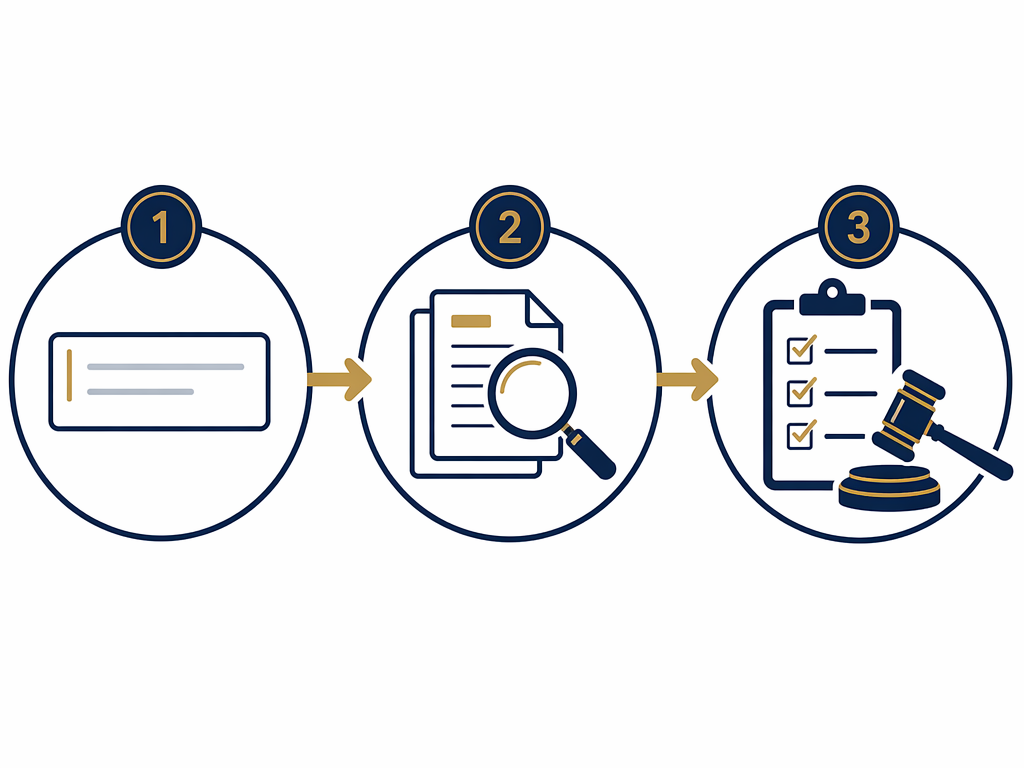
The Prompt → Verify → Audit framework, developed by GC AI's Level 110 class and cited in their May 2026 ethics article, provides a structured approach to using ChatGPT safely. Every use of generative AI in legal practice should follow these three steps.
Step 1: Prompt
Craft clear, specific prompts that define the task, the jurisdiction, the relevant legal standards, and the desired output format. Never input client confidential information into consumer ChatGPT. Use anonymized or hypothetical facts. If using an enterprise-grade tool with contractual data protections, confirm the data handling terms before inputting any client information.
- Specify the jurisdiction and court — "under California law" or "under the Federal Rules of Civil Procedure" reduces ambiguity.
- Define the task precisely — "draft a motion for summary judgment" is too broad; "draft the legal standard section of a motion for summary judgment under Rule 56(a)" is better.
- Request citations with verification instructions — "provide citations to published opinions only, and note that I will independently verify each one."
- Set output format expectations — "provide the response in bullet points with the legal rule stated first, followed by the application."
Step 2: Verify
This is the non-delegable step. Every citation, legal proposition, and factual statement generated by ChatGPT must be independently verified using primary legal research tools. ChatGPT cannot Shepardize or KeyCite. It cannot distinguish between a published opinion and a draft. It cannot tell you whether a case has been overruled.
- Verify every citation — check the case name, citation, court, year, and holding against Westlaw, Lexis, or a free alternative like Google Scholar or CourtListener.
- Verify every legal proposition — confirm that the rule stated by ChatGPT is actually the rule in the relevant jurisdiction.
- Verify every factual statement — ChatGPT may fabricate dates, names, and statistics with high confidence.
- Check for overruled or superseded authority — a case that exists may no longer be good law.
Step 3: Audit
Document the AI use, the verification steps taken, and the final human approval. This audit trail serves multiple purposes: it demonstrates compliance with the duty of supervision, it provides evidence of reasonable efforts in the event of a dispute, and it supports billing transparency.
- Record the date, tool, and prompt used — a simple log entry in the matter management system.
- Document the verification steps — which citations were checked, which legal propositions were confirmed, and by whom.
- Record the final human approval — the supervising attorney's sign-off on the AI-assisted work product.
- If disclosure is required by court order or client agreement, document that disclosure was made and the client's or court's response.
Firm Policy Template: A Traffic-Light System for AI Governance
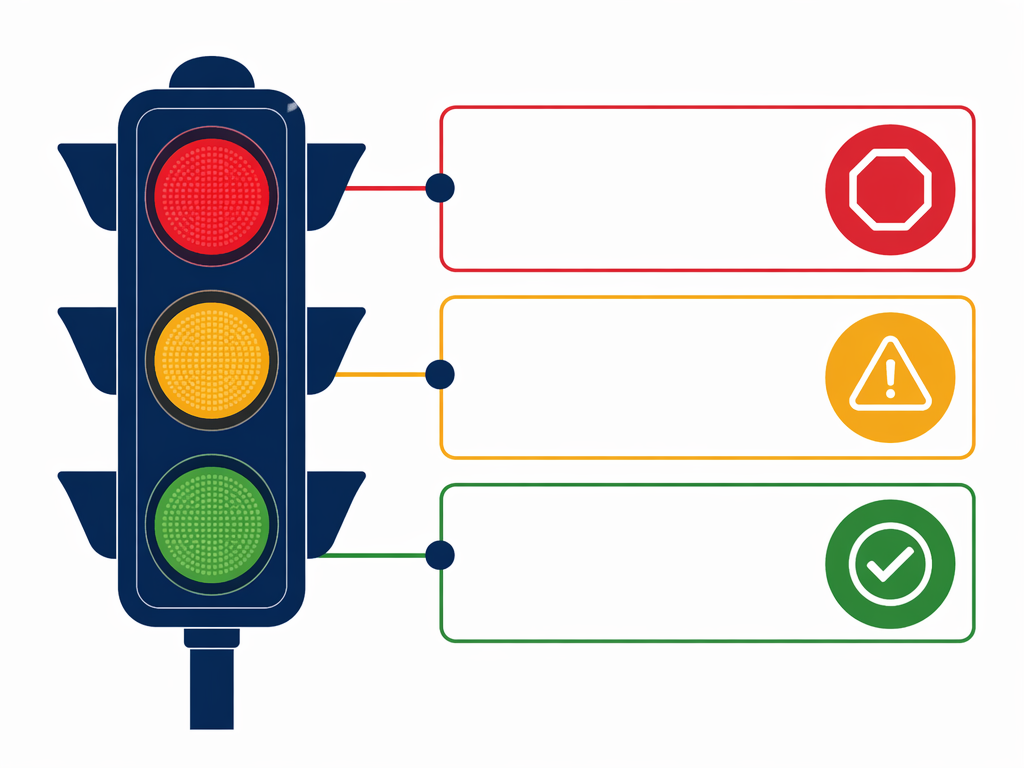
The traffic-light policy template, adapted from the GC AI framework and consistent with the guidance in ABA Formal Opinion 512 and Texas Opinion 705, provides a ready-to-use structure that firms can adapt to their specific practice areas, jurisdiction, and risk tolerance. The policy should be reviewed by the firm's ethics counsel and updated at least quarterly given the pace of regulatory change.
| Zone | Definition | Examples | Requirements |
|---|---|---|---|
| Red (Prohibited) | Use cases that carry unacceptable risk of ethical violation, privilege waiver, or sanctions. | Inputting client confidential data into consumer ChatGPT; using AI-generated citations without verification; billing for AI-saved time without disclosure. | Zero tolerance. Violations trigger mandatory reporting to firm ethics committee and potential self-reporting to bar counsel. |
| Yellow (Requires Approval) | Use cases that carry moderate risk and require case-by-case approval from a supervising attorney or ethics partner. | Using ChatGPT for drafting initial versions of documents that will be filed with a court; using AI for internal memos that analyze client-specific legal questions; using consumer AI tools for any work-related task. | Written approval from supervising attorney; documented verification plan; disclosure to client if required by engagement letter or court order. |
| Green (Permitted with Verification) | Use cases that carry low risk when proper verification and data safeguards are in place. | Using AI for brainstorming legal arguments; summarizing publicly available court opinions; improving client communication; organizing information from public sources. | Standard Prompt → Verify → Audit workflow; no client confidential data; independent verification of all citations and legal propositions. |
In addition to the traffic-light zones, firms should implement a vendor due diligence process for any AI tool used in practice. The following seven-item checklist, drawn from the GC AI framework and Texas Opinion 705, provides a starting point.
- Does the vendor offer enterprise-grade data isolation (data not used for model training)?
- Does the vendor provide contractual confidentiality guarantees that survive termination of service?
- Has the vendor obtained a SOC 2 Type II report or equivalent security certification?
- Does the vendor disclose the underlying model, its training data sources, and its known limitations?
- Does the vendor provide audit logs of user queries and outputs?
- Does the vendor support jurisdiction-specific compliance requirements (e.g., GDPR, state data privacy laws)?
- Does the vendor have a documented process for responding to subpoenas or government requests for user data?
Confidentiality and Data Handling: Consumer vs. Enterprise AI Tools
The distinction between consumer-grade and enterprise-grade AI tools is perhaps the most consequential operational decision an attorney makes when adopting generative AI. Consumer ChatGPT — the free tier and the $20/month Plus tier — does not provide contractual guarantees that user inputs will not be used for model training. Enterprise-grade tools, by contrast, typically offer data isolation, contractual confidentiality, and audit trails.
The stakes of this distinction were highlighted in two federal privilege decisions from February 2026. In Heppner, the court denied privilege protection for exchanges made through a consumer AI tool, finding that the user had no reasonable expectation of confidentiality. In Warner, the court protected AI-assisted work product where the tool was enterprise-grade with contractual data protections. This split — both cases decided in the same month — underscores the importance of understanding the data handling posture of any AI tool used in practice.
Texas Opinion 705 provides a four-item reasonable precautions framework that applies regardless of which tool an attorney chooses: (1) acquire a general understanding of how the technology works, (2) review and potentially renegotiate terms of service, (3) learn about data-security protections, and (4) train lawyers and staff on appropriate use. These four steps are not optional — they are the standard of care for any attorney using AI in practice.
| Factor | Consumer ChatGPT | Enterprise AI Tool |
|---|---|---|
| Data used for training | Yes — user inputs may be used to improve the model | No — contractual data isolation |
| Confidentiality guarantee | None — terms of service disclaim confidentiality | Contractual — typically included in enterprise agreement |
| Audit trail | Limited — user can view chat history but no firm-level audit | Comprehensive — firm can log all queries and outputs |
| Privilege protection | At risk — Heppner (2026) denied privilege for consumer AI exchanges | Stronger — Warner (2026) protected enterprise AI work product |
| Jurisdiction compliance | Limited — standard terms apply globally | Customizable — can be tailored to GDPR, state laws, etc. |
| Cost | Free to $20/month per user | Typically $50–$200+/month per user or custom enterprise pricing |
The Five Ethics Questions Every In-House GC Is Being Asked (and How to Answer Them)
According to GC AI's May 2026 analysis, more than 1,700 in-house teams are facing questions about consumer AI use. The five most common questions — and the answers grounded in the ethics opinions cited throughout this article — provide a practical framework for in-house counsel navigating this landscape.
- "Can our staff use ChatGPT for client work?" Yes, but only with a firm policy in place, using enterprise-grade tools where client data is involved, and with mandatory verification of all outputs. Staff must be trained on the policy and supervised.
- "When is client consent needed?" When the AI tool's terms of service do not guarantee data confidentiality, when the tool will be used for a material aspect of the representation, or when the client's engagement letter or court order requires disclosure of AI use.
- "How do we bill for AI-saved time?" You cannot bill hourly for time "saved" by using AI — Texas Opinion 705 is explicit on this point. Per-use AI subscription fees may be passed to clients as expenses if the client accepts the arrangement. The safest approach is to bill for the actual time spent, including verification time.
- "Who is responsible for AI hallucinations?" The attorney. AI is a nonlawyer assistant under Model Rule 5.3, and the supervising attorney bears full responsibility for its outputs. Ignorance of the AI's limitations is not a defense, as Johnson v. Dunn made clear.
- "What do we do about outside counsel using AI?" Require outside counsel to disclose their AI use policies in engagement letters. Request confirmation that they follow the Prompt → Verify → Audit framework. Include AI compliance as a topic in outside counsel audits.
A 2025 University of Southampton study (Schneiders, Krook, Seabrooke, 288 participants) adds a critical dimension to these conversations. The study found that non-experts were more willing to rely on AI-generated legal advice than human lawyer advice when the source was unknown. Even when the source was disclosed, participants trusted ChatGPT as much as the lawyer. Participants could distinguish AI from lawyer content at only 0.59 on a 0.5-to-1.0 scale — barely better than random guessing. This finding underscores why in-house GCs cannot assume that business leaders will instinctively defer to human legal judgment over AI output.
The framework presented in this article — the six ethical pillars, the sanctions timeline, the Prompt → Verify → Audit workflow, the traffic-light policy template, and the consumer vs. enterprise tool distinction — provides a comprehensive foundation for any attorney or firm navigating the use of ChatGPT in legal practice. The rules are not new. The technology is. And the duty to adapt, as every state bar that has addressed the question has made clear, falls on the attorney.
Grounded in
This procedure is grounded in the cited rule or opinion, independent of any single documented case. See the Regulation tracker for the governing text.
Cases this step would have prevented
No cases have been explicitly linked to this checklist yet. See Risk Digest for documented incidents generally.
← Back to WorkflowsReport a correction or tip
Spotted an outdated figure, a misstated fact, or a ruling this workflow checklist should reflect? Public comments are disabled for this content given the professional cost of a misreported case outcome, penalty amount, or rule text — use the structured correction channel instead.
Report a correction or tip for this record →