
How Taylor Farms' Repeat Outbreaks Affect Lettuce Recall Liability
The 2026 cyclospora outbreak linked to Taylor Farms iceberg lettuce has revived scrutiny of the company's repeated contamination incidents over 13 years. This article examines how that history could support punitive damages claims in the resulting litigation and what evidentiary hurdles remain.
- Hallucination rate
- Not measured / undisclosed
The July 17, 2026 Michigan complaint over Taco Bell cyclospora illnesses did something more consequential than add another plaintiff to a growing outbreak docket. It pleaded Taylor Farms' outbreak history as part of the liability story, alleging that the company's food-safety claims "are belied by its record."[1] For lawyers evaluating iceberg lettuce recall liability lawsuits, that pleading choice is the practical hinge: the case is no longer framed only as a contaminated-lot dispute, but as a fight over notice, remediation, and whether prior events can support punitive damages.
This article provides litigation analysis, not legal advice. The outbreak is still moving as of July 20, 2026, and the facts that matter most for punitive damages will come from documents that are not yet public: corrective-action records, audit responses, sanitation logs, supplier communications, and the internal explanation for why the same facility name appears in two cyclospora outbreaks thirteen years apart.
The current public numbers already make the case serious. The 2026 cyclospora outbreak has 1,645 confirmed cases across 34 states, with 141 hospitalizations, about 9% of confirmed cases, and traceback has linked the illnesses to Taylor Farms de Mexico iceberg lettuce served at Taco Bell.[1] Those numbers explain damages exposure and settlement pressure. They do not, by themselves, prove conscious disregard.
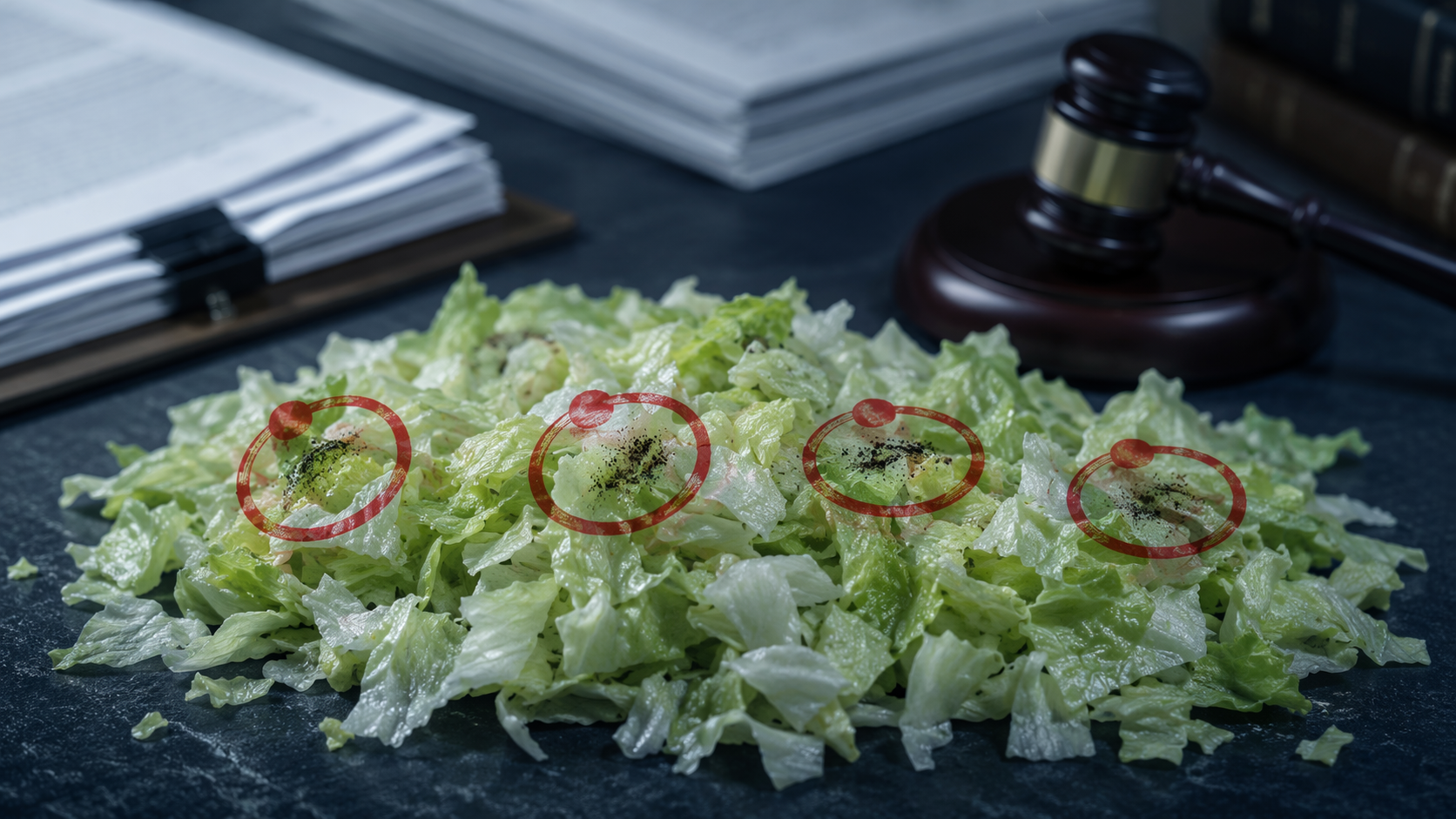
Why the Repeat-Outbreak Pleading Matters
A single produce contamination case normally begins with strict liability, negligence, breach of warranty, and causation. The plaintiff proves that the product was contaminated, that the contaminated product reached the plaintiff, and that the exposure caused the illness. A broader product-liability framework still matters, especially where restaurant, processor, distributor, and grower defendants sit in the same chain, but punitive damages ask a different question. Product Liability in the Taylor Farms Lettuce Recall covers that chain-of-distribution analysis in more detail.
Punitive damages are not awarded because lettuce was unsafe. They require proof closer to conscious disregard, reckless indifference, or a comparable state-law formulation. That is why the pleaded history matters. It is not a character attack if it helps show the company had prior notice of a relevant hazard, adopted or failed to adopt corrective measures, and then encountered a substantially similar failure.
The defense response is equally predictable. Prior outbreaks involving different pathogens, different products, or different facilities can be excluded or sharply limited as unfairly prejudicial. A court does not need to punish a defendant for being large, visible, or previously sued. The admissibility fight will turn on fit: same facility, same food-safety mechanism, same sanitation weakness, same supplier-control failure, or the same ignored corrective-action signal.
The Chronology Plaintiffs Will Try to Turn Into Notice
The strongest part of the historical record is not the headline phrase "repeat outbreaks." It is the sequence. In 2013, a cyclospora outbreak sickened more than 643 people in 25 states and was linked to salad mix served at Olive Garden and Red Lobster from Taylor Farms de Mexico in Guanajuato.[2] In 2026, the current cyclospora outbreak has again been linked by traceback to Taylor Farms de Mexico iceberg lettuce.[1] That facility-specific echo is more probative than a generalized allegation that Taylor Farms has had food-safety problems before.
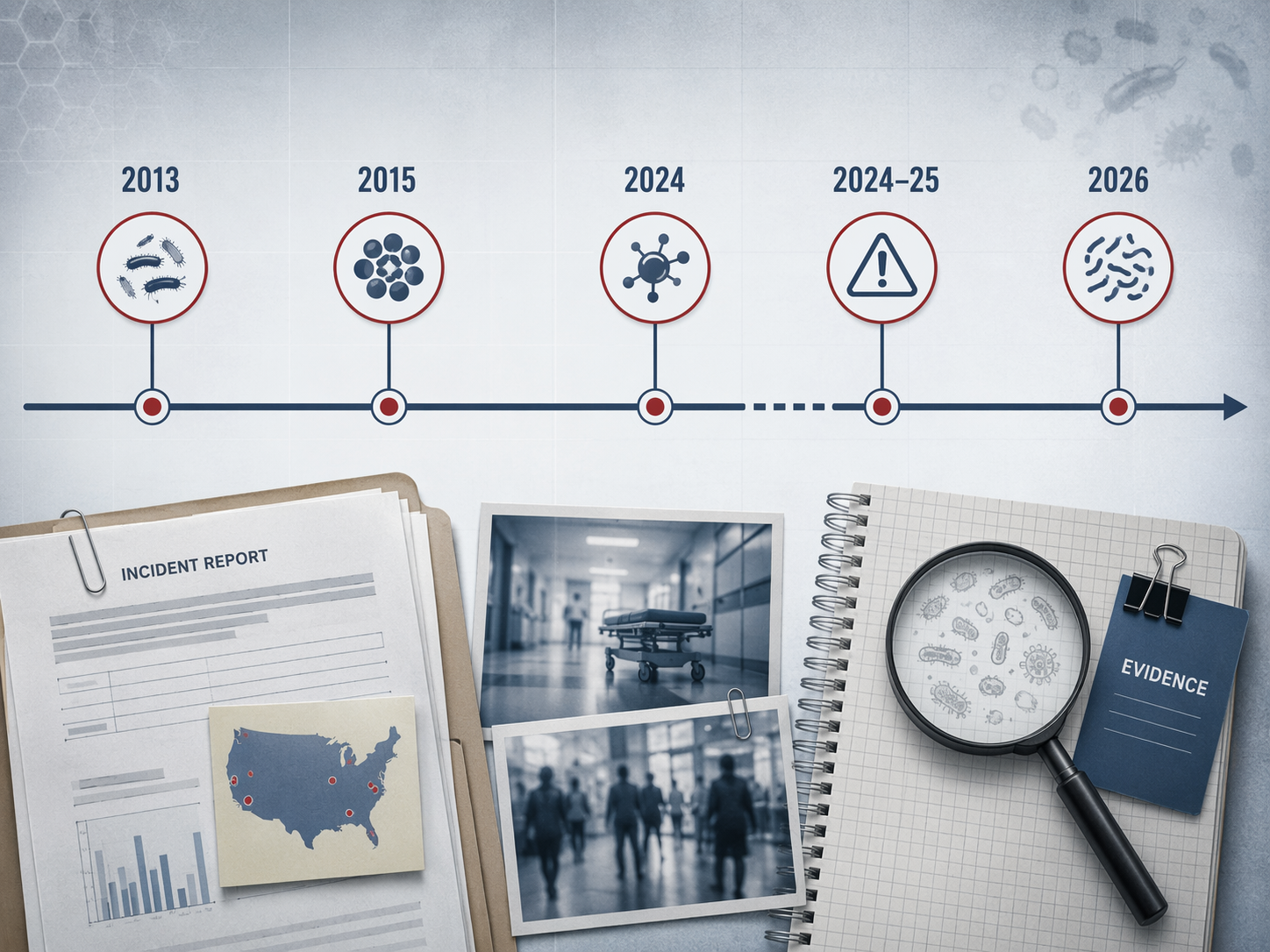
The intervening events broaden the notice argument, though not all with the same force. In 2015, an E. coli O157:H7 outbreak involving a celery-onion blend used in Costco chicken salad affected seven states.[2] In 2024, an E. coli O157:H7 outbreak linked to slivered onions served on McDonald's Quarter Pounders sickened 104 people and caused one death; FDA inspection findings at a Taylor Farms Colorado plant documented poor handwashing and dirty equipment.[3] A separate 2024-25 E. coli O157:H7 romaine outbreak sickened 89 people in 15 states; public agency materials closed without naming Taylor Farms, while lawsuits later established the link.[4]
| Event | What It Can Prove | What It Does Not Prove Alone |
|---|---|---|
| 2013 cyclospora linked to Taylor Farms de Mexico | Facility-specific notice of cyclospora risk tied to leafy-greens operations | That the 2026 contamination arose from the same uncorrected condition |
| 2015 E. coli O157:H7 celery-onion blend outbreak | Broader recurring produce-contamination history | Cyclospora-specific notice or facility-specific disregard |
| 2024 McDonald's slivered onion E. coli outbreak and FDA sanitation findings | Documented sanitation concerns and discoverable remediation questions | That the Colorado plant conditions caused the 2026 lettuce outbreak |
| 2024-25 romaine E. coli outbreak linked in litigation | Possible pattern evidence and transparency issues | That regulators publicly found Taylor Farms responsible |
| 2026 cyclospora linked to Taylor Farms de Mexico iceberg lettuce | Current injury event and facility-specific comparison point | Punitive damages without proof of knowledge and failed correction |
That table is not a verdict chart. It is a discovery map. The 2013 and 2026 cyclospora events invite questions about what Taylor Farms de Mexico changed after the first outbreak, who verified those changes, how long they lasted, and whether the relevant controls were still in place when iceberg lettuce entered the Taco Bell supply chain. The 2024 inspection findings invite a different inquiry: whether documented sanitation deficiencies at one Taylor Farms operation triggered company-wide review, audit escalation, or training changes, and whether any lessons reached the Mexico facility.
Negligence Evidence Is Not Automatically Punitive-Damages Evidence
The temptation in outbreak litigation is to treat recurrence as a shortcut. It is not. A jury may infer negligence from contaminated food and traceback proof. Punitive damages require something more specific: evidence that the defendant knew about a material risk and failed to respond in a way the law regards as minimally responsible.
That distinction will shape motion practice. Plaintiffs will argue that Taylor Farms was on notice after the 2013 cyclospora outbreak, after later produce outbreaks, and after the 2024 sanitation findings. Taylor Farms can be expected to argue that the events involved different products, pathogens, facilities, time periods, and operating conditions; that corrective actions were taken; and that the 2026 contamination was not the foreseeable result of any ignored prior warning.
The strongest punitive-damages theory will not say merely, "this happened before." It will say: this pathogen or route of contamination had already appeared in a substantially similar facility context; the company generated documents acknowledging that risk; the corrective measures were incomplete, abandoned, or not verified; and the later outbreak arose in a way that those measures were supposed to prevent. Each step requires proof.
That is also where regulatory standards matter. Food Safety Modernization Act compliance materials, supplier-verification records, hazard analyses, environmental or water assessments, training records, and corrective-action files may not decide strict liability, but they can become central to the notice-and-remediation question. FSMA Compliance and Legal Liability for Cyclospora in Produce addresses that regulatory standard-of-care layer.
The 2024 Inspection Findings May Do More Work Than the Case Counts
Large outbreak numbers affect valuation, but inspection findings are often more useful for punitive-damages briefing. The 2024 McDonald's-linked outbreak is not cyclospora, not iceberg lettuce, and not the same plant. Those differences matter. Still, FDA-documented poor handwashing and dirty equipment at a Taylor Farms Colorado plant create a paper trail that plaintiffs can use to ask what senior food-safety personnel knew, whether sanitation failures were treated as isolated or systemic, and whether remedial obligations were tracked across operations.[3]
The inspection record matters because it fixes the company in time. A prior outbreak without a written deficiency can be explained through contaminated inputs, complex supplier networks, or one-off failures. An inspection finding gives plaintiffs a more concrete path: identify the deficiency, request the corrective-action response, depose the person responsible for verification, and compare promised changes with later practice.
That does not make the Colorado findings a direct bridge to Guanajuato. Plaintiffs still need to connect the proof. A court may allow discovery into corporate-level sanitation governance while later limiting trial evidence if the link to the 2026 cyclospora contamination remains too attenuated. The useful question is not whether the 2024 inspection sounds bad. It is whether it reveals a management practice that persisted after notice.
Taco Bell's History Expands Discovery, But It Should Not Take Over the Case
Taco Bell's own lettuce-linked history gives plaintiffs another notice theory. Prior outbreaks connected to Taco Bell include a 2006 E. coli O157:H7 outbreak with 71 illnesses, 53 hospitalizations, and 8 hemolytic uremic syndrome cases; a 2010 Salmonella outbreak with 155 illnesses and 42 hospitalizations; and a 2011-12 Salmonella Enteritidis outbreak with 68 illnesses across 10 states.[5] Those facts may support discovery into supplier selection, audit requirements, contractual food-safety obligations, and recall-response procedures.
But Taco Bell's prior history should not displace the Taylor Farms question. The headline liability issue is whether the supplier's repeat record changes the character of the 2026 iceberg lettuce litigation. Taco Bell may face exposure as a restaurant seller in the distribution chain, and the early litigation structure is already developing across restaurant and supplier defendants. Taylor Farms Cyclospora Outbreak Spurs Early Lawsuits tracks those filed theories and defendants.
What Discovery Has to Show
The punitive-damages record will likely be built or broken in ordinary documents, not in public statements. Plaintiffs will want internal communications after 2013, food-safety audits at Taylor Farms de Mexico, corrective-action plans, executive-level reports, water and sanitation assessments, supplier and field records, and documents showing how the company responded to later outbreaks and inspections.
- What did Taylor Farms conclude after the 2013 cyclospora outbreak linked to Taylor Farms de Mexico?
- Were specific corrective actions documented, verified, and maintained at the Guanajuato operation?
- Did later outbreaks or the 2024 FDA inspection findings trigger company-wide food-safety reviews?
- Were sanitation, worker-hygiene, irrigation, water, or supplier-control concerns escalated to management?
- Did any audit, insurer, customer, or regulator identify unresolved conditions before the 2026 outbreak?
If those documents show a real corrective program, verified changes, and a materially different mechanism for the 2026 contamination, the repeat-history theory weakens. If they show recurring warnings, cosmetic remediation, ignored audit findings, or an absence of facility-specific follow-through after 2013, plaintiffs have a substantially stronger punitive-damages foundation than they would in a first outbreak.
Cyclospora cases also bring proof problems that can complicate even a well-pleaded liability theory. Exposure windows, medical diagnosis, traceback, and the lag between consumption and confirmation can all become contested. The Unique Proof Challenge in 2026 Cyclospora Lawsuits addresses those causation barriers. A punitive-damages theory still needs an individual plaintiff who can prove exposure and injury.
The Procedural Caveats Are Real
No class action has been certified. That matters because foodborne illness cases often turn on individualized exposure, symptoms, testing, treatment, and damages. Consolidation or coordination may occur, but that is different from class certification.
Limitations periods also vary by state, commonly from 1 to 6 years for product-liability or personal-injury claims.[1] In a multistate outbreak, that variation affects intake decisions, tolling analysis, and whether counsel prioritizes rapid filing for severe cases. The ongoing nature of the outbreak adds another moving part: case counts, defendant disclosures, recall scope, and agency conclusions may change after this analysis is published.
Repeat-record liability is not unique to food cases. Product-liability lawyers make similar arguments when prior incidents, recalls, verdicts, or regulatory warnings show a defendant had notice before a later injury. Recent analysis of the Kentucky ghost-gun verdict and Ford's 2016-2019 recall history illustrates the same litigation logic: prior events matter most when they show knowledge of a specific hazard and an inadequate response, not merely when they make the defendant look familiar to plaintiffs' lawyers.[6][7]
Where the Record Leaves the 2026 Litigation
Taylor Farms' documented history gives plaintiffs a credible punitive-damages foundation that a first-time contamination case would not have. The same Taylor Farms de Mexico facility connection in the 2013 and 2026 cyclospora outbreaks is the cleanest notice fact. The 2024 FDA sanitation findings at a different Taylor Farms plant are less direct, but they are likely to drive discovery into corporate remediation, sanitation governance, and whether known food-safety deficiencies were treated as isolated incidents or recurring operational warnings.
The unresolved fight is not whether Taylor Farms has a repeat outbreak history. It does. The unresolved fight is whether discovery can connect that history to unremediated conditions relevant to the 2026 cyclospora contamination. If plaintiffs can make that connection with facility-specific documents, audit trails, and ignored corrective-action evidence, the litigation moves beyond negligence valuation. If they cannot, the prior record may remain powerful settlement background but too prejudicial, too different, or too remote to carry punitive damages.
References
- Two Lawsuits Filed Over Taco Bell Cyclospora Outbreak
- Product Liability in the Taylor Farms Lettuce Recall
- Taylor Farms Lettuce Recall Lawsuits Expose FDA Transparency Gap
- Taylor Farms Cyclospora Outbreak Spurs Early Lawsuits
- Taco Bell outbreak history compilation
- What Kentucky's $104 Million Ghost Gun Verdict Means for Liability Law
- Why Ford's 2016-2019 recalls matter for product liability risk
Chronological incident history
No sanction cases have named this tool in the tracked record set to date. This does not imply the tool is safe — see Risk Digest for ongoing monitoring.
← Compare peer toolsReport a correction or tip
Spotted an outdated figure, a misstated fact, or a ruling this tool profile should reflect? Public comments are disabled for this content given the professional cost of a misreported case outcome, penalty amount, or rule text — use the structured correction channel instead.
Report a correction or tip for this record →