
Athens suitcase death shows AI summary correction gaps
On 2 August 2026 the BBC corrected its framing of the Athens suitcase case; this record explains why AI-generated case summaries that captured the earlier snapshot will not propagate that correction. Under the Munich Regional Court's preliminary 'own statements' ruling on Google AI Overviews, that staleness becomes an ingestion and liability risk, so primary-source verification must be the standard for AI-summarized legal content while the underlying case record is still moving.
- Jurisdiction
- Germany
- Court
- Munich Regional Court
- AI tool named
- Google AI Overviews
- Ruling date
- Jun 1, 2026
- Source document
- View primary court order ↗
- Last verified
- Aug 3, 2026
Lex Machina Review is an independent risk-tracking and reference resource. Nothing on this site is legal advice, and using it does not create an attorney-client relationship. Every record is reviewed against primary sources but may not reflect the most current status of a matter — always verify directly against the cited court order, rule text, or a licensed attorney before relying on it.
Companion explanation — secondary to the source document above
The legally interesting event in the Scottish woman Athens suitcase death investigation is not the tabloid contour of the case. It is a correction. On 2 August 2026, the BBC clarified its report after further information emerged: the man in the Athens investigation had admitted transporting the body, not admitted killing Elisabeth-Jane Ross.[1] For a casual reader, that may look like a narrow wording repair. For a legal research system, a knowledge-management record, or an AI-generated case note, it changes the classification of the fact being summarized.
“Admitted killing” and “admitted transporting” do not belong in the same risk field. One points toward culpability for death. The other may still be grave, but it does not carry the same evidentiary or charging implication. If an automated summary captured the earlier formulation before the clarification, that summary would not become safe merely because its source later corrected itself. Unless the system tracks correction events and forces re-verification, the stale sentence can continue to look clean, current, and usable.

That is the correction-propagation problem. It is not a claim that a particular AI research product reproduced the BBC’s superseded wording. The available materials do not prove that. The risk is narrower and more useful: AI summaries and aggregator records often preserve a point-in-time snapshot of a developing public record, while the source record continues to move.
The live record is still too unstable for a finished summary
The Ross investigation is a poor candidate for a confident one-paragraph legal summary because several core fields remain unsettled or inconsistently reported. The cause of death was still pending further findings, including toxicology, in BBC coverage.[2] That alone should stop a legal or compliance workflow from treating the death narrative as closed.
The charge descriptions also differ by source. The Guardian, citing a Greek police statement, reported accusations involving intentional homicide, robbery, and weapons.[3] UK reporting has also used manslaughter language, with charges not yet finalized in the materials summarized for this record.[1] Those are not interchangeable labels. A legal chronology can quote both source positions, but it should not flatten them into one settled charge field.
There are date conflicts as well, including reported differences around arrival timing and departure from Keratsini. Those discrepancies are better maintained as open record conflicts than smoothed over by a summary model. Readers who need the day-by-day public record should use the verified internal timeline, Elisabeth-Jane Ross Case Timeline, rather than relying on a compressed narrative.
This is not pedantry. A live criminal investigation record contains different classes of information: confirmed official facts, reported statements, inferred timelines, conflicting media descriptions, and later corrections. A summary that does not preserve those distinctions can become more misleading as it becomes more readable.
What breaks when a source corrects itself after an AI snapshot
A correction event creates a custody problem for downstream text. The source article changes. A cached summary, database abstract, newsletter item, or AI answer may not. The user who sees the later summary may reasonably assume it reflects the current source record, especially if the interface presents the answer as polished prose rather than as a dated extract.
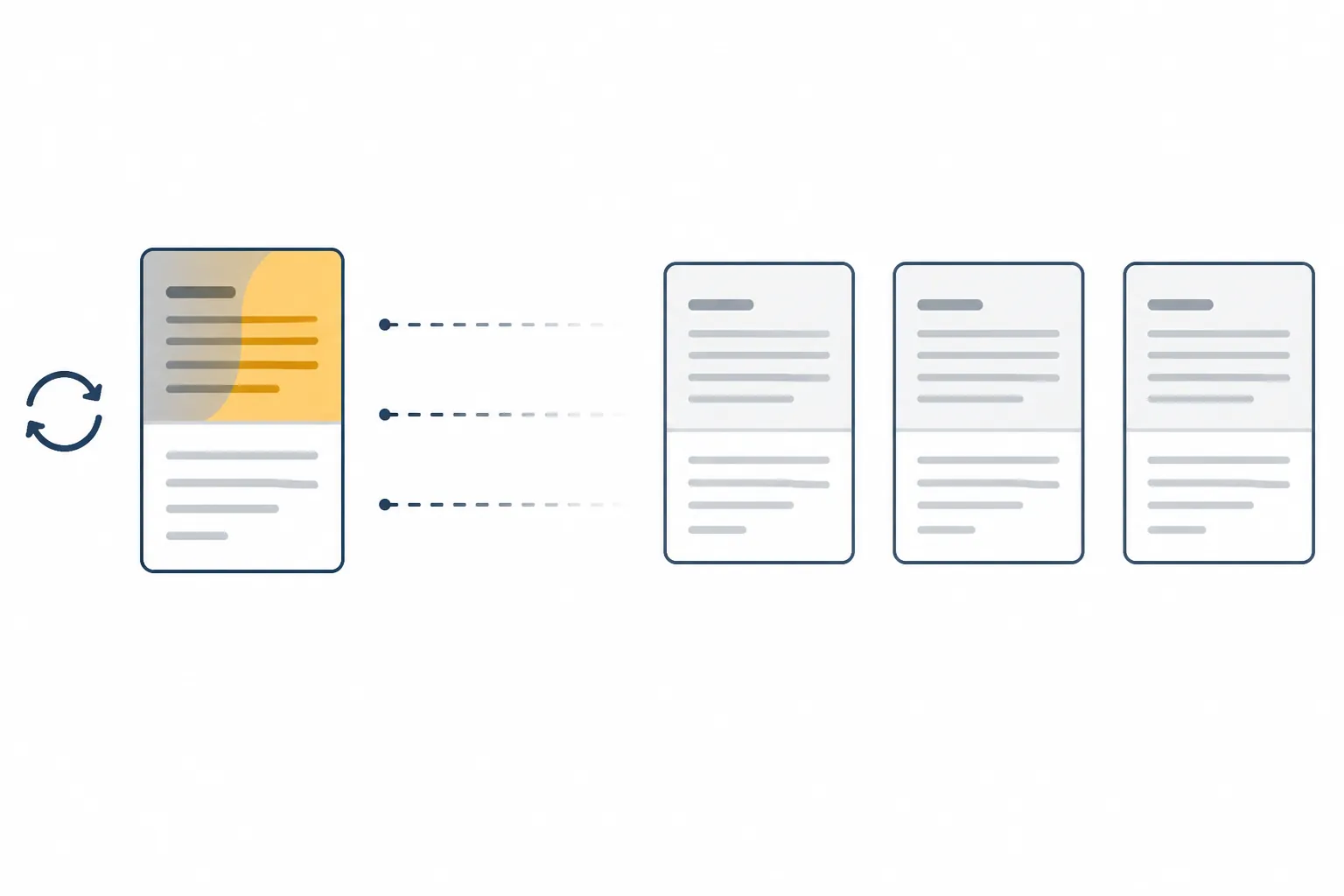
In a legal research or KM pipeline, the break usually does not appear at the moment of ingestion. It appears later, when someone uses the abstract for a chronology, a risk memo, a client update, or an internal matter note. By then, the provenance question is harder: which source was summarized, at what time, before or after which correction, and under what verification standard?
A safe record for this case would not simply say that a man admitted a fact. It would specify the source, the wording, and the correction status. The BBC clarification is useful because it is dated and concrete: on 2 August 2026, the relevant framing was corrected from a killing admission to a transport admission after further information emerged.[1] That date gives downstream systems something to test against.
| Record element | Why it matters in this case |
|---|---|
| Source wording | “Admitted killing” and “admitted transporting” carry materially different legal implications. |
| Correction date | The 2 August 2026 BBC clarification creates a before-and-after point for any summary or abstract. |
| Charge field | Greek police reporting and UK outlet descriptions should not be silently merged. |
| Cause of death | Pending toxicology or official findings make a closed causation summary premature. |
| Last verified | A live record needs an explicit timestamp showing when it was checked against source-of-record materials. |
The cleanest operational rule is also the least glamorous: any AI-generated or AI-assisted summary of this investigation should be treated as unfit for legal ingestion unless it carries a source list, a last-verified timestamp, and a correction check against the source-of-record materials. A generic “generated by AI” label does not answer those questions.
Observed AI-content labels are artifacts, not proof of a false AI answer
There were visible AI-content signals around coverage of the Ross case. Minute Mirror published a page carrying an “AI Generated Summary” byline on a story headlined around the man admitting that he transported the body of a Scottish woman in a suitcase in Athens.[4] Upday coverage also carried an “AI Generated Stock Image” label. Those observations matter because they show the case entering an AI-mediated information layer while the underlying public record remained unsettled.
They do not prove that the Minute Mirror summary was false. They also do not prove that any AI tool reproduced the BBC’s earlier, corrected framing. The distinction is important. A risk record should not manufacture an example merely because the example would be convenient.
The separate internal companion, What AI search gets wrong about the Athens suitcase killing, deals with AI-search output about the case. This record is narrower. It is concerned with what happens when a summarization layer captures a developing record before the source stabilizes, and then gives the downstream user no reliable sign that the snapshot has aged.
That is why the issue is not solved by asking whether an AI answer is “hallucinated.” The more routine failure is less dramatic: the answer may have been plausible when generated, or may have drawn from a real source, and still become unsafe because the source later corrected a material verb.
Munich makes stale AI summaries harder to dismiss as ordinary media drift
The Munich Regional Court ruling on Google AI Overviews is not a final European rule for every AI summary product. It was a preliminary ruling, and Google reportedly said it would review it.[5] That posture matters. A non-final procedural decision should not be inflated into settled continent-wide liability doctrine.
Even so, the ruling is a serious risk signal for legal-tech ingestion. Wired reported that the court treated Google’s AI Overviews as producing Google’s own “independent, new, and substantial statements,” rather than merely passing along third-party snippets.[5] Malwarebytes reported that the order required Google to remove the false statements at issue and pay 80% of the plaintiff’s costs.[6]
For a legal research buyer, the important point is not whether Google ultimately loses that case. It is the attribution logic. If an AI interface synthesizes source material into a new answer, a court may view the output as the provider’s own statement rather than as a neutral index card. That makes provenance and correction handling part of product risk, not merely editorial housekeeping.
The Athens correction shows how quickly that matters. Suppose, hypothetically, that a legal research product summarized a live article before the 2 August clarification and stored the earlier wording in a case digest. If that digest later appeared in a research result without a correction flag, the problem would not be that the user failed to read enough news. The problem would be that the product presented an aged derived statement without exposing the age and correction status of the source snapshot.
This is where legal AI risk differs from ordinary search inconvenience. A stale summary can become part of a chronology. A chronology can become part of a witness-preparation note or a client alert. A client alert can be copied into a matter file. At each handoff, the language appears more institutional and less provisional.
The ingestion standard should be source custody, not confidence of prose
A legal research or KM system handling live investigations should be able to answer four questions before its summary is allowed into a matter workflow:
- What exact source or sources were summarized?
- When was each source last checked?
- Has any source issued a correction, clarification, update, or replacement since ingestion?
- Which fields remain disputed, pending, or source-conflicted?
For the Ross investigation, that means the summary should preserve the 2 August 2026 BBC clarification, the pending cause-of-death status, the charge-description conflict, and the unresolved timeline inconsistencies. It should not convert them into a clean case abstract merely because the interface has room for one.
The broader pattern is familiar. AI systems have already created risk by fabricating criminal accusations about real people; that problem is tracked separately in AI hallucinations and false child-abuse charges. Verification workflows also have practical precedents in records on checking claimed credentials and docket material, including professional-degree verification and Hearn docket verification. The Ross record adds a different failure mode: not invented content, but corrected content that may not propagate.
A buyer evaluating AI legal research should therefore ask for correction tracking in the product demonstration, not after deployment. Show the source snapshot. Show the correction flag. Show whether an answer generated before a material correction is withdrawn, regenerated, or marked stale. Show whether exported summaries carry the verification date with them after they leave the platform.
For live investigations and unsettled legal records, AI-summarized content should not be ingested into legal research databases, briefs, or KM pipelines unless it is checked against primary or source-of-record materials and carries a last-verified timestamp. For this record, that timestamp is 3 August 2026 UTC. Re-verification is required as toxicology findings and charge decisions finalize.
References
- Man admits transporting body of Scottish woman in suitcase in Athens, BBC News, 2 August 2026.
- Scottish woman found dead in suitcase in Athens, BBC News.
- Man arrested after Scottish woman found dead in suitcase in Athens, The Guardian, 2 August 2026.
- Man admits transporting body of Scottish woman in suitcase in Athens, Minute Mirror.
- A Court Has Ruled That Google Is Liable for False Statements Generated by AI Overviews, WIRED.
- Google can be liable for false AI Overviews, court rules, Malwarebytes, June 2026.
Related records
Tool profile
How Meta's AI Spending Reshapes Law Firm ProfitabilityGoverning regulation
Browse the obligations tracker →Preventive workflow
Browse verification workflows →
Report a correction or tip
Spotted an outdated figure, a misstated fact, or a ruling this case record should reflect? Public comments are disabled for this content given the professional cost of a misreported case outcome, penalty amount, or rule text — use the structured correction channel instead.
Report a correction or tip for this record →