
No conviction in Jason Rogers teacher probation case
Viral and news reports describe former Underwood teacher Jason Rogers as "convicted," but the Otter Tail County District Court record shows a stay of adjudication on three counts of malicious punishment of a child — no conviction entered, with charges dismissed if he completes two years of supervised probation and its conditions. This verification record separates what the court actually ordered from complaint allegations and press wording, and flags the docket checks still needed before any summary is relied on.
- Jurisdiction
- Minnesota, United States
- Court
- Otter Tail County District Court
- AI tool named
- None
- Ruling date
- Jul 28, 2026
- Source document
- View primary court order ↗
- Last verified
- Jul 31, 2026
Lex Machina Review is an independent risk-tracking and reference resource. Nothing on this site is legal advice, and using it does not create an attorney-client relationship. Every record is reviewed against primary sources but may not reflect the most current status of a matter — always verify directly against the cited court order, rule text, or a licensed attorney before relying on it.
Companion explanation — secondary to the source document above
The usable record answer in the Jason Rogers teacher probation sentence case is narrower than much of the public wording around it: on July 28, 2026, in State of Minnesota v. Jason Lowell Rogers, the Otter Tail County District Court stayed adjudication on three counts of malicious punishment of a child under Minn. Stat. § 609.377, placed Rogers on two years of supervised probation, and did not enter a conviction on the current record. If he completes probation and the ordered conditions, the charges are to be dismissed. The primary-record access path for Minnesota district court records is Minnesota Court Records Online, and that record is the tiebreaker over headlines, social captions, snippets, or secondhand summaries. [1][2]
The conditions explain why this case is easy to mislabel. Rogers must surrender any teaching license in any state, complete an anger-management assessment and follow-through, perform 90 hours of community service, write apology letters to each victim, and pay $2,250 in fines and fees. Those terms are punitive in ordinary English. They still do not answer the procedural question that matters for a case summary: whether adjudication was entered. On the current court record, it was not. [1]

The disposition field controls the wording
A stay of adjudication is not a casual synonym for conviction. It means the court has imposed a probationary disposition while withholding adjudication. If the defendant violates probation, the case can return to court with consequences attached to that violation and the underlying counts. If the defendant completes the ordered period and conditions, the charges are dismissed. That is materially different from a conviction followed by probation.
For risk files, partner briefs, newsroom updates, and AI-assisted case notes, the safe wording is not “Jason Rogers was convicted.” The safe wording is: “Jason Lowell Rogers received a stay of adjudication on three counts of malicious punishment of a child and was placed on two years of supervised probation.” If space permits, add that no conviction is entered on the current record and the charges are dismissed if probation and conditions are completed.
| Field | Current-record wording | Unsafe shortcut |
|---|---|---|
| Disposition | Stay of adjudication on three counts; no conviction entered on the current record. [1] | Convicted |
| Supervision | Two years of supervised probation with conditions. [1] | Jail sentence, unless the record shows one |
| License consequence | Surrender of any teaching license in any state. [1] | Proof of conviction by itself |
| Charge statute | Malicious punishment of a child under Minn. Stat. § 609.377. [2] | A different child-abuse offense unless separately charged |
| Allegation details | Complaint-sourced allegations belong in an allegation bucket, not a sentencing-finding bucket. [3][4] | Court found every reported detail at sentencing |
That table may look fussy until someone has to correct a database record six months later. “Probation” is a sentence word. “Conviction” is an adjudication word. They can appear in the same case; here, on the current record described above, they do not.
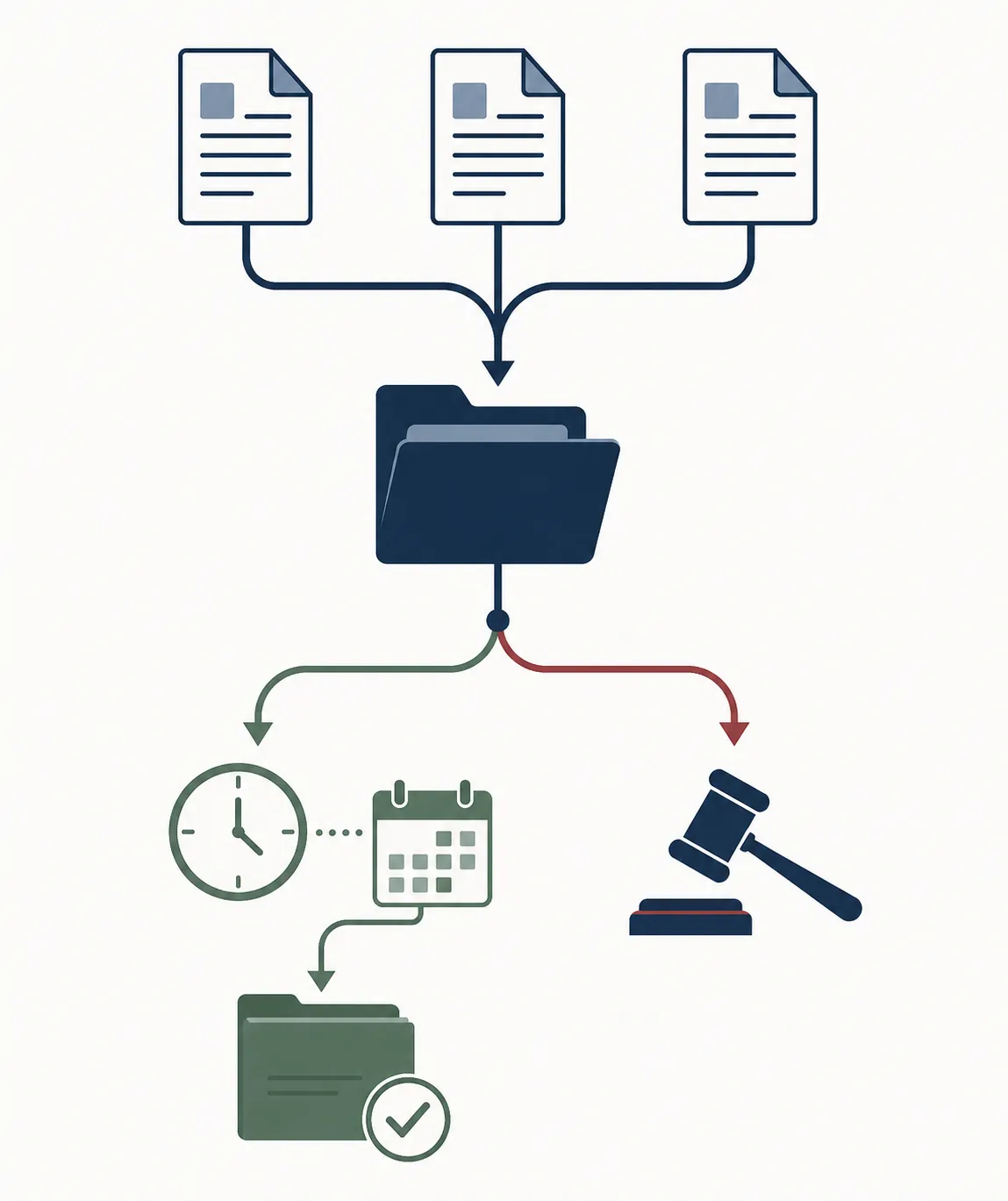
What the court did not decide in the July 28 disposition
The court did not convert every detail from the early complaint coverage into a sentencing finding. Public interest in the case has often centered on the reported “more than 350 pounds” weight figure, the allegation that Rogers stepped on a student with both feet for about 10 seconds, and an alleged statement comparing the experience to being “80 years old.” Those details trace to complaint-stage reporting and admissions described in early coverage; they should be labeled as allegations or complaint-sourced facts unless the docket or sentencing record independently adopts them as findings. [3][4]
That distinction does not minimize the child-victim allegations. It keeps the record clean. A complaint tells the court and the public what the state alleged. A sentencing or disposition entry tells the public what the court ordered. Mixing the two is how a vivid allegation becomes, by repetition, a supposed judicial finding.
The statute matters, but only as an anchor. Minnesota’s malicious-punishment statute, Minn. Stat. § 609.377, covers a parent, legal guardian, or caretaker who, by an intentional act or series of intentional acts, uses unreasonable force or cruel discipline that is excessive under the circumstances. The statute includes gross-misdemeanor exposure of up to 364 days and/or a fine where the violation results in less than substantial bodily harm. That helps identify the charged offense; it does not turn a stayed adjudication into a conviction. [2]
Where the public reporting diverges
The public-reporting layer is not useless. It is useful for spotting what needs to be checked. In this case, it also shows the usual failure point: disposition language gets flattened while the attention-grabbing facts survive intact.
Sentencing date: July 28 is supported; July 29 remains a docket-check flag
Valley News Live and KSTP both support the sentencing date as Tuesday, July 28, 2026. Their July 30 reporting also describes the probation and license-loss outcome, which aligns with the court-record disposition described above. [5][6]
KBUN’s July 30 news-summary item is different because the available material is snippet-only and appears to imply a July 29 timing conflict. That should not be smoothed over by choosing the date that sounds most plausible. The docket controls the date field; until a reviewer checks the docket entry directly, the conflict should be noted as a docket-resolution item rather than silently erased. [7]
Charge count: one count in early coverage is not the same as three counts at disposition
March 2025 coverage described Rogers as charged with one count of malicious punishment of a child. The current disposition is on three counts. That is not a harmless compression. A one-count summary and a three-count disposition create different risk entries, different search results, and different downstream inferences. Early FOX 9 and InForum reports are useful for the complaint-stage allegation history, but the count at disposition has to be checked against MCRO and the final court record. [1][3][4]
The “convicted” wording should not be treated as record language
A WAFB social post has circulated in the public layer with “convicted” wording in snippet-only material. That is a warning flag, not a substitute for the docket. Because the available material is snippet-only here, it should not be quoted as a verified source for the legal status without direct review of the post and any linked report. More importantly, even a fully viewable social post could not override the Otter Tail County District Court record on whether adjudication was entered. [8]

How to brief this case without importing the viral frame
A short case note can be accurate without repeating the most sensational complaint details. A usable version would read:
“On July 28, 2026, the Otter Tail County District Court stayed adjudication for Jason Lowell Rogers on three counts of malicious punishment of a child under Minn. Stat. § 609.377 and placed him on two years of supervised probation. Conditions include surrender of any teaching license in any state, anger-management assessment and follow-through, 90 hours of community service, apology letters to each victim, and $2,250 in fines and fees. No conviction is entered on the current record; the charges are dismissed if probation and conditions are completed.” [1][2]
If the note needs context, keep the buckets separate. Use What Happened in the Underwood Teacher Malicious Punishment Case and Teacher loses license for stepping on students during drill as baseline confirmed records on this Rogers/Underwood matter. Do not use those records as permission to relitigate every complaint detail in a disposition note.
Do not merge this case with The Underwood Teacher Probation Case That AI Keeps Hallucinating. That page concerns Peake v. Underwood, a different case. It is relevant only as a verification-pattern sibling: once a summary system drops party names, procedural posture, or disposition type, two unrelated matters can start to look artificially connected.
The same confirmed-vs-reported discipline used in What’s Confirmed in the Lindsay Clancy Trial and Why officers get suspended for unauthorized records access applies here: report what is confirmed, label what is reported, and leave unresolved conflicts visible until the primary record resolves them.
Remaining docket checks before relying on any downstream summary
Three checks remain worth doing before a summary is filed as final. First, confirm the sentencing-entry date directly in MCRO if the July 28 versus July 29 conflict matters to the use case. Second, confirm the final count structure against the docket rather than carrying forward the one-count language from March 2025 complaint coverage. Third, pull the judge’s name from the docket if the summary needs it; the judge is not named in the public reports reviewed here.
There is no documented AI component in the Rogers case itself. Its relevance to verification work is plainer than that: case summaries, including AI-assisted ones, can flatten a stayed adjudication into a conviction if “disposition type” is not a required field. A workflow like AI Verification Workflow for FedEx Truck Accident Cases in Texas belongs in the same verification family, even though this is not an AI-sanction case.
On the current Otter Tail County District Court record, “convicted” is inaccurate. “Stay of adjudication with two years of supervised probation” is the safer summary. Any downstream brief that omits disposition type is not reliable enough to use.
References
- Court Records, Minnesota State Law Library.
- 609.377 MALICIOUS PUNISHMENT OF A CHILD, Minnesota Revisor of Statutes.
- Teacher charged with malicious punishment in Otter Tail County, FOX 9.
- Underwood teacher charged after allegedly stepping on student, InForum.
- Underwood teacher gets probation, loses teaching license after stepping on students during lockdown drill, Valley News Live, July 30, 2026.
- Former teacher who allegedly stood on a student sentenced to 2 years of probation, KSTP.
- News Summary 7-30, KBUN.
- WAFB post on X, WAFB.
Related records
Tool profile
Browse tool evaluations →Governing regulation
Browse the obligations tracker →Preventive workflow
Browse verification workflows →
Report a correction or tip
Spotted an outdated figure, a misstated fact, or a ruling this case record should reflect? Public comments are disabled for this content given the professional cost of a misreported case outcome, penalty amount, or rule text — use the structured correction channel instead.
Report a correction or tip for this record →