
Lindsay Clancy order binds AI tools as responders testify
Judge Sullivan's July 24 order bars media and the public from recording, displaying, reproducing, or otherwise disseminating the 911 recording and autopsy photos in Commonwealth v. Clancy under a substantial-likelihood-of-harm standard. This record maps those restrictions to AI transcription, summarization, and exhibit platforms, and stress-tests the operative language against the July 30 first-responder testimony phase with source links and confirmed-versus-reported flags.
- Jurisdiction
- Massachusetts, US
- Court
- Massachusetts Superior Court
- Judge
- William F. Sullivan
- AI tool named
- AI transcription/summarization platforms
- Ruling date
- Jul 24, 2026
- Source document
- View primary court order ↗
- Last verified
- Aug 1, 2026
Lex Machina Review is an independent risk-tracking and reference resource. Nothing on this site is legal advice, and using it does not create an attorney-client relationship. Every record is reviewed against primary sources but may not reflect the most current status of a matter — always verify directly against the cited court order, rule text, or a licensed attorney before relying on it.
Companion explanation — secondary to the source document above
Last verified posture: Aug. 1, 2026 UTC
The live risk record in the Lindsay Clancy murder trial first responders testimony phase is not the testimony. It is Judge William F. Sullivan’s July 24, 2026 order restricting what media and the public may do with two categories of evidence: the 911 recording and autopsy photos. As of Aug. 1, 2026 UTC, the trial remained ongoing; a jury view of the Duxbury home had occurred July 31, and hospital or emergency-room testimony was expected next.
This record separates confirmed from reported material. The full two-page July 24 order was not reviewed directly for this record, so the analysis below does not pretend to be a full-text construction. It relies on the operative language and standard quoted consistently by the Boston Globe, WBUR, MassLive, and NewsNation: media and members of the public were barred from “recording, displaying, reproducing, distributing, or otherwise disseminating” the 911 recording and autopsy photos, with Judge Sullivan finding a “substantial likelihood of harm.”[1][2][3][4]
| Item | Status in this record | Handling |
|---|---|---|
| July 24 dissemination restriction | Confirmed as quoted consistently across four outlets | Used as the operative risk language; not treated as a full-text order reading |
| Docket number 2383CR00199 | Reported from a third-party posting | Not relied on as confirmed here; should be checked against primary PDFs or MassCourts before citation |
| First-responder count | Reported as 10 Duxbury police/fire personnel in the July 30 phase; other coverage uses looser phrasing such as nearly a dozen | Use exact count only with a cited outlet; otherwise describe as Duxbury police and fire personnel |
| Trial-length estimates | Reported in varying ranges, including six weeks and six-to-eight weeks | Do not treat as a fixed court schedule unless confirmed from a primary court source |
| Witness-count claims | Reported as more than 200 witnesses in some trial coverage | Background only unless independently confirmed |
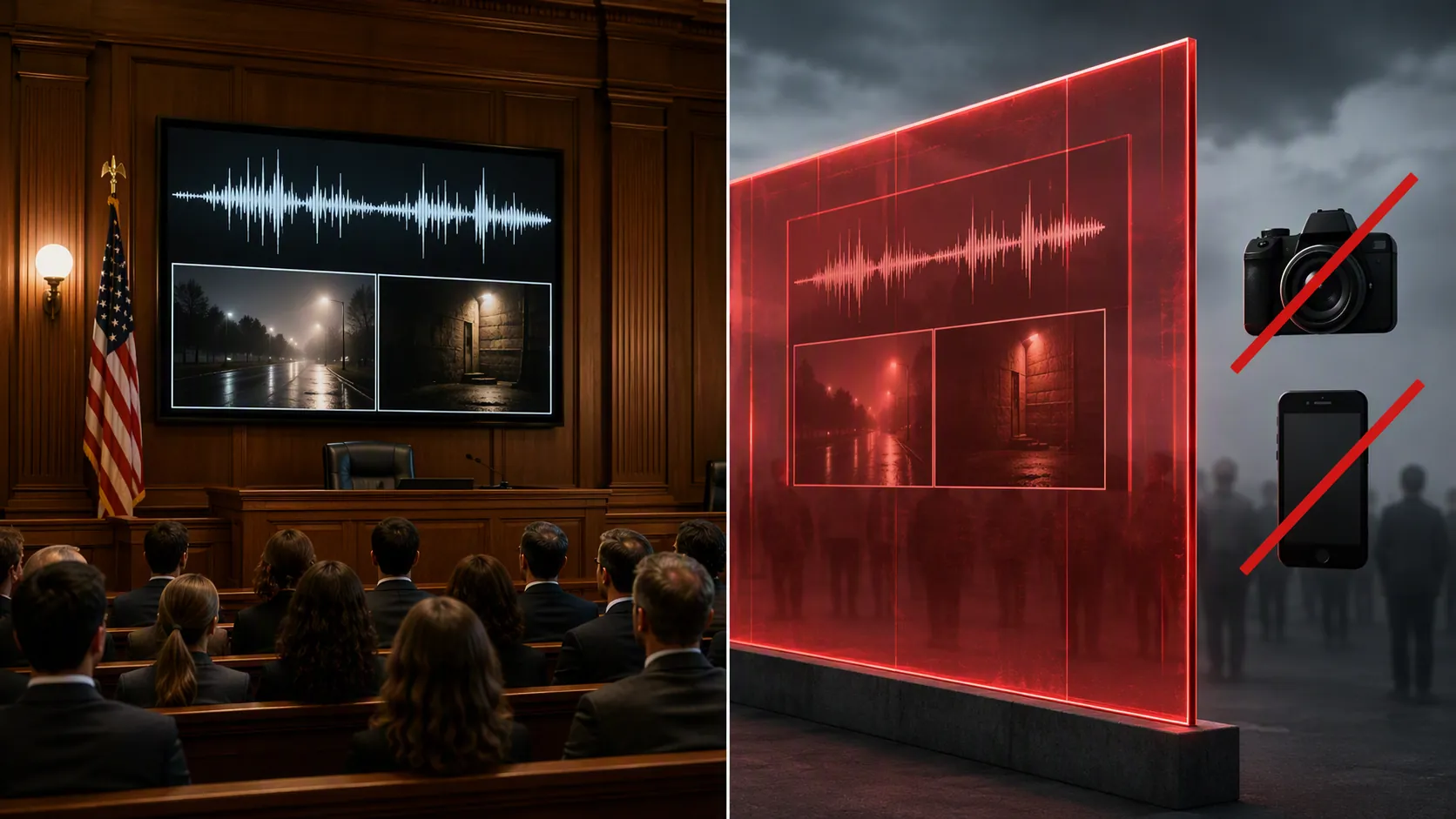
The order restricts copies and dissemination, not ordinary reporting
The distinction matters because it is easy to overstate the order in both directions. It does not mean journalists cannot describe testimony, report what witnesses said, or report the contents of evidence admitted and played or shown in court. The restriction attaches to recording, displaying, reproducing, distributing, or otherwise disseminating the 911 recording and autopsy photos themselves.[1][2][3][4]
That is also why the first-responder phase is a compliance stress test rather than the article’s spectacle. On July 29, the 911 call was played for the jury; during the same phase, scene photographs and other evidence were shown in court; on July 30, Duxbury police and fire personnel testified about what they encountered.[6][7][9] The courtroom use of the material and the public dissemination of the material are different acts.
The evidence could be admissible for the parties while still being restricted outside the courtroom. Prosecutors argued, among other points, that the 911 call qualified as an excited utterance and contained party-opponent statements; they also argued that Patrick Clancy’s actions after the call were probative of deliberateness and extreme atrocity.[1][3] None of that gives a newsroom, a court-feed vendor, or an AI summarization platform permission to create and circulate another copy of the protected recording or protected photos.
The underlying request came through Patrick Clancy’s Motion to Restrict Display of and Access to Certain Evidence, available as a primary PDF through WPRI.[5] Boston Globe Media Partners opposed aspects of the restriction in the access dispute, but the operative risk for this record is the order as entered and quoted in contemporaneous coverage.
What the verbs do to AI workflows
The order’s verbs are not decorative. Each one maps onto a technical behavior that modern legal and media systems perform almost automatically.
| Operative verb | Technical behavior to check | AI-tool consequence |
|---|---|---|
| Recording | Capturing courtroom audio, saving a livestream, preserving a reporter’s raw audio, or creating an audio buffer that persists | A tool that captures the 911 recording may have crossed the restricted act before any summary is produced |
| Displaying | Showing autopsy photos, thumbnails, still frames, exhibit previews, or embedded media in a dashboard | A platform can violate the restriction through interface design even if download is disabled |
| Reproducing | Making copies in transcripts, vector stores, document repositories, backups, caches, training sets, or review workspaces | The fact that a copy is machine-readable rather than human-facing does not make it irrelevant |
| Distributing | Sending the recording, photos, transcript derived from captured audio, or exhibit files to users, subscribers, Slack channels, social feeds, or downstream vendors | Internal routing can matter if it sends protected material beyond the people authorized to handle it |
| Otherwise disseminating | Publishing clips, screenshots, summaries packaged with source media, searchable exhibit entries, or generated posts that expose the restricted material | This catchall is the wrong place to rely on a narrow file-format argument |
A transcription service is the cleanest example. If it ingests the courtroom feed while the 911 call is played, stores the audio, generates a transcript, and keeps the recording attached to the transcript for quality review, the “we only transcribed it” defense misses the first two steps. The system recorded and reproduced the protected material before anyone asked what the transcript would be used for.
The same point applies to AI news generators. A lawful reporter can write that the jury heard a 911 call and can describe the substance of testimony. A generator that pulls a captured courtroom-audio file into its pipeline, clips the call, stores the file, and publishes a short “key moments” reel has not merely reported the proceeding. It has made and distributed a new version of restricted evidence.
Social-media summarizers create a related problem because they often operate on whatever asset receives engagement. If the input is a written article describing testimony, the risk analysis is different from an input that contains the actual 911 audio or autopsy-photo images. The restricted object matters. A summary generated from a lawful written description is not the same conduct as a summary product that embeds, previews, or links to a copied restricted exhibit.
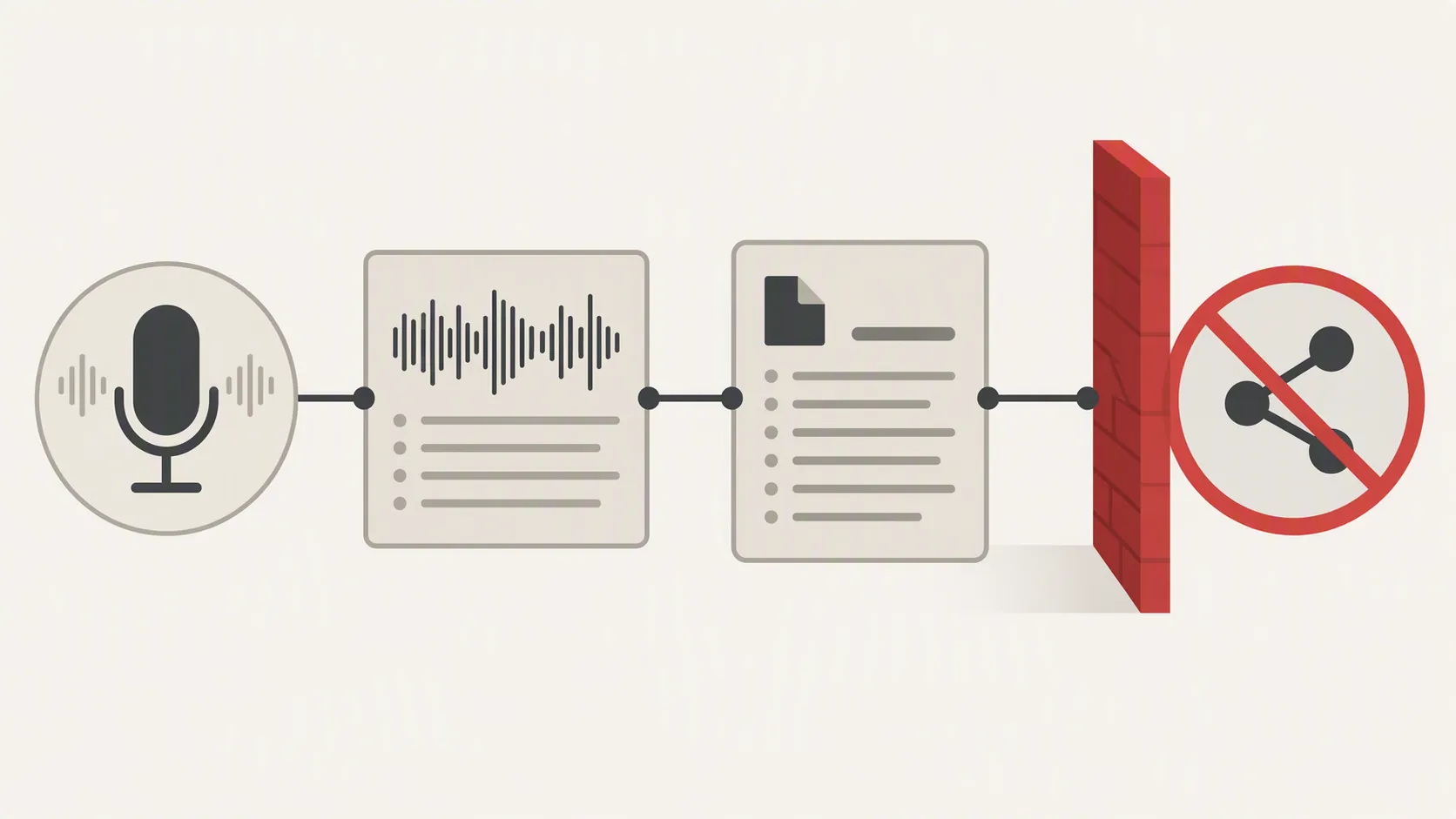
Exhibit and document platforms deserve particular attention because they make duplication look like housekeeping. A litigation-support workspace may create a native-file copy, a normalized image, text extraction, metadata, a thumbnail, a review-set duplicate, an export package, and a backup. If the source item is one of the restricted materials, the compliance question is not answered by saying the platform is secure. The question is which copies exist, who can see them, and whether any of them are displayed or distributed outside the permitted litigation use.
Knowledge-management teams face the same trap in a different accent. A trial-monitoring memo can summarize what happened in open court. A searchable internal evidence library that stores the 911 recording, autopsy-photo thumbnails, or AI-generated derivatives tied to those files is a different artifact. The first is reporting. The second may be reproduction, display, or dissemination, depending on access and use.
The July 30 responder testimony is where ordinary automation becomes unsafe
The first-responder testimony phase brought exactly the materials covered by the order into the ordinary rhythms of trial coverage. AP reported that first responders described the scene after the deaths of the three children, while other outlets covered the Duxbury police and fire testimony and the courtroom presentation of evidence.[6][7][9] CBS Boston also reported the prosecution’s framing that Clancy staged events to look like a suicide attempt after killing the children.[8]
Those are reportable developments. They are also the sort of developments that trigger automated capture: a newsroom system records the day’s audio, a producer cuts a clip, a summarizer extracts the call as a highlight, a photo desk preserves courtroom-screen images, a legal newsletter generator ingests the trial feed, a social team packages “what the jury heard.” The order does not need to mention artificial intelligence for those steps to matter. It already names the conduct.
For product counsel, the narrowest useful question is not “Can the public know what happened?” The answer to that is yes, through reporting on testimony and admissible evidence. The useful question is whether the product creates another instance of the protected 911 recording or autopsy photos, shows those materials to a user, keeps them in a retrievable store, or sends them to another person or system.
A practical read of common systems
- Courtroom-audio capture: highest immediate risk if the 911 call is included in the captured feed and retained. The risky act can occur before publication.
- Transcription tools: risk depends on whether the system captured or stored the restricted recording, whether the transcript reproduces restricted material in a way the order covers, and who receives the output.
- AI news generators: lower risk when fed lawful written reporting; materially different risk when fed copied restricted audio or images.
- Social-media clipping tools: high risk if they create reels, waveforms, captions, thumbnails, or previews from the restricted recording or photos.
- Exhibit platforms: risk turns on duplication, display permissions, export controls, search indexes, thumbnails, backups, and access logs.
- Document repositories and KM systems: risk rises when restricted materials are converted into reusable institutional knowledge assets rather than kept within the permitted case-use channel.
The point is not to ban trial reporting by implication. It is to stop treating capture as a neutral prelude. In AI systems, capture is often the step that makes every later action possible: summarization, search, clipping, translation, recommendation, export, and republication.
What this record does not decide
This record does not revisit Massachusetts impoundment procedure or the good-cause tailoring framework. That procedural companion belongs in the existing Clancy impoundment ruling record. It also does not rebuild the broader pretrial-rulings map, which is covered in the Sullivan ruling record and the five-rulings evidence overview.
Nor is this a general AI-authentication article. The authentication issues raised by AI and trial evidence are tracked separately in the Clancy trial authentication gaps record. The July 24 order presents a narrower and more immediate obligation: whether the tool records, reproduces, displays, distributes, or otherwise disseminates the restricted 911 recording or autopsy photos.
For a continuously verified procedural chronology, use the Lindsay Clancy trial record. For a cross-case comparison on AI-processed audio and dissemination risk, the Ben Crump–Tyler Smith audio record is the closer analogue than a generic AI policy explainer.
The working compliance line
A reporter may describe testimony. A legal analyst may explain why the 911 call mattered to the prosecution’s evidentiary theory. A newsroom may report that first responders testified and that the jury heard evidence in court. Those acts are not the same as posting the recording, showing the autopsy photos, embedding thumbnails, preserving restricted files in a searchable product, or letting an AI workflow redistribute them.
For AI tools, the live risk record is the July 24 order. Compliance turns on the system’s conduct toward the restricted 911 recording and autopsy photos: whether it records, reproduces, displays, distributes, or otherwise disseminates them.
References
- Lindsay Clancy judge bars media from posting audio of husband's 911 call, autopsy photos of children, Boston Globe, July 24, 2026
- Judge limits sharing of autopsy photos, 911 call as murder trial for Lindsay Clancy gets underway, WBUR, July 24, 2026
- Judge blocks broadcast of 911 call from night of Clancy children's deaths at mother's trial, MassLive, July 2026
- Judge restricts public's access to sensitive evidence in Lindsay Clancy trial, NewsNation
- Patrick Clancy Motion to Restrict Display of and Access to Certain Evidence, WPRI
- First responders describe scene after Lindsay Clancy killed her 3 children, AP News
- It turned very chaotic very quickly, Boston Globe, July 30, 2026
- Lindsay Clancy murder trial: Duxbury first responders testify, CBS Boston
- First responders testify about what they found after Lindsay Clancy killed her children, PBS NewsHour
Related records
Tool profile
How Meta's AI Spending Reshapes Law Firm ProfitabilityGoverning regulation
Browse the obligations tracker →Preventive workflow
Browse verification workflows →
Report a correction or tip
Spotted an outdated figure, a misstated fact, or a ruling this case record should reflect? Public comments are disabled for this content given the professional cost of a misreported case outcome, penalty amount, or rule text — use the structured correction channel instead.
Report a correction or tip for this record →