
NeeDoh burn lawsuit — alleged, not recalled, not proven
Track the verified status of the Mendoza v. Schylling NeeDoh burn litigation: docket milestones and case facts from the July 2026 federal filing, with allegations separated from court findings and no CPSC recall confirmed as of August 2, 2026.
- Jurisdiction
- United States (N.D. Cal.)
- Court
- U.S. District Court for the Northern District of California, San Jose Division
- Judge
- Nathanael M. Cousins
- AI tool named
- No AI tool named (product liability case)
- Ruling date
- Jul 21, 2026
- Source document
- View primary court order ↗
- Last verified
- Aug 2, 2026
Lex Machina Review is an independent risk-tracking and reference resource. Nothing on this site is legal advice, and using it does not create an attorney-client relationship. Every record is reviewed against primary sources but may not reflect the most current status of a matter — always verify directly against the cited court order, rule text, or a licensed attorney before relying on it.
Companion explanation — secondary to the source document above
Current status: filed, pending, and not recalled
Mendoza v. Schylling, Inc. is a newly filed federal product-liability case, not a ruling that NeeDoh toys caused burns and not a confirmed safety recall. The case is on the docket as No. 5:26-cv-07534 in the Northern District of California, San Jose Division, before Magistrate Judge Nathanael M. Cousins; it was filed July 21, 2026, with Nature of Suit 365 and diversity jurisdiction under 28 U.S.C. § 1332. As last checked for this record on August 2, 2026, the complaint is pending, no answer is reflected on the docket mirror, no class has been certified, and there is no settlement fund or claim form. [1]
| Verification point | Current record |
|---|---|
| Case | Mendoza v. Schylling, Inc., No. 5:26-cv-07534 [1] |
| Court | U.S. District Court for the Northern District of California, San Jose Division [1] |
| Judge | Magistrate Judge Nathanael M. Cousins [1] |
| Filed | July 21, 2026 [1] |
| Docket posture | Complaint pending; no answer shown on the PACER Monitor docket mirror as of this record check [1] |
| Class posture | Proposed classes only; no class certified [1] |
| Recall posture | No CPSC NeeDoh recall confirmed in the materials reviewed for this record; Schylling’s public safety-alert page supplied here concerns a May 12, 2015 Press & Go police vehicle recall, not NeeDoh [2] |
That status matters because searches for “needoh toy burn injury lawsuit safety recall” collapse three different things into one phrase: a lawsuit, alleged injuries, and regulatory action. Only the first is presently verified as a federal docket. The injury and warning claims are pleaded allegations. There is no confirmed CPSC NeeDoh recall in the materials reviewed here.
For readers tracking comparable Risk Digest records, this entry should be read like a docket-status file, not a consumer-recall notice. The same separation between docket fact and pleaded theory appears in Amazon tariff refund litigation tracking and in the pleaded-liability posture used for Winters v. OpenAI.
What the complaint alleges
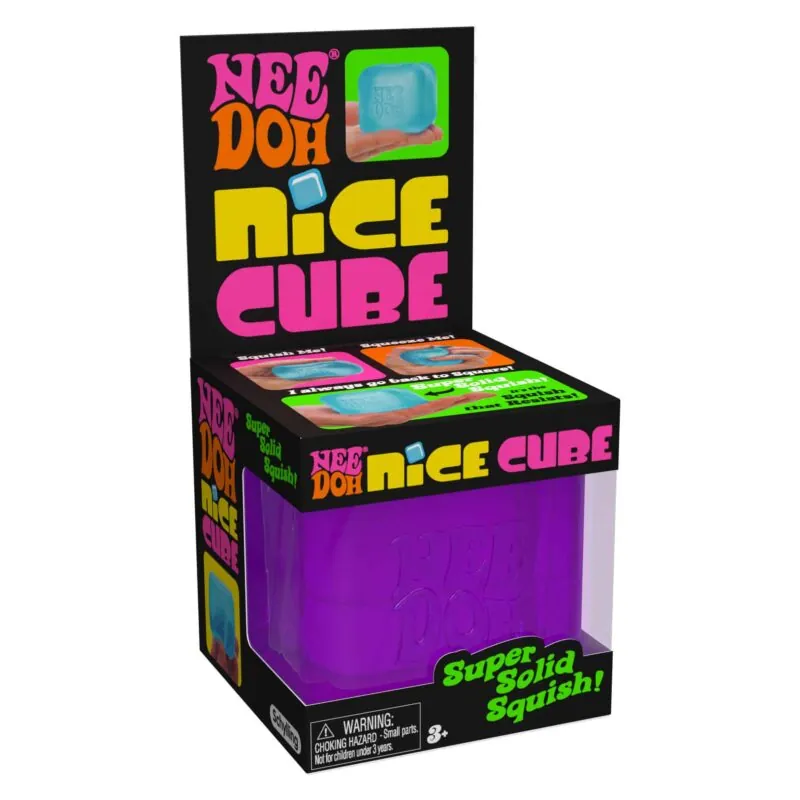
The pleaded case centers on Cristiana Mendoza, described in secondary summaries of the 47-page complaint as a behavioral technician who bought a NeeDoh Nice Cube at a Walmart in San Jose in April 2026. The complaint alleges that the toy ruptured indoors near a window and ejected hot adhesive filling, causing burn injuries. The same summaries report that Mendoza says she did not microwave the toy and did not intentionally heat it. [3][4]
Those details do real work in the pleading. A case framed around a microwaved toy would point quickly toward misuse arguments. Mendoza’s allegation is narrower and more consequential: the product allegedly ruptured without intentional heating, and the warning allegedly failed to disclose that heat exposure could make the filling dangerous. That is still only a plaintiff-side allegation, but it is the allegation the docket is now built to test.
The complaint itself is publicly linked, but the PDF was not parsed for this article. The specific narrative points above are therefore attributed to the named secondary summaries, not treated as independently extracted complaint text. [3][4][5]
The pleaded theory is warning adequacy
The case is being summarized as an inadequate-warning case, not as a court finding that the NeeDoh line has a proven design defect. The complaint alleges that Schylling marketed NeeDoh toys without adequate warnings that the toys may rupture and eject hot adhesive filling when exposed to heat. It also asserts California statutory claims under the Unfair Competition Law, Consumers Legal Remedies Act, and False Advertising Law. [3][4]
The proposed class language is broad. The summaries describe a proposed nationwide purchaser class and a narrower California injury subclass. At this stage, those are requested litigation categories. They do not mean a class exists, that anyone can submit a claim, or that the court has accepted the plaintiff’s theory. [3][4]
| Pleaded category | What is alleged |
|---|---|
| Named plaintiff | Cristiana Mendoza, who allegedly bought a Nice Cube at a San Jose Walmart in April 2026 [3][4] |
| Incident theory | Toy allegedly ruptured indoors near a window and ejected hot adhesive filling; no microwaving or intentional heating alleged [3][4] |
| Primary liability frame | Inadequate warnings about rupture and hot filling, as summarized from the complaint [3][4] |
| Statutory claims | California UCL, CLRA, and False Advertising Law claims [3][4] |
| Proposed classes | Nationwide purchaser class and California injury subclass, as proposed in the complaint summaries [3][4] |
The product-scope allegations are also wider than the named plaintiff’s Nice Cube purchase. The summarized complaint identifies Nice Cube, Dream Drop, Groovy Glob, Super NeeDoh, Teenie NeeDoh, Gumdrop, Groovy Fruit, Dohnut, Jelly Dohnut, Squeezza, Nice-sicle, Press Doh, Color Change Cube, and materially similar products. That list is a pleaded scope, not a tested product universe. [3][4]
This distinction is familiar in warning-adequacy product files. The relevant early question is not whether a headline says a toy “exploded,” but what the seller allegedly knew, what risk the warning allegedly omitted, what use or foreseeable exposure the pleading describes, and what the defendant admits or disputes after appearing. For a nearby labeling comparison, see the warning-focused treatment in Rohto eye drops product-liability claims.
The docket timeline is short, and that is the point
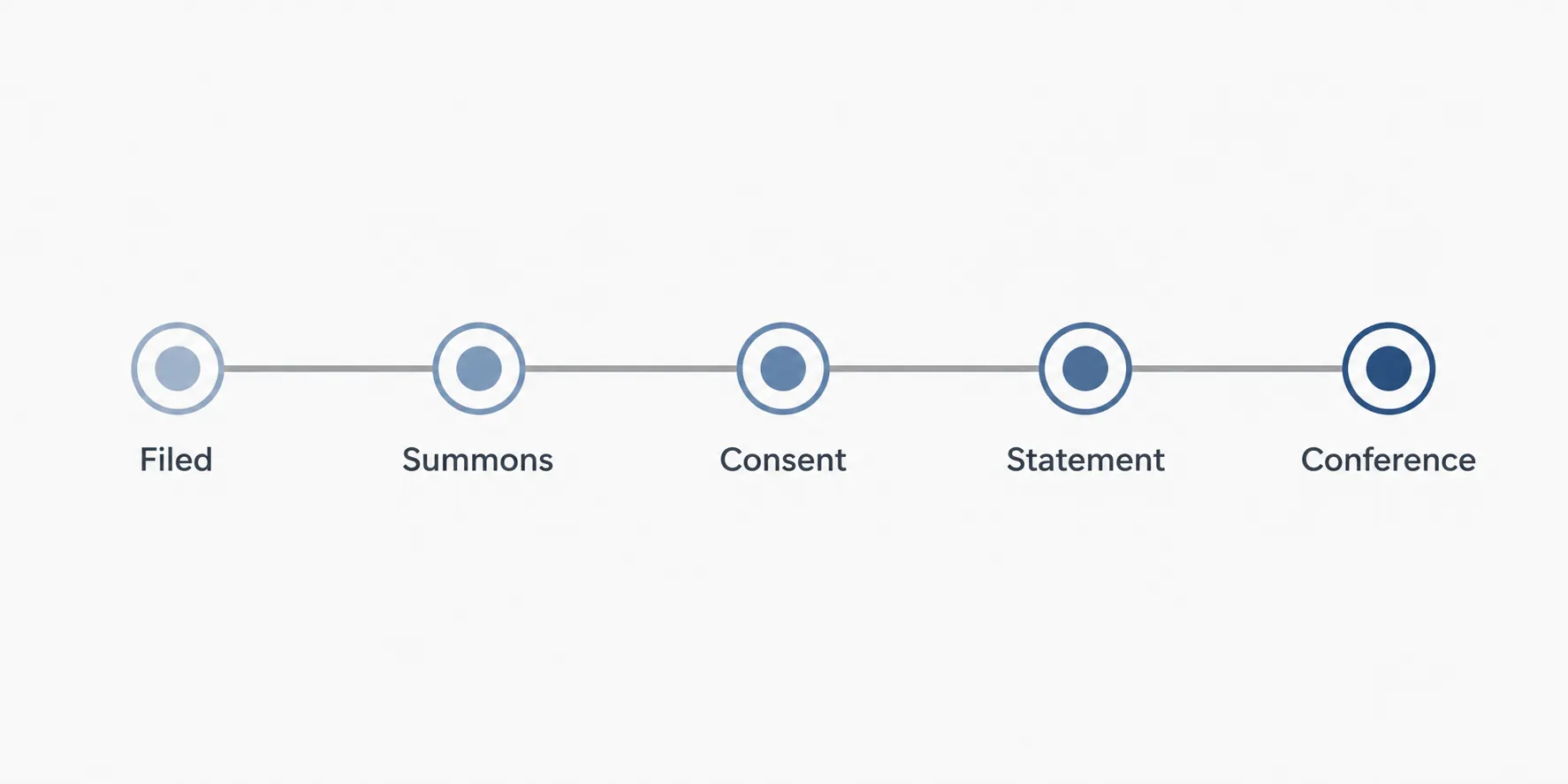
The PACER Monitor page is a third-party docket mirror, not the court’s own PACER interface. It is useful for public tracking, but any filing, service, answer, or deadline should be rechecked against the official federal docket before a lawyer relies on it. The mirror currently shows the case opening and early scheduling milestones, not a developed merits record. [1]
| Date | Docket event or deadline |
|---|---|
| July 21, 2026 | Complaint filed in the Northern District of California [1] |
| July 22, 2026 | Summons issued [1] |
| August 5, 2026 | Consent or declination deadline [1] |
| October 14, 2026 | Case-management statement due [1] |
| October 21, 2026 | Initial case-management conference set by videoconference [1] |
The next meaningful procedural changes are not mysterious, but they are not on the record yet. Schylling may answer, move to dismiss, challenge the pleading, contest class allegations, or otherwise respond after the relevant procedural triggers. Later, if the case survives long enough and plaintiff counsel pursues it, class certification would require its own motion and court order. Nothing in the present docket substitutes for those events.
What is not established
- No court has found that a NeeDoh toy ruptured and caused Mendoza’s injuries.
- No answer is reflected in the docket mirror reviewed here, so there are no pleaded admissions by Schylling in this record. [1]
- No class has been certified, and the proposed nationwide and California classes remain allegations and requests. [3][4]
- No settlement fund, claim form, or claims administrator exists in the case record reviewed here. [1]
- No CPSC NeeDoh recall is confirmed in the materials reviewed for this record; Schylling’s cited safety-alert page identifies a different 2015 recall. [2]
The complaint summaries also refer to other alleged burn incidents, including an 11-year-old boy’s alleged third-degree burns, and to plaintiff-side characterizations that Schylling acted knowingly or deliberately. Those assertions may explain the complaint’s tone and requested relief, but they remain allegations unless proved or admitted. [3][4]
Why the recall search keeps appearing
The recall confusion did not come from nowhere. Consumer Reports asked the CPSC on March 19, 2025 to investigate chemical burn risks from gel in sensory squeeze toys, including the NeeDoh Nice Cube. [6] Consumer Reports later published an investigation on squishy fidget toys and reported that Schylling disputed Consumer Reports’ pH finding while pointing to misuse and standards-compliance defenses. [7]
Those materials are relevant background, not proof of the Mendoza allegations. A consumer petition is not a recall. A product test is not a court finding. A manufacturer’s public position is not a judicial defense ruling. Each may become part of the broader factual conversation, but none changes the docket posture of the July 2026 complaint.
Two SaferProducts.gov reports also appear in the background record, but they are consumer self-reports and should be handled as such. The two report IDs supplied for this file are 5464670 and 5108893; the research brief notes no manufacturer responses for them. [8][9]
July 2026 media coverage added a separate safety-warning layer, especially around children heating or microwaving NeeDoh-style toys and clinicians warning that serious burns could result. CNN, NBC Connecticut, and CBS New York all covered that warning context. [10][11][12] It may matter to consumer behavior and to misuse arguments, but it does not erase the pleaded Mendoza allegation that her Nice Cube was not microwaved or intentionally heated.
Schylling’s public safety-alert page is also easy to misread if someone arrives with the word “recall” already in mind. The page supplied here describes a CPSC-cooperative recall dated May 12, 2015 for Press & Go police vehicles. It does not document a NeeDoh recall. [2] That boundary is the same kind of recall-status discipline used in Rohto eye drops recall tracking and Maple Leaf bacon recall analysis.
What changes the record next
The first useful update is Schylling’s response: an answer, a motion to dismiss, or another filing that states how the company contests the complaint. Until then, the public docket mostly tells readers that the lawsuit exists and that early case-management deadlines are approaching.
The second useful update is motion practice. A motion to dismiss would test pleading sufficiency, not resolve every factual dispute. An answer would frame admitted and denied allegations. Discovery, if reached, would begin to separate product documents, warnings, incident history, causation evidence, and damages from the allegations as drafted.
The third useful update is any class-certification activity. Proposed class language in a complaint is cheap to overread. Certification would require a later motion, evidence, opposition, and an order. Until then, a purchaser who sees the phrase “class action” should not assume there is an approved class, a claims process, or compensation available.
As of August 2, 2026, the clean record is this: Mendoza v. Schylling is a trackable federal product-liability docket with serious burn and warning allegations pending; the allegations are not proven; no answer is on the docket mirror reviewed here; no class is certified; and no CPSC NeeDoh recall is confirmed in the materials reviewed for this article.
References
- Mendoza v Schylling, Inc, PACER Monitor
- Safety Alert, Schylling
- Class Action Lawsuit Alleges NeeDoh Sensory Toys Can Explode When Exposed to Heat, Posing Risk of Severe Burns, ClassAction.org
- NeeDoh Sensory Toy Burn Hazard Lawsuit, ClassAction Pulse
- Schylling Complaint
- Consumer Reports Urges CPSC to Investigate Chemical Burn Risks from Gel in Sensory Squeeze Toys, Including the NeeDoh Nice Cube, Consumer Reports, March 19, 2025
- Squishy Fidget Toys Can Be a Sticky Mess—or Worse, Consumer Reports, December 16, 2025
- Report 5464670, SaferProducts.gov
- Report 5108893, SaferProducts.gov
- Needoh Microwave Burns, CNN, July 12, 2026
- Connecticut Doctor Warns Heated NeeDoh Toys Can Cause Serious Burns, NBC Connecticut
- Needoh Fidget Toys Microwave Viral Challenge, CBS New York
Related records
Tool profile
How Meta's AI Spending Reshapes Law Firm ProfitabilityGoverning regulation
Browse the obligations tracker →Preventive workflow
Browse verification workflows →
Report a correction or tip
Spotted an outdated figure, a misstated fact, or a ruling this case record should reflect? Public comments are disabled for this content given the professional cost of a misreported case outcome, penalty amount, or rule text — use the structured correction channel instead.
Report a correction or tip for this record →