
Where the SpaceXAI Unpermitted Turbine Enforcement Stands
The SpaceXAI (formerly xAI) turbine enforcement record in Southaven, Mississippi is live, not settled: a federal Clean Air Act citizen suit and a July 2026 MDEQ agreed order are pending, with full removal deferred to July 2027 and no penalty assessed. Every date, turbine count, and emissions figure is timestamped and attributed to a primary source.
- Jurisdiction
- US federal and Mississippi state
- Court
- U.S. District Court for the Northern District of Mississippi
- AI tool named
- SpaceXAI (formerly xAI)
- Ruling date
- Jul 30, 2026
- Source document
- View primary court order ↗
- Last verified
- Aug 3, 2026
Lex Machina Review is an independent risk-tracking and reference resource. Nothing on this site is legal advice, and using it does not create an attorney-client relationship. Every record is reviewed against primary sources but may not reflect the most current status of a matter — always verify directly against the cited court order, rule text, or a licensed attorney before relying on it.
Companion explanation — secondary to the source document above
As of Aug. 3, 2026, the SpaceXAI unpermitted turbines environmental-enforcement record is not a closed penalty file. The federal Clean Air Act citizen suit over the Southaven, Mississippi Colossus 2 power setup remains pending in the Northern District of Mississippi; the Mississippi Department of Environmental Quality entered an agreed order on July 30, 2026; no penalty has been assessed; no court has ruled on the merits; turbine removal is scheduled to begin Aug. 18, 2026, with full removal deferred into July 2027 under the state order; and congressional scrutiny has not been reduced to a final finding or sanction.[1][2]
That status matters because several events that sound conclusive in headlines are procedural steps: an agency order entered, a joint dismissal motion filed, and removal dates agreed. None is the same thing as a merits ruling that the turbines violated the Clean Air Act, and none is a penalty assessment. For readers tracking AI-infrastructure enforcement risk, this record fits awkwardly into ordinary litigation databases because the risk signal is the open posture itself.

Current status block
| Field | Status as of Aug. 3, 2026 |
|---|---|
| Federal case | NAACP and Mississippi State Conference NAACP v. xAI Corp. and MZX Tech LLC, pending in the U.S. District Court for the Northern District of Mississippi. |
| Claim track | Clean Air Act citizen suit. Plaintiffs seek declaratory and injunctive relief, best available control technology, and per-day Clean Air Act penalties, but no penalty has been assessed. |
| State agency track | MDEQ agreed order entered July 30, 2026. The order provides for removal beginning Aug. 18, 2026, with certain units allowed to remain past the original 12-month window and newest units required to stop by July 14, 2027.[1] |
| Merits ruling | None identified in the supplied record. The stationary-source versus mobile-temporary exemption dispute remains unresolved by a court. |
| Dismissal posture | xAI, DOJ, and Mississippi jointly sought dismissal in June 2026, but a filed dismissal request is not the same as a dismissal order.[3] |
| Congressional track | The July 29, 2026 House Energy and Commerce minority letter and a separate Senate EPW inquiry remain part of the open oversight record.[6] |
| Name issue | Older materials refer to xAI. The search term “SpaceXAI” reflects the later SpaceXAI naming context, but the enforcement documents in this record mostly concern xAI and the Southaven Colossus 2 site. |
For comparison with other records where the procedural posture does most of the work, see the site’s Hearn docket verification note. The same discipline applies here: “joint dismissal sought” does not mean “case dismissed,” and “agreed order entered” does not mean “federal claims adjudicated.”
How the record reached this posture
The citizen-suit track begins with the Feb. 13, 2026 notice of intent to sue. That notice is not the complaint; it is the Clean Air Act prerequisite that starts the waiting period before private plaintiffs may file. The notice asserted that turbines at the Southaven site were operating without the required Clean Air Act permits and attached an exhibit supporting the plaintiffs’ allegations.[4]
On March 10, 2026, MDEQ issued a permit for 41 permanent turbines at the site. That agency action did not dispose of the dispute over allegedly operating temporary or mobile gas turbines, and it did not answer the later federal complaint’s Clean Air Act claims. It is one of the reasons the record can be misread: a permitting event and an enforcement defense can sit beside each other without resolving the citizen suit.[5]
The complaint followed on April 14, 2026. The plaintiffs — the NAACP and the Mississippi State Conference NAACP, represented by the Southern Environmental Law Center and Earthjustice — alleged that xAI and MZX Tech LLC were operating 27 unpermitted gas turbines at up to 495 MW at the Colossus 2 data center site. The complaint materials framed the operation as an illegal power plant supporting AI data-center infrastructure and sought declaratory relief, injunctive relief, pollution controls, and Clean Air Act penalties.[2]
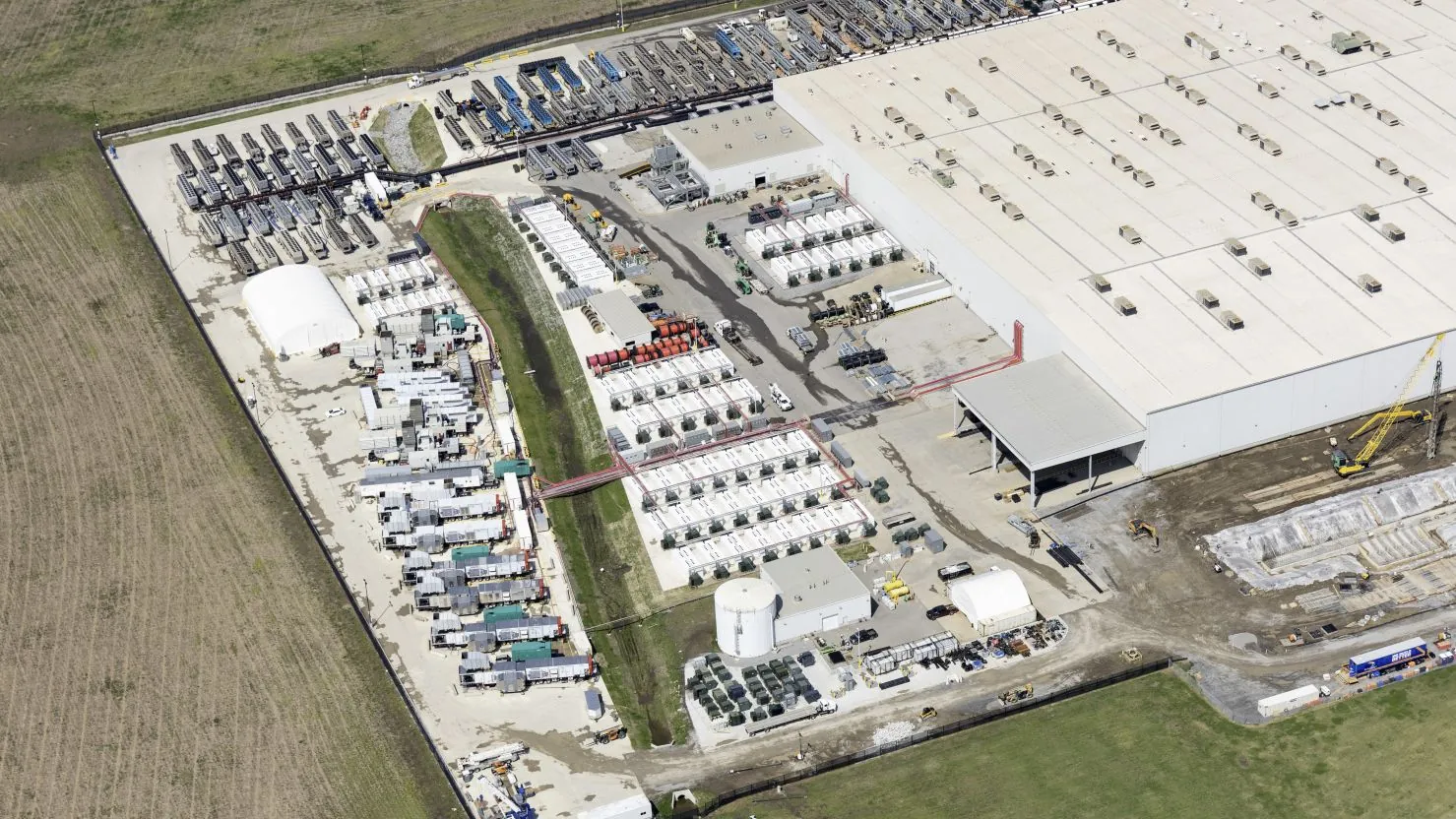
The May 6 preliminary-injunction motion pushed the federal case from pleading into urgent-relief territory. Around the same time, Mississippi Today reported that MDEQ had confirmed 46 turbines at the site and that the agency was treating many of them as temporary units, a position materially different from the plaintiffs’ characterization of an unpermitted stationary source.[5]
DOJ then entered the record. On May 15, 2026, the Department of Justice filed an intervention notice, and on June 16, 2026, DOJ’s memorandum and the joint dismissal posture put national-security and AI-infrastructure arguments directly into an environmental citizen suit. Reporting on the filings described the government’s position that the suit threatened national, economic, and energy security, and the joint motion sought dismissal by xAI, DOJ, and Mississippi.[3]
That intervention is important, but it should not be overread. It supplies a federal executive-branch litigation position; it does not decide whether the turbines are stationary sources, whether an exemption applies, whether emissions thresholds were crossed, or whether plaintiffs are entitled to relief. It also does not erase the state order entered the following month.
The July 30, 2026 MDEQ agreed order is now the most concrete operational document in the record. It addresses 69 turbines and sets a removal schedule. Removal is to begin Aug. 18, 2026. Thirteen units may run past the original 12-month deadline, and the newest units must stop by July 14, 2027.[1][3]
That is a compliance schedule, not a fine. Counsel briefing the matter should resist the shortcut that turns “agreed order” into “violation resolved.” The state order narrows some practical questions about what happens to the turbines, but the federal suit and the exemption dispute remain live on the supplied record.
The turbine count is a dated evidence trail, not a single corrected number
The count progression is one of the easiest places to lose the record. A later number does not simply “correct” an earlier number unless the source says so. It may reflect new equipment, new confirmation, different counting rules, or a later document capturing a changed site.
| Date or window | Turbine count | Source type | What the number supports |
|---|---|---|---|
| April 14, 2026 | 27 | Plaintiff complaint / SELC public materials | The number pleaded when the Clean Air Act citizen suit was filed; not a court finding.[2] |
| May 6–11, 2026 reporting window | 46 | MDEQ-confirmed count reported by Mississippi Today | A regulator-confirmed count reported after the complaint; this is stronger than an advocacy estimate but still not a merits ruling.[5] |
| Mid-May 2026 | 57 | Emails obtained by SELC | A plaintiff-side document trail indicating a higher count; useful as an evidentiary lead, not equivalent to an adopted agency finding. |
| July 14, 2026 | 59 | Reuters reporting described in later record materials | A press-reported count; because the Reuters page was not supplied as a directly available source here, it should be rechecked before being used as a primary figure. |
| July 29, 2026 | At least 60 | House Energy and Commerce minority letter to Elon Musk | A congressional oversight assertion relying on reported analysis; it is an inquiry record, not an adjudication.[6] |
| July 30–31, 2026 | 69 | MDEQ agreed order and subsequent reporting | The operative count for the state agreed-order removal schedule.[1][3] |
The safest shorthand is therefore not “27 turbines” or “69 turbines” in isolation. It is “27 alleged in the April complaint; 46 MDEQ-confirmed in May reporting; 69 addressed in the July MDEQ agreed order.” That phrasing is clumsy, but it is the difference between a record and a rumor.
Emissions figures need source labels
The emissions allegations are serious, but they are not all the same kind of fact. Some are plaintiff-side allegations, some are advocacy-commissioned estimates, some are press or congressional summaries of reported analysis, and the supplied record does not identify a court or regulator adopting them as final findings.
| Figure | Source type | How to use it |
|---|---|---|
| More than 1,700 tons of nitrogen oxides per year; up to 180 tons of fine particulates; 500 tons of carbon monoxide; 19 tons of formaldehyde per year | SELC / Earthjustice complaint materials | Use as plaintiffs’ alleged emissions case, not as an adjudicated emissions finding.[2][7] |
| About 20 tons of fine-particle pollution per year and $30–44 million in annual health damages for the 41 permanent turbines | SELC-commissioned EmPower Analytics study described in advocacy materials | Use only with the commissioned-study label; do not present as an MDEQ or court calculation.[7] |
| Approximately 2,500 tons of nitrogen oxides, approximately 4,000 tons of carbon monoxide, and approximately 22 tons of formaldehyde from roughly 30 turbines | Reported analysis cited in the July 29, 2026 Pallone letter | Use as a congressional inquiry allegation relying on reported analysis, not as an independent congressional measurement or regulatory finding.[6] |
A separate TechCrunch figure of more than 2,000 tons of nitrogen oxides per year is noted in the supplied research brief, but no source URL was supplied for direct citation in this record. It should be treated as a press-reported figure to re-verify before reuse, not as a primary number for a litigation brief.
This is the same verification problem that appears in AI-infrastructure claims outside environmental litigation. The site’s Jensen Huang AI jobs claim verification record is a useful analogue: the question is not whether a claim is rhetorically powerful, but whether the source, date, and measurement are being carried forward accurately.
The exemption dispute remains unresolved
The core legal tension is whether the turbine setup should be treated as an unpermitted stationary source or whether temporary/mobile-unit treatment changes the permitting analysis. Plaintiffs contest the exemption theory. MDEQ’s position, as reflected in the reporting and state process, differs from the plaintiffs’ framing. The supplied record does not contain a court order deciding the issue.[5]
That unresolved point is why the matter cannot be summarized as “SpaceXAI fined for unpermitted turbines” or “SpaceXAI cleared.” Neither sentence matches the documents. The agreed order gives the state a removal timetable; the federal case still tests whether plaintiffs can obtain the Clean Air Act relief they requested.
What the congressional letters add — and what they do not
The House Energy and Commerce minority letter dated July 29, 2026 asks Elon Musk and SpaceXAI for information about turbines, permitting, emissions, and the company’s statements. It uses “at least 60” turbines and cites reported emissions analysis, including approximately 2,500 tons of nitrogen oxides, approximately 4,000 tons of carbon monoxide, and approximately 22 tons of formaldehyde from about 30 turbines.[6]
The letter is an oversight document. It is useful because it shows congressional attention and preserves a dated set of questions. It is not a penalty order, not a Clean Air Act adjudication, and not a substitute for the MDEQ agreed order or the federal docket.
A separate Senate EPW inquiry is also part of the supplied research record, including broader allegations about AI companies, gas plants, and carbon dioxide emissions. Because no direct URL for that release was supplied here, this article does not rely on its numeric assertions. The safer description is that congressional scrutiny remains open on more than one track.
What not to merge into this record
This Southaven matter should not be blended with separate SpaceX environmental issues in Texas, including water-deluge or launch-site matters. Those may matter for a company-wide environmental-risk review, but they are distinct records with different agencies, facts, and procedural histories.
Nor does this record turn into a general article about AI data-center energy demand. The DOJ filing makes AI infrastructure and national-security arguments relevant to this case, but the operative tracking questions remain narrower: which turbines, which permits, which forum, which order, which motion, and which compliance date.
For readers comparing environmental proof problems across climate and emissions litigation, the site’s heatwave attribution litigation docket and climate attribution studies in court records raise the same habit: keep the scientific or technical assertion tied to the forum that accepted, challenged, or merely cited it.
The risk to track from here
The immediate operational date is Aug. 18, 2026, when removal is scheduled to begin under the MDEQ agreed order. The long-tail date is July 14, 2027, when the newest units covered by the order must stop. Between those dates, the practical question is whether removal proceeds on schedule and whether the federal court takes up or disposes of the pending claims.[1]
The legal questions remain narrower than the public controversy. Has a court ruled on the Clean Air Act merits? No, not on the supplied record. Has a penalty been assessed? No. Has MDEQ entered an order with a removal schedule? Yes. Has the turbine count changed over time in a way that must be dated and sourced? Yes. Are congressional inquiries part of the risk environment? Yes, but they are oversight documents, not findings of liability.
That is where the SpaceXAI Colossus 2 turbine record sits on Aug. 3, 2026: a pending federal citizen suit, a state agreed order with delayed removal, unresolved exemption arguments, open congressional scrutiny, and a factual record that cannot be responsibly collapsed into a settled fine.
References
- MDEQ agreed order primary document, Mississippi Department of Environmental Quality, July 30, 2026.
- Civil rights group sues xAI for illegal pollution from data center power plant, Southern Environmental Law Center.
- Southaven xAI turbines deadline, Mississippi Today, July 31, 2026.
- 2026.02.13 final xAI Southaven NOI with Exhibit A, Earthjustice, Feb. 13, 2026.
- xAI 46 gas turbines no air permits, Mississippi Today, May 11, 2026.
- July 2026 letter from RM Pallone to Elon Musk re SpaceXAI, House Energy and Commerce Democrats, July 29, 2026.
- xAI illegal gas power plant data center Colossus, Earthjustice.
Related records
Tool profile
How Meta's AI Spending Reshapes Law Firm ProfitabilityGoverning regulation
Browse the obligations tracker →Preventive workflow
Browse verification workflows →
Report a correction or tip
Spotted an outdated figure, a misstated fact, or a ruling this case record should reflect? Public comments are disabled for this content given the professional cost of a misreported case outcome, penalty amount, or rule text — use the structured correction channel instead.
Report a correction or tip for this record →