
DeepSeek V4 Flash vs OpenAI Pricing for Legal Work
This comparison examines whether DeepSeek V4 Flash's lower per-token cost translates into real savings for legal workloads once verification and sanction risks are factored in. It finds that the discount holds only for human-reviewed, high-volume extraction and summarization tasks, not for client-facing research or filing-adjacent output.
- Tool
- DeepSeek V4 Flash
- Benchmark source
- Artificial Analysis; Solvimon; Stanford RegLab / Ho et al.
- Hallucination rate
- Not measured / undisclosed
- Test methodology
- Official rate-card comparison plus 30M/30M-token workload model; benchmark deltas from Artificial Analysis; legal hallucination data from Stanford RegLab/Ho et al.; AA-Omniscience calibration measure.
- Test date
- Jul 31, 2026
A rate-card comparison answers the easiest version of deepseek v4 flash api pricing vs openai. On tokens alone, DeepSeek V4 Flash is dramatically cheaper than the OpenAI tiers most likely to sit in the same procurement spreadsheet. That part is not subtle. The harder question is whether a law firm can keep that discount after the output has passed through the people, policies, and professional duties that turn model text into legal work.

The distinction matters because legal teams rarely buy an API for the abstract pleasure of cheaper text. They buy it to reduce the cost of deposition summaries, document triage, contract extraction, internal research support, first-pass matter analysis, and sometimes drafts that get uncomfortably close to client advice or court filings. The first group can benefit from cheap tokens. The second group can make cheap tokens look expensive.
The rate card really is lopsided
Last verified: 2026-07-31 UTC. DeepSeek-V4-Flash-0731 entered public beta on the same date, so this table should be rechecked at publication and again before any procurement decision is signed. The table separates official vendor pricing from third-party or aggregator pricing because those numbers answer different questions.
| Provider / model | Source type | Input price per 1M tokens | Output price per 1M tokens | Context / output notes | Commercial caveats |
|---|---|---|---|---|---|
| DeepSeek V4 Flash | Official DeepSeek API | $0.14 cache miss; $0.0028 cache hit | $0.28 | 1M context window; 384K max output | Public beta as DeepSeek-V4-Flash-0731 on 2026-07-31; table-level verification needed because the release is new. [1][2] |
| OpenAI GPT-5.4 Nano | Official OpenAI API | $0.20 | $1.25 | Official pricing tier in the supplied OpenAI rate card | Batch/flex discounts can be about 50%; Priority can be 2x; long-context surcharges and a 10% data-residency uplift may apply to eligible models released on or after 2026-03-05. [3] |
| OpenAI GPT-5.4 Mini | Official OpenAI API | Verify live rate before contracting | Verify live rate before contracting | Relevant comparison tier for benchmarks, but the supplied verified pricing extract does not provide a fixed Mini dollar rate | Do not fill this row from memory or an aggregator when preparing a legal procurement model. Use the live OpenAI price sheet. [3] |
| OpenAI GPT-5.6 Luna | Official OpenAI API | $1.00 | $6.00 | Official pricing tier in the supplied OpenAI rate card | Same batch/flex, Priority, long-context, and data-residency caveats as above. [3] |
| DeepSeek V4 Flash via OpenRouter | Third-party host / aggregator | $0.09 | $0.18 | Third-party route to DeepSeek V4 Flash | Lower than the official DeepSeek rate, but not the same vendor, contracting, data, support, or availability question. [4] |
Against GPT-5.4 Nano, V4 Flash is only modestly cheaper on uncached input tokens, but it is about 4.5x cheaper on output tokens. Against GPT-5.6 Luna, the gap is much wider: about 7.1x cheaper on input and about 21.4x cheaper on output, before any OpenAI batch/flex discount, Priority uplift, data-residency uplift, or long-context surcharge is applied. Those are real differences, not rounding errors.
That is why a spreadsheet built only from token prices will reach the obvious first conclusion: V4 Flash is the cheapest official frontier-class API listed in this comparison. It also explains why buyers should not treat the OpenRouter number as if it were simply a better DeepSeek contract. A third-party host may be useful, but a law firm still has to ask who stores data, who supports the route, what logs are retained, where the request travels, and what happens when service quality or availability changes.
A 30M-token workload shows where the discount survives
The better procurement unit is not “one million tokens.” It is a recurring workload. Solvimon’s verified comparison used an identical monthly workload of 30M input tokens and 30M output tokens and estimated V4 Flash at about $12.60, GPT-5.6 Luna at about $210, and GPT-5.6 Sol at about $1,050. Solvimon marked that comparison verified on 2026-07-13. [5]
| Monthly workload | DeepSeek V4 Flash | OpenAI GPT-5.4 Nano | OpenAI GPT-5.6 Luna | What the number means |
|---|---|---|---|---|
| 30M input + 30M output tokens | $12.60 using the official DeepSeek rate | $43.50 using the official Nano rates in the supplied pricing extract | $210 using the official Luna rates | Token-only run cost before human review, vendor-management cost, data controls, or sanction-risk premium. [1][3][5] |
For high-volume legal extraction and summarization, that discount can remain meaningful. The reason is not that the output is magically safe. It is that the work is already designed to be checked. A litigation team summarizing depositions, clustering discovery documents, extracting clauses from contracts, identifying dates from a production set, or preparing internal matter notes usually has a review layer between model output and professional reliance.
That review layer changes the economics. If a staff attorney is already sampling extracted fields against source documents, a cheaper model can lower the cost of generating the first pass without changing the final control point. If an associate is using summaries to decide which deposition segments deserve closer reading, lower output-token pricing can make broader coverage affordable. If a knowledge-management team is enriching an internal clause bank, cheaper generation can support more iterations before a lawyer approves the final taxonomy.
The common feature is boundedness. The model is asked to work against a known document set, and the reviewer can compare the answer to the underlying material. A deposition summary can be checked against a transcript. A clause extraction can be checked against a contract. A document-triage label can be sampled against the file. A matter-analysis note can be kept internal until someone confirms the factual basis.
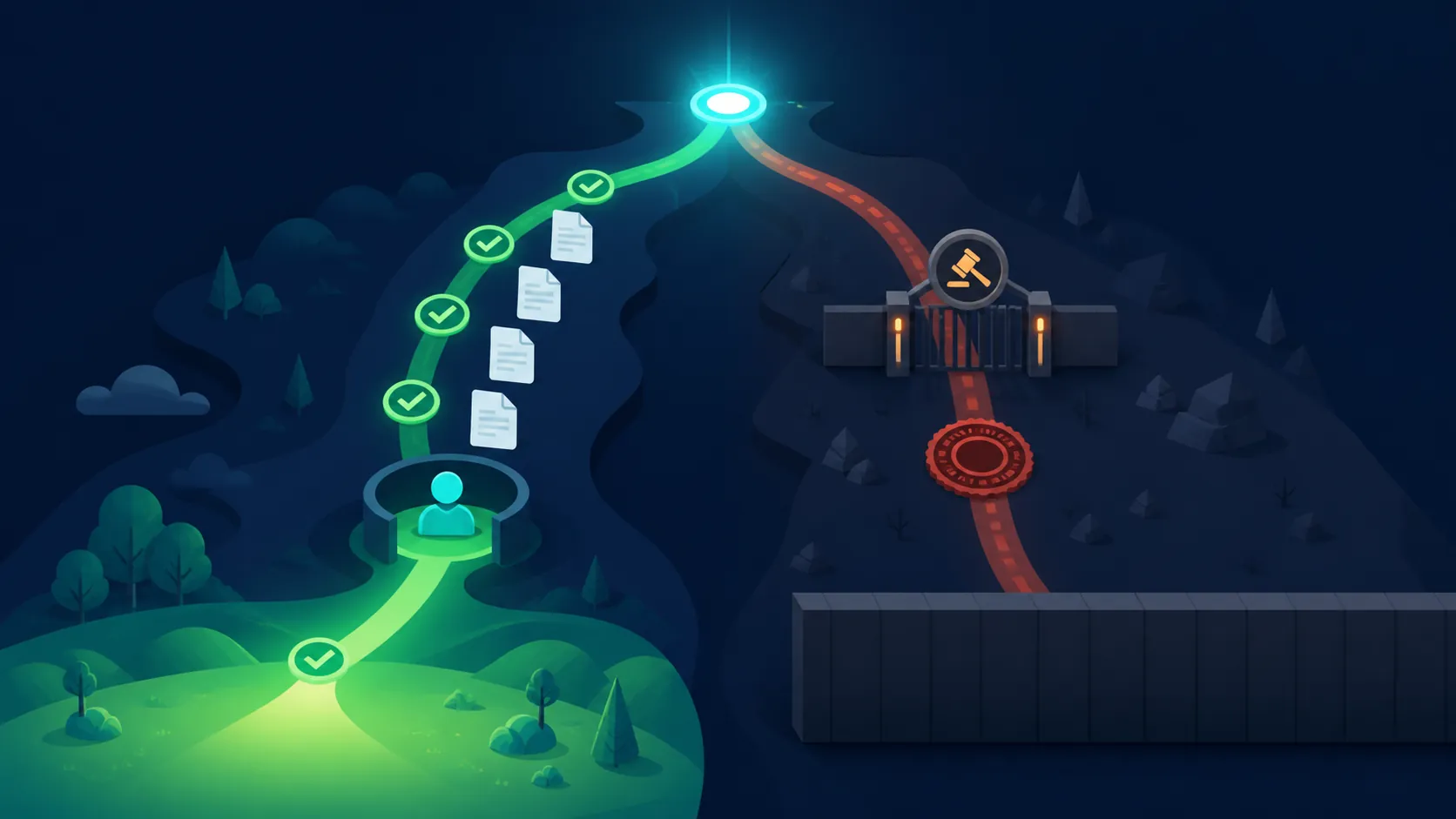
This is the part of the comparison where V4 Flash deserves attention. A 1M context window is useful for long document sets, and the official rate card makes repeated summarization and extraction runs far less painful than they would be on a higher-priced output tier. Artificial Analysis also reported benchmark strengths that are relevant to document-heavy legal workflows: V4 Flash scored 78.7% on MRCR 1M long-context retrieval versus 47.7% for GPT-5.4 Mini at 64K–128K, 69.0% on MCP Atlas tool use versus 57.7%, and 88.1% on GPQA Diamond versus 88.0%. [6][7]
Those benchmark deltas do not prove that V4 Flash is the better legal model. They do show why it should not be dismissed as merely cheap. For controlled workflows where the source material is available, the answer format is constrained, and the reviewer’s job is to confirm or correct, the token discount can survive contact with legal operations.
Where the discount collapses: verified legal output
This article is the provider-comparison extension of Why OpenAI API Pricing Misleads Legal Professionals, which framed legal AI cost as token cost plus verification hours plus sanction-risk premium. The same framework becomes sharper in a DeepSeek-versus-OpenAI comparison because the token-cost difference is so large. If verification time remains constant, V4 Flash wins the token column easily. If verification expands because the output is being used as legal authority, the token column stops controlling the budget.
The governing question is simple enough to write into a procurement worksheet: how much human verification does this output require before a lawyer can rely on it? Client-facing research, citation generation, memo drafting that depends on legal authority, and filing-adjacent output sit on the expensive side of that line. They require lawyers to verify authorities, procedural posture, quotations, jurisdictional fit, and whether the cited material actually supports the proposition being advanced.
That is not a DeepSeek-only problem. Stanford RegLab and Ho et al. reported in the Journal of Empirical Legal Studies that Lexis+ AI, Westlaw AI-Assisted Research, and Ask Practical Law AI hallucinated 17–33% of the time even with retrieval-augmented generation, while general-purpose LLMs erred on 69–88% of legal queries. The same work reported verification overhead of about 4.3 hours per week. [8]
That finding is useful because it prevents a lazy conclusion. The issue is not that DeepSeek is cheap and therefore risky while legal research vendors are expensive and therefore safe. The issue is that legal querying has a documented error problem even when vendors add retrieval systems and legal databases. A law firm does not escape verification by paying more per token; it also does not make verification disappear by paying less.
ABA Formal Opinion 512 and Rule 11 exposure sit behind the cost model even when no sanction ever arrives. A lawyer who uses generative AI for legal work still has to supervise the output, protect confidentiality, and make reasonable inquiries before presenting material to a court. Many court standing orders and judge-specific AI rules turn that duty into a practical checklist: cite-check, quote-check, source-check, and certify only what the lawyer has actually verified.
The Artificial Analysis calibration result belongs here, but it has to be read precisely. AA-Omniscience measured V4 Flash answering incorrectly 96% of the time when it did not know an answer, the highest rate Artificial Analysis had recorded; V4 Pro was measured at 94%, while GPT-5.x reasoning models were in the roughly 78–86% range. That is an overconfidence/refusal-calibration measure. It is not a claim that 96% of V4 Flash outputs are fabricated. [6][7]
For law, calibration matters because a wrong answer that sounds complete creates work for someone else. A refusal, a qualification, or a signal of uncertainty can be annoying in a consumer chatbot. In legal drafting, it can be the difference between a reviewer spending two minutes confirming a boundary and twenty minutes unwinding a confident but unsupported proposition.
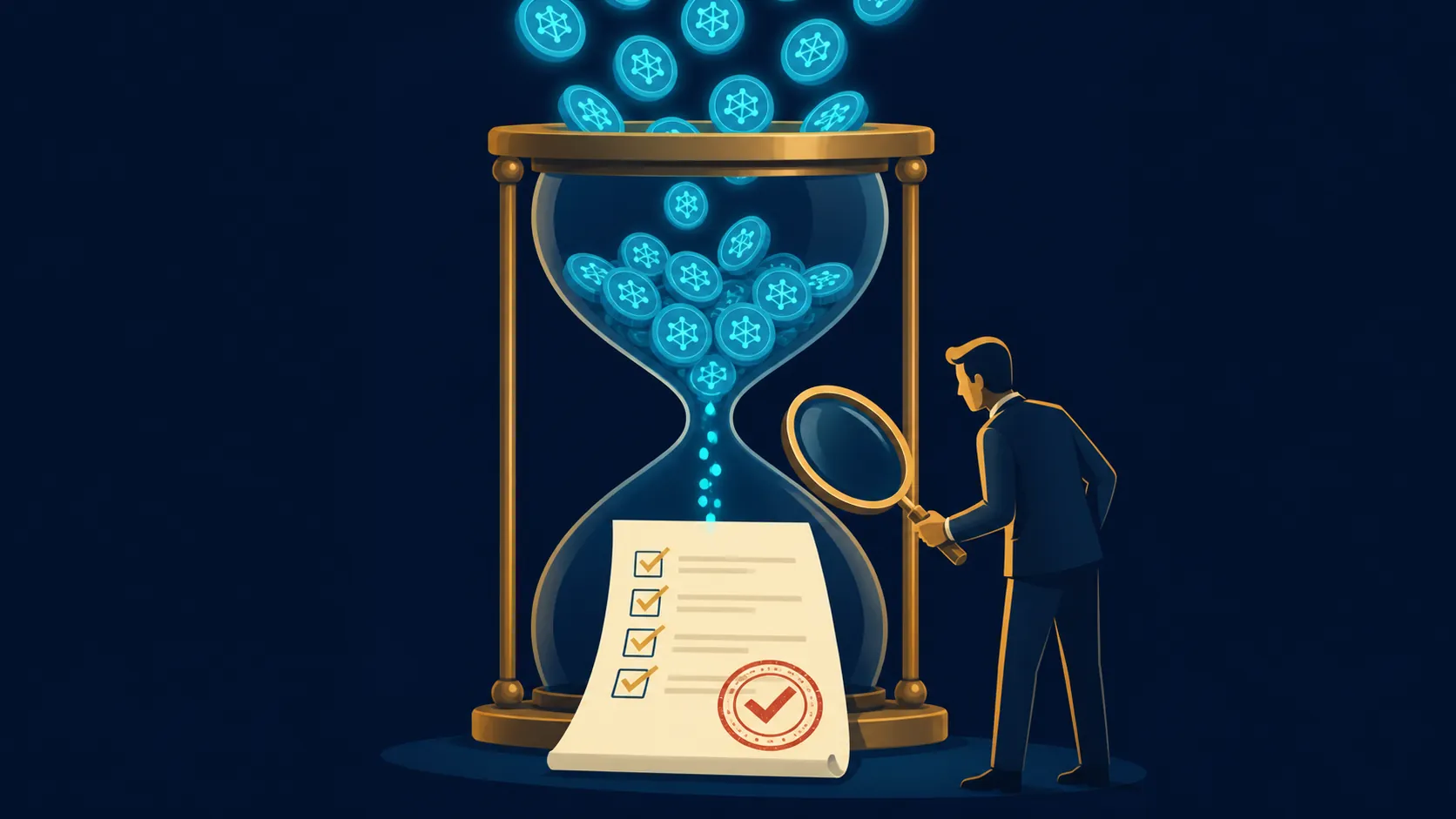
This is where the $12.60 workload can become misleading. If a 30M/30M run produces internal summaries that reviewers would have checked anyway, the low token bill is valuable. If it produces research propositions for a brief, the relevant cost is the lawyer time required to verify every authority and the premium associated with filing something that could trigger correction, embarrassment, client harm, or sanctions. The public AI hallucination cases database maintained by Damien Charlotin listed 1,811 cases and was updated on 2026-07-29, which is enough to keep sanction-risk premium in the spreadsheet even when the article does not assign a dollar figure to it. [9]
A practical split for legal workloads
The cleanest way to use V4 Flash in a legal cost model is to separate outputs that remain intermediate from outputs that ask a lawyer to rely on legal authority. The first category can be priced mostly like an operations problem. The second has to be priced like professional work.
| Workload | Does V4 Flash pricing likely help? | Why |
|---|---|---|
| Deposition and transcript summaries | Yes, when source-linked and reviewed | The reviewer can check the summary against the transcript, and the output is usually an internal aid rather than a filed assertion. |
| Document triage and issue tagging | Yes, especially at scale | The model creates bounded intermediate labels that can be sampled, corrected, and routed through existing review protocols. |
| Clause extraction and contract inventory work | Yes, if fields are source-verifiable | The output can be checked against the contract text, and the savings compound over large document sets. |
| Internal matter analysis from known materials | Sometimes | The discount helps when the model is organizing facts from a closed file; it helps less when the analysis drifts into legal conclusions. |
| Client-facing legal research | Usually not on token price alone | Authorities, quotations, jurisdictional fit, and negative treatment still require lawyer verification. |
| Citation generation | No, unless treated only as a draft candidate list | A citation that looks plausible but is wrong creates review burden rather than savings. |
| Briefs, motions, declarations, and filing-adjacent drafts | No procurement case should rest on token savings | The output touches Rule 11-style inquiry, court standing orders, and sanction-risk premium. |
The split is not a moral judgment about models. It is a control judgment about outputs. A cheaper model can be a very good fit when the legal team controls the source set, constrains the task, and has already budgeted review. The same model can be a poor bargain when it produces confident legal propositions that must be reconstructed from primary law before anyone can use them.
The secondary caveats are real, but they should not swallow the pricing question
There are several edge conditions a legal buyer should keep in the file without letting them displace the cost comparison. The first is V4 Pro pricing. The official DeepSeek page lists V4 Pro at $0.435 per 1M input tokens and $0.87 per 1M output tokens, while CloudZero reported $1.74 and $3.48 with a 75% promotional discount. That conflict should be treated as a live verification item, not a number to smooth over. [1][10]
The second is comparability. DeepSeek’s V4 models are text-only in this comparison, while OpenAI’s commercial stack includes multimodal capabilities, batch/flex and Priority routes, long-context pricing rules, and data-residency options. A law firm that needs those enterprise features may rationally pay a higher token price. A law firm running text-only extraction against reviewed source documents may not.
The third is regulatory and data-residency exposure. DeepSeek procurement in U.S. legal settings now sits inside a broader patchwork of Chinese AI regulation, state-level restrictions, client data terms, and institutional risk tolerance. That subject deserves its own diligence track; the site’s Chinese AI model and U.S. regulation analysis is the more natural place to park those questions rather than bury them in a token table.
OpenAI has its own non-token risks. Vendor concentration, outages, financing dependencies, and enterprise lock-in can all affect legal operations. The relevant comparison is not “DeepSeek has risk, OpenAI has none.” It is which risks a firm can govern for a given workload. The same procurement file may need to consider OpenAI vendor-concentration risk, ChatGPT outage exposure, AI chip-cost pressure, and law-firm AI procurement governance alongside the model-price worksheet.
There is also an infrastructure angle. DeepSeek V4’s mixture-of-experts economics and inference-hardware dependencies affect whether very low pricing remains durable, while broader chip-cost volatility can push legal-tech vendors toward higher pass-through prices or tighter usage controls. For buyers, that means the API line item should be reviewed with the same discipline used for retention, routing, fallback, and availability terms, not treated as a static commodity price.
For teams building a formal evaluation, the useful precedent is not a beauty contest among models. It is a retention-first, workflow-specific comparison like the site’s Claude Opus 5 and Fable 5 compliance evaluation: define the documents, define the permissible outputs, define the verification step, and only then compare model cost.
The procurement answer
DeepSeek V4 Flash should be on the shortlist for cheap, high-volume, human-reviewed extraction and summarization. The official $0.14 input and $0.28 output rate gives legal operations teams room to process more material, run more drafts, and support more internal workflows without turning the token bill into the blocker. For source-grounded work that remains inside a review process, the discount is real.
It should not be sold internally as a substitute for verified legal research or filing-adjacent drafting. Once an output depends on legal authority, the budget moves from API price to review time, cite-checking, confidentiality controls, court-order compliance, and sanction-risk premium. At that point, the firm is not buying cheap tokens. It is buying text that a lawyer must still make safe.
The procurement question therefore narrows from “Which API is cheaper?” to “Which outputs can remain cheap after a lawyer has done what the profession requires?” V4 Flash has a strong answer for bounded, human-reviewed intermediate work. It has a much weaker answer where the output asks to be relied on as law.
References
- Pricing, DeepSeek API Docs.
- Updates, DeepSeek API Docs.
- Pricing, OpenAI Developers.
- DeepSeek: V4 Flash, OpenRouter.
- OpenAI vs DeepSeek, Solvimon, verified July 13, 2026.
- DeepSeek is back among the leading open weights models with V4 Pro and V4 Flash, Artificial Analysis.
- DeepSeek V4 Flash, Artificial Analysis.
- Hallucination-Free? Assessing the Reliability of Leading AI Legal Research Tools, Stanford RegLab / Ho et al., Journal of Empirical Legal Studies, 2025.
- AI Hallucination Cases Database, Damien Charlotin, updated July 29, 2026.
- DeepSeek Pricing: How Much Does DeepSeek Cost?, CloudZero.
Chronological incident history
No sanction cases have named this tool in the tracked record set to date. This does not imply the tool is safe — see Risk Digest for ongoing monitoring.
← Compare peer toolsReport a correction or tip
Spotted an outdated figure, a misstated fact, or a ruling this tool profile should reflect? Public comments are disabled for this content given the professional cost of a misreported case outcome, penalty amount, or rule text — use the structured correction channel instead.
Report a correction or tip for this record →