
FBI proof-of-life verification for AI deepfake evidence
When a client receives proof-of-life media that may be AI-generated, FBI and IC3 guidance now provides a citable verification framework. This article distills the required steps—code words, recording the media, independent direct-contact verification, and forensic lab analysis—and shows how to operationalize them in an incident-response workflow for preservation and admissibility.
- Jurisdiction
- US Federal
- Court
- No court (FBI/IC3 guidance)
- AI tool named
- Deepfake AI
- Ruling date
- Dec 5, 2025
- Source document
- View primary court order ↗
- Last verified
- Jul 31, 2026
Lex Machina Review is an independent risk-tracking and reference resource. Nothing on this site is legal advice, and using it does not create an attorney-client relationship. Every record is reviewed against primary sources but may not reflect the most current status of a matter — always verify directly against the cited court order, rule text, or a licensed attorney before relying on it.
Companion explanation — secondary to the source document above
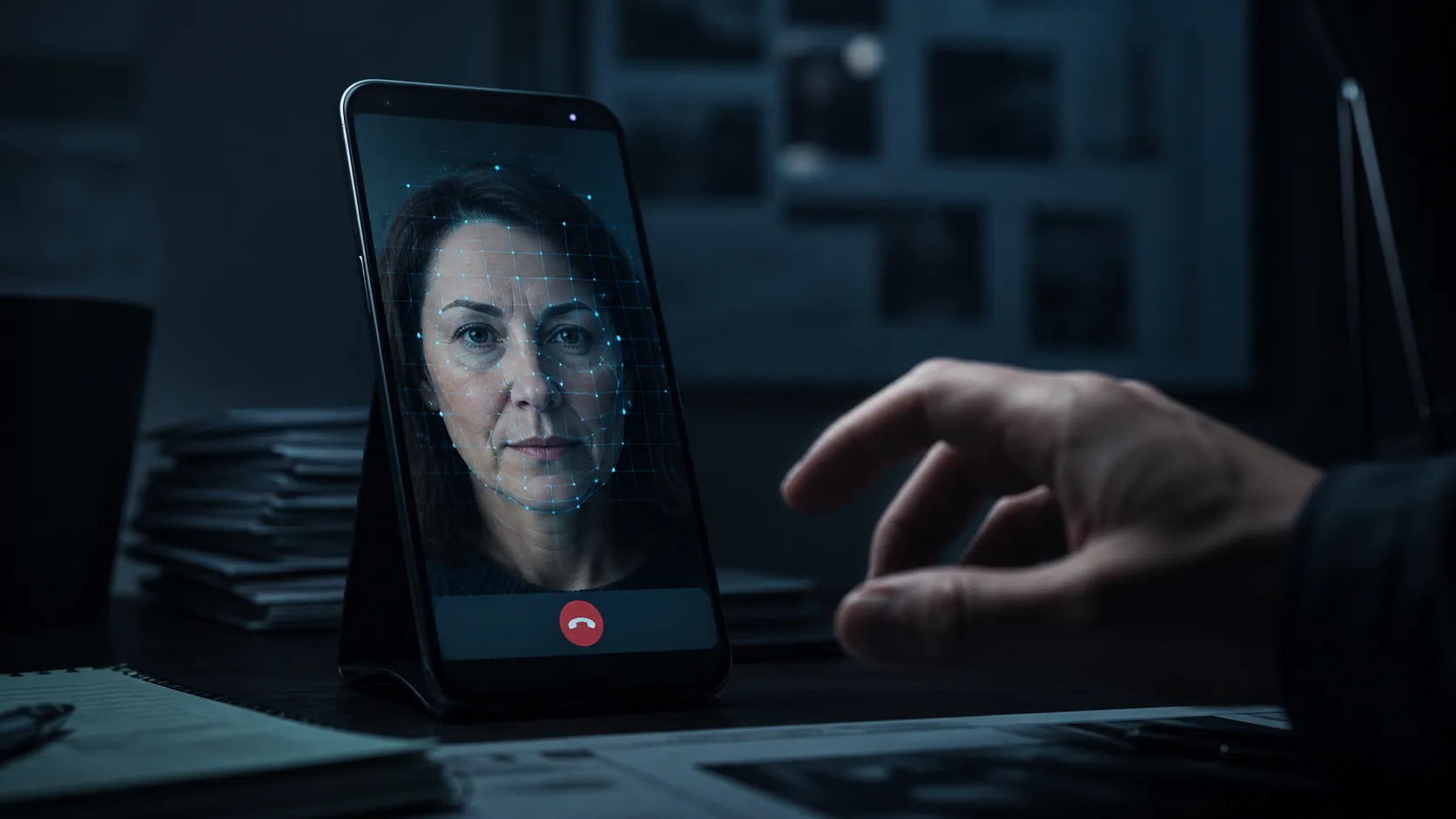
Savannah Guthrie’s demand was simple in human terms and difficult in evidentiary terms: show that her mother, Nancy Guthrie, who was reported missing in the Jan. 31–Feb. 1, 2026 window, was alive. The FBI’s public answer was not that video proof is useless. It was that video proof is no longer enough by itself. As FBI Phoenix chief Heith Janke told the Associated Press, “With AI these days you can make videos that appear to be very real. So we can't just take a video and trust that that's proof of life.” NPR covered the same proof-of-life problem in the Guthrie search as an AI and deepfake verification issue, not merely a missing-person development. [1][2]
That distinction matters for readers following the Guthrie case through the sheriff–FBI dispute. The public record includes ransom-note reporting, changing reward announcements, and contested interagency claims. Those facts belong in the background. The operational lesson sits elsewhere: if counsel, a family representative, or an incident-response team receives proof-of-life media during a kidnapping, extortion, or fraud event, visual confidence is not an authentication plan.
Nothing in the public materials reviewed here confirms that investigators received an AI-generated image or video of Nancy Guthrie. The AI issue is forward-looking and procedural. It is grounded in the FBI’s public warning in the Guthrie matter and in the FBI Internet Crime Complaint Center’s broader guidance on altered proof-of-life media. That is enough to change how the first file, first screenshot, first call log, and first decision memo should be handled.
The FBI/IC3 proof-of-life sequence
The load-bearing public guidance is IC3 PSA251205, issued in December 2025. It warns that criminals have used altered photos as fake proof-of-life media in virtual kidnapping-for-ransom scams, identifies visual indicators such as missing tattoos or scars and inaccurate body proportions, and recommends practical verification steps before payment: use a code word, record or screenshot proof-of-life media, and attempt direct contact with the alleged victim. [3]
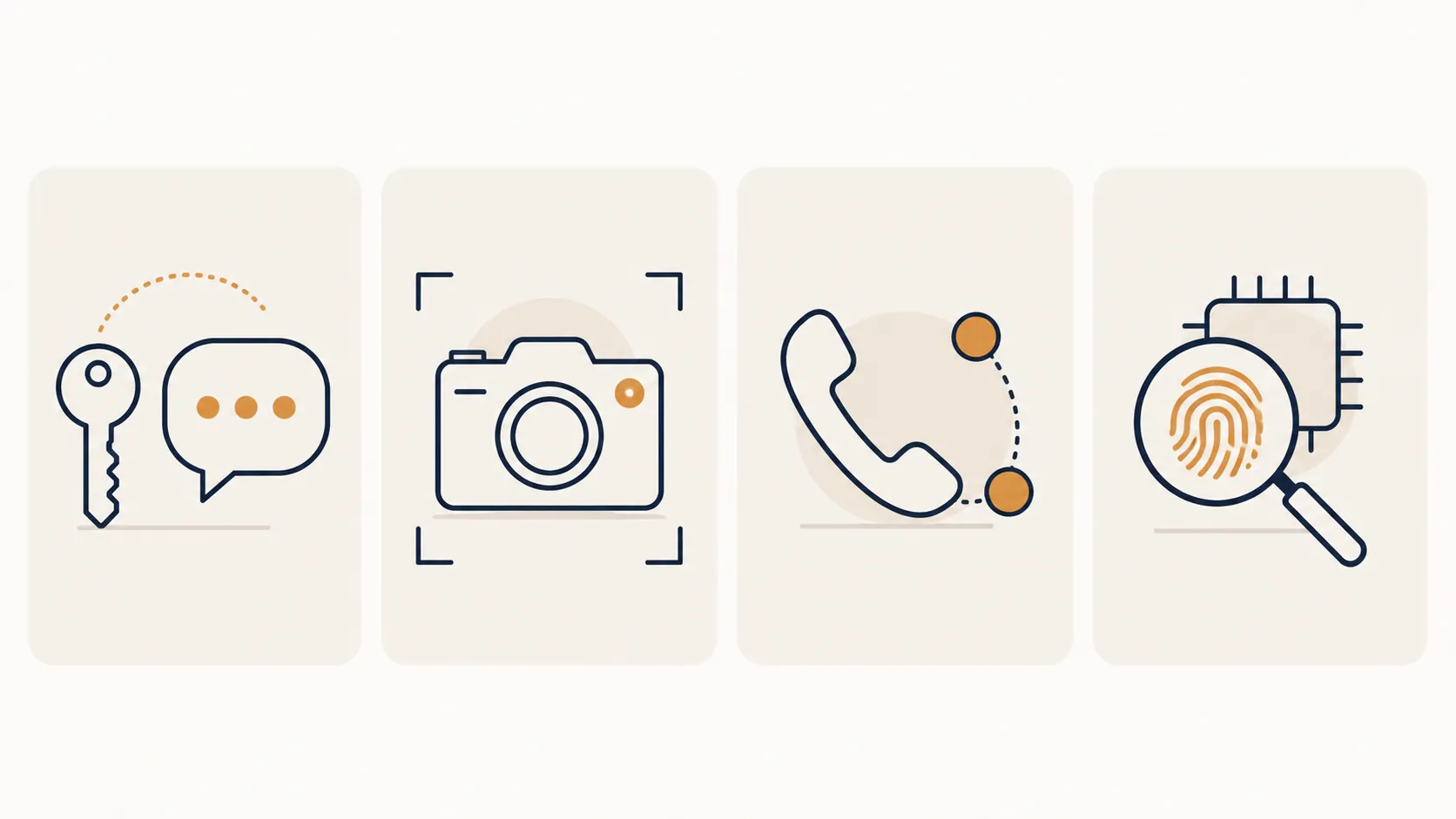
| IC3 step | What it does evidentially | What counsel should be able to explain later |
|---|---|---|
| Use a code word | Creates a prearranged authentication challenge that the sender should not be able to guess from the media itself. | When the code word was selected, who knew it, whether the response matched, and whether the challenge was compromised. |
| Record or screenshot the proof-of-life media | Preserves the received artifact and the surrounding context before panic, forwarding, compression, or deletion changes the record. | What was received, when it was captured, by whom, from which device or account, and whether the original file was retained. |
| Attempt direct contact | Uses a separate verification channel instead of letting the sender control the only source of truth. | Which numbers, accounts, employers, relatives, or other channels were tried, in what order, and with what result. |
| Escalate to forensic review when authenticity remains material | Moves the analysis beyond lay visual inspection and vendor assurances toward a documented technical assessment. | Who reviewed the media, what material was provided, what methods were used, and what limits the reviewer stated. |
The sequence is useful because it separates four questions that are often collapsed in a crisis: does the sender know something only the victim or family should know; what exactly was received; can the alleged victim be reached through an independent channel; and, if the media later matters in court or a payment decision, has a competent technical reviewer examined it?
A code word is an authentication challenge, not a comfort phrase
A code word works only if it is set before the crisis and kept narrow. In a family kidnapping scenario, that may mean a phrase known only to the alleged victim and a small set of trusted contacts. In an executive-fraud or law-firm extortion scenario, it may mean a prearranged challenge-and-response protocol held by security, legal, and one business approver. The legal value is not the word itself. The value is the ability to show that the media sender was tested against information not visible in the image, not inferable from public sources, and not invented after the demand arrived.
If the code word fails, the failure should be logged without turning the log into speculation. “Sender did not provide agreed code word” is useful. “Video is fake” may be more than the record supports at that point. The first formulation preserves an observable verification result; the second creates an avoidable cross-examination target.
Recording and screenshots are preservation acts
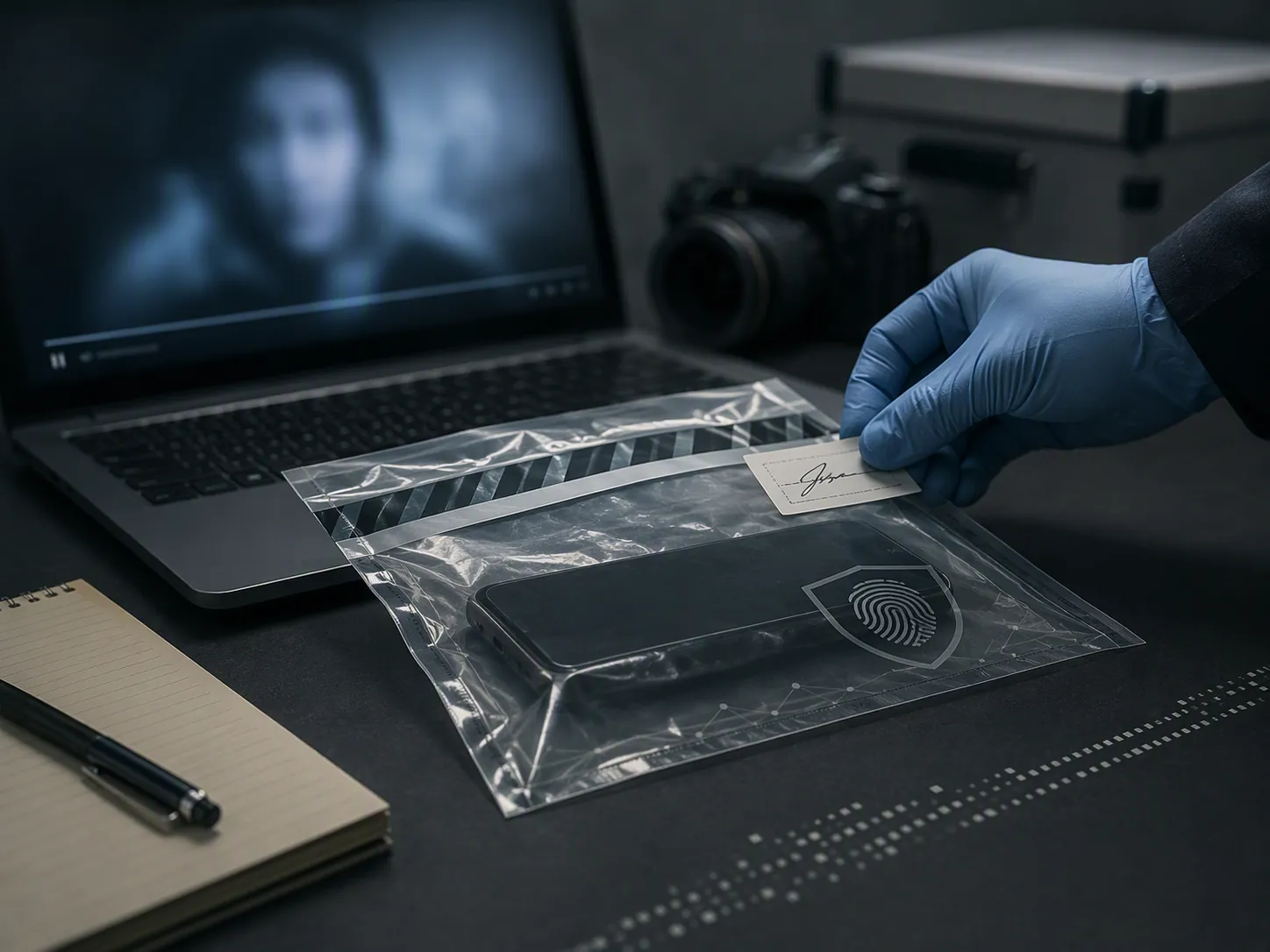
The instinct to forward the clip to “someone technical” is understandable and often damaging. Messaging apps strip metadata. Platforms compress media. A hurried screenshot may omit the sender account, time stamp, message thread, or payment demand that gives the file its meaning. Deleting the thread after copying the video can turn a preservation problem into an authentication problem.
Counsel should treat the first received proof-of-life file as a potential evidence item, even when the immediate goal is safety rather than litigation. Preserve the original message, the file as received, the device or account context if practicable, and a contemporaneous capture showing the sender, time, accompanying words, and any demand. A screenshot can be valuable, but it should not become a substitute for the original media if the original is still available.
This is the same contamination pattern that appears in other AI-evidence files: the legal fight often begins not with the model output, but with the handling history. The site’s AI-evidence contamination record and audio-risk analysis track the same practical issue: authentication arguments become weaker when the original artifact, the processing history, or the first recipient’s actions cannot be reconstructed.
Direct contact must be independent of the sender’s channel
IC3’s direct-contact instruction is easy to state and hard to perform under pressure. The point is to keep the extortionist, impersonator, or fraud actor from controlling the only verification path. If the proof-of-life video arrives through a messaging account, direct contact should not mean replying to that same account and asking for reassurance. It means trying separate known channels: a known phone number, workplace security, a trusted relative, a preexisting email account, a travel contact, or law enforcement guidance where appropriate.
The log should show attempts, not just success or failure. A later reviewer will want to know who tried to reach the person, which channels were considered reliable before the incident, and whether any attempted contact may have alerted the sender or increased risk. In a real kidnapping investigation, those decisions may need law-enforcement coordination. In a virtual kidnapping or executive-impersonation fraud, the same record can prevent a rushed payment based on a single controlled media channel.
Forensic review is where visual inspection stops
There is a place for obvious visual anomalies: a missing scar, an impossible hand shape, inconsistent lighting, or a distorted body proportion may justify escalation. IC3 specifically identifies some visual indicators in altered proof-of-life media. [3] But visual inspection is only a triage function. It is not a defensible endpoint when the media will support a payment decision, a criminal referral, an insurance claim, a sanctions motion, or admissibility briefing.
This is also where legal teams should be cautious about vendor-shaped narratives. A detector score can be useful if its method, limits, inputs, and custody path are documented. It is much less useful if counsel cannot explain what file was tested, whether the file was original or platform-compressed, what the tool actually measures, and whether a qualified reviewer can defend the conclusion. The better practice is to preserve first, document the verification sequence, and then provide a clean evidence package for forensic review.
From proof-of-life handling to admissibility pressure
A proof-of-life clip can become several different things: an investigative lead, a payment-pressure artifact, a trial exhibit, a basis for a warrant, a board-level incident record, or a privileged communication attachment. The same file may move through family members, outside counsel, crisis negotiators, law enforcement, insurers, and forensic analysts. Every transfer creates an authentication question.
The minimum defensible record is not elaborate. It should answer: who first received the media; what account, number, platform, or device received it; when it was received; whether the original was preserved; who viewed or forwarded it; what code-word challenge was attempted; what independent contact attempts were made; when law enforcement or forensic specialists were contacted; and what assumptions were deliberately not made.
Those questions map directly onto authentication and chain-of-custody fights. A party seeking to use the media later may need to show that the exhibit is what it claims to be, that the copy offered is linked to the item received, and that any technical opinion rests on a reliable file history. The site’s bodycam-authentication record and AI-forensics evidence-chain analysis show why courts and litigants are increasingly focused on provenance, processing, and expert reliability rather than on whether a file “looks real.”
A crisis file should therefore distinguish observations from conclusions. “The received video displayed a person resembling X” is different from “X was alive at the time of the video.” “The sender responded with the agreed code word” is different from “the sender is authentic.” “No direct contact was established” is different from “the person is being held.” These distinctions may feel lawyerly in the moment. They are also how counsel prevents a frightened email thread from becoming the weakest piece of the evidence record.
What the Guthrie chronology adds, and what it does not
The public Guthrie record contains facts that explain the pressure on proof-of-life verification without turning this into a retelling of the case. The FBI Phoenix office announced a reward of up to $50,000 on Feb. 5, 2026, for information leading to Nancy Guthrie’s location and the arrest and conviction of those responsible for her kidnapping. [4] CNN later reported on a second-note issue and, importantly for evidence handling, described law enforcement withholding note contents for future authentication. [5]
Withholding note contents is not a narrative flourish. It is authentication discipline. If investigators disclose every detail publicly, they make it harder to test whether a later claimant, tipster, or sender knows something that only the perpetrator, victim, or investigative team should know. The same principle supports code words in proof-of-life media: preserve a verification fact that has not been contaminated by public circulation.
The sheriff–FBI dispute and perjury-referral reporting remain contested case context, not adjudicated proof of any AI-media event. Readers looking for that separate Brady/Giglio and interagency-evidence discussion can use the site’s Nancy Guthrie sheriff–FBI record. For this workflow, the important point is narrower: the Guthrie matter put the proof-of-life problem in public view at the same time federal guidance was already warning that altered media could be used to extort victims.
The July 2026 update keeps the issue active
The risk has not stayed confined to kidnapping scenarios. McDonald Hopkins, discussing IC3 Alert No. I-072026-PSA, described the FBI’s July 20, 2026 update as a renewed warning about AI-generated deepfakes impersonating law enforcement in fraud-recovery schemes and re-targeting victims. The firm’s July 22, 2026 analysis also emphasized early incident-response counsel involvement. [6]
That update reinforces the same handling rule. When the apparent speaker is a victim, an executive, an officer, an agent, or a lawyer, the first question is not whether the face and voice are persuasive. The first question is whether the recipient has a verification channel and a preservation process that do not depend on believing the media.
Build the sequence into the crisis file
A workable protocol does not need to pretend that a kidnapping, extortion, or fraud event arrives in orderly steps. It should give the first responder a short path that survives disorder:
- Do not treat the media as proof by appearance alone.
- Preserve the original message, file, platform context, and demand before forwarding or editing.
- Use the prearranged code word or challenge-response process, and record whether it succeeded, failed, or was unavailable.
- Attempt direct contact through channels not controlled by the sender.
- Escalate to law enforcement and forensic specialists when safety, payment, admissibility, or reporting obligations may turn on authenticity.
- Keep conclusions narrower than the facts: document what was received and verified, not what everyone feared or hoped it meant.
For law-firm risk teams and in-house incident-response leads, the practical task is to pre-build this into intake forms, family or executive security plans, evidence-preservation notices, and vendor instructions. The same verification workflow can sit beside other AI verification procedures without requiring a new theory of evidence every time a synthetic-media scare appears.
Proof-of-life media is now a multi-step verification problem, not a visual authenticity call. Counsel should be ready to show what was received, when, by whom, how it was preserved, which independent checks were attempted, what was not assumed, and when law enforcement or forensic review entered the file.
References
- Savannah Guthrie wants proof that her mom is alive. That's complicated in this era of AI, AP News
- How the use of AI and "deepfakes" plays a role in the search for Nancy Guthrie, NPR
- Criminals Using Altered Proof-of-Life Media to Extort Victims in Virtual Kidnapping for Ransom Scams, FBI Internet Crime Complaint Center, December 2025
- FBI Reward: Nancy Guthrie, FBI Phoenix, Feb. 5, 2026
- Nancy Guthrie note: What we know, CNN, June 23, 2026
- FBI renews warning on AI-generated deepfakes impersonating law enforcement in fraud recovery schemes, McDonald Hopkins, July 22, 2026
Related records
Tool profile
How Meta's AI Spending Reshapes Law Firm ProfitabilityGoverning regulation
Browse the obligations tracker →Preventive workflow
Browse verification workflows →
Report a correction or tip
Spotted an outdated figure, a misstated fact, or a ruling this case record should reflect? Public comments are disabled for this content given the professional cost of a misreported case outcome, penalty amount, or rule text — use the structured correction channel instead.
Report a correction or tip for this record →