
Max Miller's Defamation Suits Over Abuse Keep Backfiring
Serial defamation suits over the same abuse allegations compound a plaintiff's exposure: the 2023 settlement clause is now a breach claim, Miller's own recordings are cited as admissions, and Ohio's anti-SLAPP law adds mandatory fee risk. This record maps the three-case arc as a repeat-litigant pattern for lawyers.
- Jurisdiction
- US-Ohio
- Court
- Cuyahoga County Court of Common Pleas
- AI tool named
- No AI tool implicated
- Ruling date
- Jul 7, 2026
- Source document
- View primary court order ↗
- Last verified
- Aug 2, 2026
Lex Machina Review is an independent risk-tracking and reference resource. Nothing on this site is legal advice, and using it does not create an attorney-client relationship. Every record is reviewed against primary sources but may not reflect the most current status of a matter — always verify directly against the cited court order, rule text, or a licensed attorney before relying on it.
Companion explanation — secondary to the source document above
This is a single-case companion procedural-risk record, outside this site’s AI-sanction database and not legal advice. It treats the Max Miller domestic abuse allegations legal dispute as a litigation-pattern file: what happens when the same underlying allegations keep moving through defamation pleadings, settlement language, public statements, and anti-SLAPP procedure. Last verification for this article is Aug. 2, 2026, based on the cited record; before publication or reliance, the current Cuyahoga County docket status of the July 23, 2026 UPEPA dismissal hearing in Miller v. Moreno should be checked directly against the clerk.
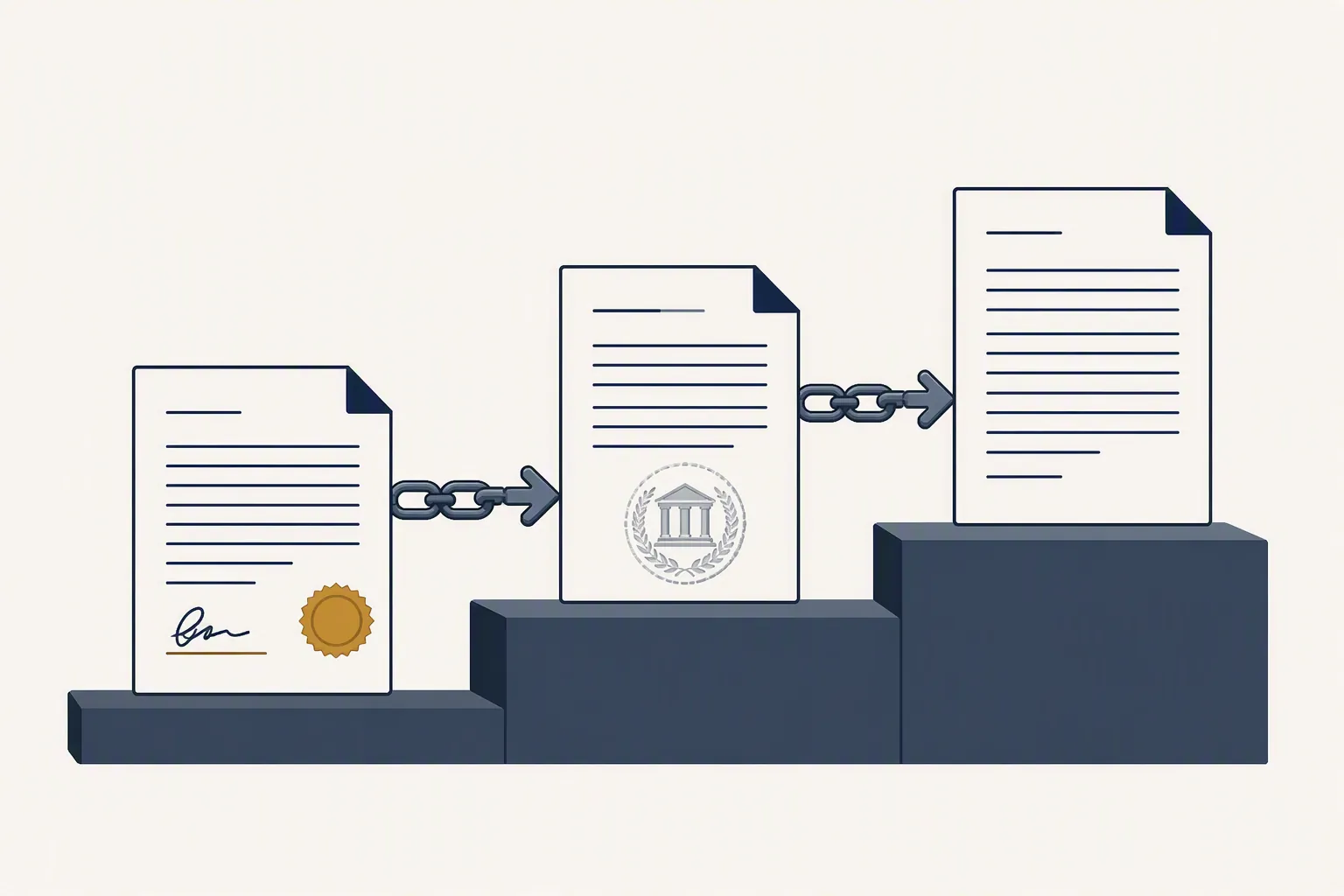
The useful feature of the record is not that there are many allegations. It is that each litigation act appears to have left behind a new instrument. A dismissed 2021 defamation case produced a confidential settlement provision. A 2026 defamation and false-light case produced public statements, leaked audio, and discovery fights. A July 2026 breach case then reached back to the settlement, the public comments, and the court filings. The cases are easier to misread if they are treated as separate storms.

The three-case chain
The first anchor is Miller v. Grisham. Miller sued Stephanie Grisham in Cuyahoga County in October 2021 over statements tied to a Washington Post op-ed and memoir, and the case was voluntarily dismissed with prejudice in August 2023 shortly before trial after a confidential settlement; reports on that earlier dispute also noted that Miller’s request for a temporary restraining order against Grisham had been denied. [1][2]
The second anchor is Miller v. Moreno. In 2026, Miller brought defamation and false-light claims against Emily Moreno, and Moreno responded with an expedited-relief motion under Ohio’s Uniform Public Expression Protection Act. Her May 27, 2026 motion sought early dismissal under the state’s anti-SLAPP framework and invoked the statute’s discovery stay. [3] On July 7, 2026, the court denied Miller’s emergency discovery motion, including requested depositions of Sen. Bernie Moreno and Daily Mail reporter Phillip Nieto, while the defense framed that ruling as keeping the UPEPA path alive. [4]
The third anchor is Grisham v. Miller, filed in July 2026. Grisham alleges that Miller breached the confidential 2023 settlement by making a May 7, 2026 X post claiming she had “fabricated” allegations, by speaking in a June 5, 2026 Spectrum News interview, and by referencing a confidential settlement provision in Miller v. Moreno filings. The relief described in reports includes deletion of the challenged post, declaratory relief, liquidated damages, attorney’s fees, and injunctive relief. [2][5]
| Stage | What carried forward | Why it matters |
|---|---|---|
| 2021–2023: Miller v. Grisham | A dismissed-with-prejudice defamation case and confidential settlement | A clause drafted for closure later becomes pleaded breach material. |
| 2026: Miller v. Moreno | Public statements, leaked audio, emergency discovery requests, and UPEPA motion practice | The plaintiff’s own words and discovery moves become defense material. |
| July 2026: Grisham v. Miller | Alleged settlement breaches based on an X post, TV interview, and court filings | Prior settlement language becomes a new claim rather than a closed file. |
That chronology sits inside important guardrails. The abuse allegations remain allegations, not adjudicated findings. Reporting on the broader dispute has described Miller as not having been criminally charged, and the child-services finding discussed in the record was “unsubstantiated.” [6] The supplied materials also flag conflicting public accounts over the date of the Miller–Moreno divorce, with some reporting pointing to June 2025 and other quoted material pointing to Dec. 18, 2025; this procedural-risk record does not need to resolve that conflict to evaluate the defamation, settlement, and fee-shifting mechanics. [1][5]
For the same reason, unverified reporting about contempt-motion activity in the separate restraining-order track is not doing work here. Readers looking for the broader docket inventory can compare this record with Five legal disputes now trackable in Max Miller abuse allegations and Max Miller restraining order case details from the docket. This article stays with the narrower repeat-litigant pattern.
The settlement clause did not stay in the past
The Grisham breach suit is the cleanest example of procedural afterlife. A confidential settlement in a dismissed defamation case normally looks like the exit door. In this record, it is alleged to have become a new pleading hook after Miller continued speaking about the same subject matter in public and in court.
Grisham’s theory, as reported, is not merely that Miller said things she disputes. It is that he made statements covered by a settlement restriction and then exposed the settlement language in later litigation. The alleged breaches are specific: the May 7 X post saying Grisham “fabricated” allegations, the June 5 Spectrum News interview, and filings in Miller v. Moreno that referenced a confidential settlement provision. [2][5]
That third alleged breach is the part settlement drafters should sit with. A confidentiality or non-disparagement clause may be drafted as protection against future public attack. But when the same speaker later litigates adjacent allegations, the clause can be pulled into pleadings, exhibits, privilege disputes, sealing fights, and breach claims. The lawyer is no longer asking only whether the 2023 language ended the 2021 case. The harder question is whether the 2023 language is now regulating the client’s 2026 campaign speech, media interviews, and litigation strategy.
The requested relief underscores the point. Grisham is not described as seeking only reputational vindication. The reported relief includes deletion of a post, a declaration, liquidated damages, attorney’s fees, and an injunction. [2] Those are contract remedies and conduct-control remedies. They turn the public-comment problem into something more concrete than “bad optics.” They create a separate damages and fee lane.
The drafting lesson is uncomfortable because it cuts both ways. A robust non-disparagement clause may give a settling party a later enforcement tool. The same clause may also put the other side on notice that every future denial, clarification, campaign line, interview answer, or pleading phrase needs to be screened against the settlement text. If a client’s future public role makes silence unlikely, that practical reality has to be priced into the settlement language before signature, not after a breach complaint is filed.
Statements made for one audience became evidence for another
The Moreno materials show a second backfire mechanism: statements apparently made for persuasion can become statements parsed for elements. The audience changes. Campaign readers, television viewers, and social-media followers may hear confidence or denial. Defense counsel hears admissions, damages problems, waiver problems, and discovery targets.
The recording issue is the most direct example. Mother Jones reported that a 44-second audio clip leaked to the New York Post in June 2026 captured Moreno saying, “You poured steaming hot water on me,” and Miller replying, “I never thought that that hurt you.” [6] Moreno’s UPEPA filings, according to the defense record, treated that exchange as evidence relevant to truth and falsity in the defamation case. [4]
That does not adjudicate the underlying allegation. It changes the litigation posture. A plaintiff who sues over an abuse allegation invites the court to test words like “false,” “injury,” and “fault” against the record the plaintiff himself helped create. A short recording can become more consequential than a long denial if it speaks to the element the motion is attacking.
The same problem appears in the reported “zero impact” and reelection-boast materials. Moreno’s counsel has pointed to Miller’s public confidence about the election and statements that the allegations had “zero impact” as admissions undercutting actual injury in the defamation and false-light claims. [4] The defense argument may or may not prevail; the immediate risk is that a plaintiff’s public-strength messaging can be recast as a damages concession.
For public-figure plaintiffs, the instinct is easy to understand. Silence can look like retreat, especially during a campaign. But a damages theory and a public “no harm” message do not sit comfortably together. If a complaint says reputational injury was serious, while the plaintiff tells voters there was no effect, the later brief will put those statements side by side.
That is not a public-relations nicety. It is pleading hygiene. If a client must speak, the review should start from the live elements: substantial truth, actual malice where applicable, actual injury, causation, privilege, and damages. A sentence that is safe for one element may be dangerous for another. “They lied” may help a campaign line and complicate a settlement clause. “This had no effect” may reassure supporters and damage an injury claim.
UPEPA made the next move more expensive
Ohio’s anti-SLAPP statute is the third compounding mechanism. Ohio enacted the Uniform Public Expression Protection Act with an effective date of April 9, 2025, creating an expedited procedure for claims arising from protected public expression. [7] The statute provides for a stay of proceedings after an expedited-relief motion, subject to limited exceptions, and requires an award of court costs, reasonable attorney’s fees, and reasonable litigation expenses if the moving party prevails. [8]
This article is not repeating the full statutory mechanics already covered in Ohio Anti-SLAPP Law Tested in Max Miller Defamation Case. The point here is narrower: once Moreno filed her May 27, 2026 UPEPA motion, ordinary plaintiff-side discovery was no longer ordinary. The motion triggered the statutory stay framework, and Miller’s emergency discovery request had to be justified within that posture. [3][8]
The July 7 ruling shows why that matters. The court denied Miller’s emergency request to take discovery that included depositions of Sen. Bernie Moreno and Daily Mail reporter Phillip Nieto. The defense account of the ruling says the court relied on grounds including Ohio’s reporter-shield statute, a one-year statute-of-limitations bar, and attorney-client privilege. [4] The practical result was that the stay remained a working constraint rather than a background rule.
Fee exposure is not hypothetical under the statute. If an expedited-relief movant prevails, the Ohio UPEPA text uses mandatory fee language. [8] Independent press-freedom resources likewise describe Ohio as now having anti-SLAPP protections through the UPEPA framework. [9] For a defamation plaintiff, that changes the cost model: losing early can mean paying not only one’s own lawyers, but the speaker’s costs, fees, and litigation expenses as well.
That is why the July 23, 2026 hearing status matters. The sourced record for this article confirms the scheduled anti-SLAPP path and the July 7 discovery ruling, but it does not confirm a final July 23 dismissal outcome or any fee amount as of Aug. 2, 2026. Any later order, dismissal with prejudice, or fee award should be verified from the Cuyahoga County Clerk before being treated as current.
The risk lessons are practical, not dramatic
The Miller–Grisham–Moreno record is useful because it puts several familiar warnings into the same file. None of them requires a view on the truth of the underlying abuse allegations. Each one follows from ordinary litigation mechanics.
- Settlement drafting: if a party is likely to keep speaking publicly, the non-disparagement and confidentiality provisions need operational definitions, carveouts, enforcement language, and filing procedures that match that reality.
- Client speech discipline: an X post, a television interview, or a sentence in a pleading can become the factual basis for breach, damages, waiver, or impeachment arguments.
- Damages consistency: a public figure who claims severe reputational injury in court and “zero impact” in public invites an element-by-element comparison.
- Discovery judgment: after an anti-SLAPP motion, aggressive discovery requests may fail early and add to the fee-shifting narrative.
- Confidentiality handling: litigating around a confidential settlement clause can create the very disclosure issue the clause was meant to prevent.
There are useful comparisons elsewhere on this site for fee-shifting and self-created evidence problems: How Two Anti-SLAPP Fee Rulings in the Baldoni Case Compare, New York Times Awarded $171,616 in Anti-SLAPP Costs, and How Pleading $10B in Damages Opened Trump’s Financial Records to BBC. The agreement-drafting side also overlaps with Howard Stern NDA Lawsuit Highlights Signature Risk.
The narrower lesson from this record is temporal. Serial defamation litigation over the same underlying allegations does not spread risk across forums. It stacks risk across time. The first case can leave settlement language. The second can create admissions and discovery rulings. The third can turn the earlier attempt at closure into a claim for breach, fees, and injunctive relief. Current docket status still controls the live consequences, but the practitioner-facing warning is already visible in the record.
References
- US Rep. Max Miller sues his ex-wife for defamation in escalation of long-running divorce feud, First Amendment Watch / AP
- Rep. Max Miller accused of breaching settlement with ex-girlfriend Stephanie Grisham, cleveland.com, July 2026
- Defendant Moreno’s Motion for Expedited Relief Under UPEPA, Cuyahoga County Court of Common Pleas filing via Chandra Law, May 27, 2026
- Thwarted: Court denies Congressman Max Miller’s emergency discovery motion, advancing path to anti-SLAPP dismissal for Emily Moreno, Chandra Law, July 7, 2026
- Max Miller, Stephanie Grisham defamation, Spectrum News, July 8, 2026
- Assault, Misogyny, Verbal Threats: Records Detail New Allegations Against Rep. Max Miller, Mother Jones, July 2026
- Ohio Enacts Uniform Public Expression Protection Act, Establishing Anti-SLAPP Protections, Frantz Ward
- Ohio Revised Code Chapter 2747, codes.ohio.gov
- Anti-SLAPP Guide: Ohio, Reporters Committee for Freedom of the Press
Related records
Tool profile
How Meta's AI Spending Reshapes Law Firm ProfitabilityGoverning regulation
Browse the obligations tracker →Preventive workflow
Browse verification workflows →
Report a correction or tip
Spotted an outdated figure, a misstated fact, or a ruling this case record should reflect? Public comments are disabled for this content given the professional cost of a misreported case outcome, penalty amount, or rule text — use the structured correction channel instead.
Report a correction or tip for this record →