
Obligations tracker
Regulation
An obligations tracker organized by issuing authority and jurisdiction: US federal and state court standing orders, state bar ethics opinions, ABA guidance, and EU AI Act provisions relevant to legal-service AI use. Each entry pairs the primary rule text with a plain-language summary and an effective date, kept strictly separated by jurisdiction scope so US court/bar rules are never conflated with EU AI Act obligations. Serves the task of determining what is mandatory where a practitioner practices. Excludes case outcomes (Risk Digest) and procedural how-to steps (Workflows); this group answers 'what rule applies,' not 'what happened' or 'what do I do.'
US Federal
 UpdatedAuthorityInternational Seabed AuthorityRule typeregulation
Deep Sea Mining Regulation Delay Becomes a Conflict of Laws
Assess legal exposure under both U.S. domestic permitting and UNCLOS/ISA/ITLOS tracks before relying on either.
 UpdatedAuthorityFederal Election CommissionRule typestatute
Which Campaign Finance Law Applies to Trump's Second Term
Analyze each fundraising vehicle separately for contribution limits, disclosure duties, and enforcement path.
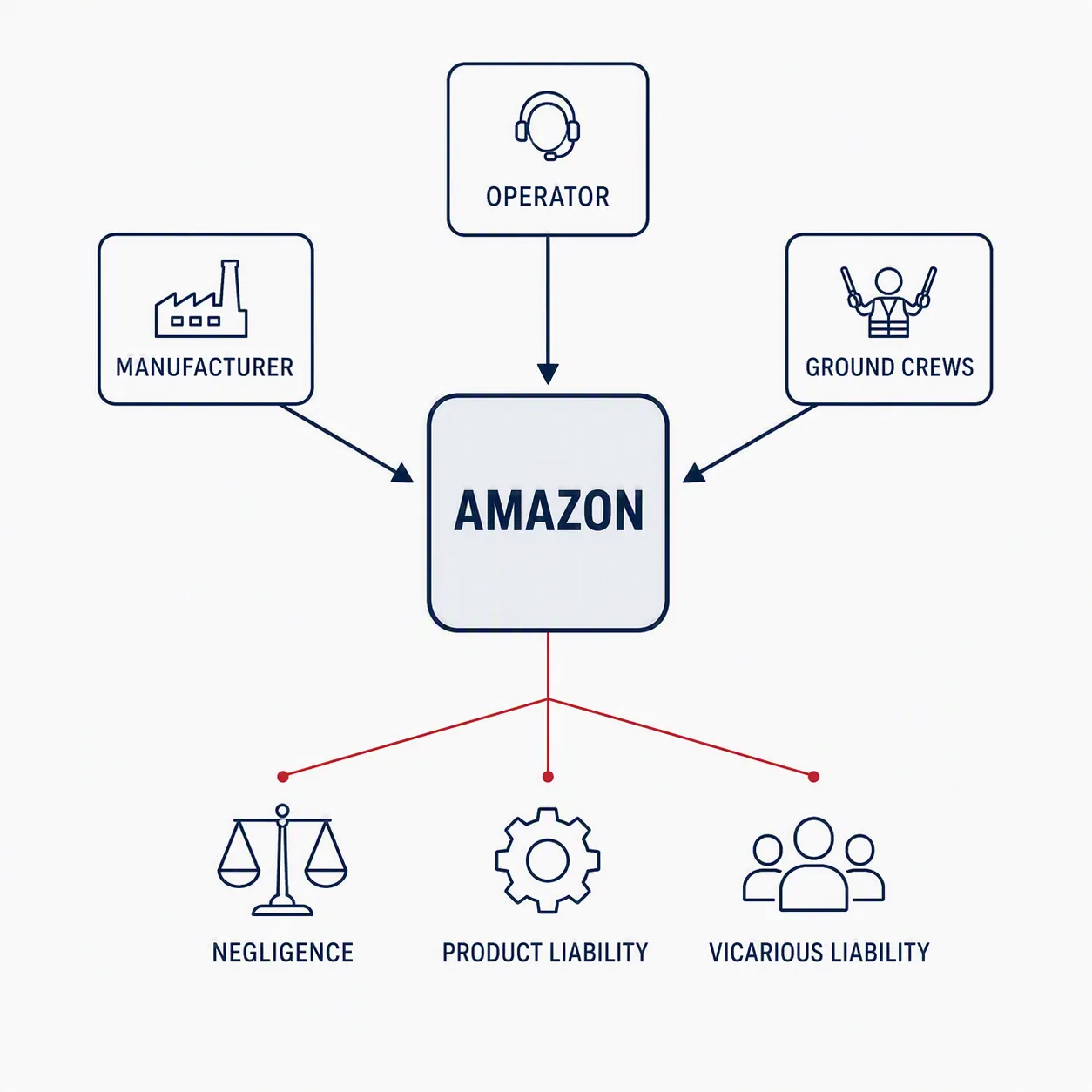 UpdatedAuthorityFederal Aviation Administration (FAA)Rule typeregulation
Who is liable when an Amazon delivery drone crashes?
Drone package delivery requires FAA Part 135 operator certification; proposed Part 108 would add operator-centered BVLOS duties and property-damage reporting.
 UpdatedAuthorityU.S. Department of JusticeRule typeregulationEffectiveNov 1, 2019
Where Genetic Genealogy Cold Cases Face Legal Implications
Federal agencies and DOJ-funded activity must follow the DOJ Interim Policy on forensic genetic genealogy searching; it is not a universal rule for state or local IGG use.
US State
 Updated
Does Israel's Phased Withdrawal End Gaza's Occupation?
Counsel assessing whether the phased Gaza withdrawal ends Israel's occupation can use the ICJ's effective-control test: because authority over roughly 53-58% of Gaza remains exercisable behind the shifting Yellow Line, occupation obligations persist, scaled to retained control and triggering third-state duties that require continued monitoring.
 Updated
Can a hospital cancel striking employees' health insurance?
No federal or state statute forces a private hospital to keep paying for strikers' health coverage, but the union contract, NLRB accrued-benefits rulings, COBRA, and state protections set real limits on what an employer may cut. This rights map helps striking hospital workers and their representatives distinguish a lawful benefit cutoff from an unfair labor practice.
 Updated
Why the US legal response to Iran's water cyberattacks lags
A primary-source chronology of the US legal response to Iran's water-system cyberattacks, from the 2016 Bowman Avenue Dam indictment through the February 2024 sanctions to the July 2026 multi-state PLC incidents. It shows how criminal, economic, and regulatory tools have each lagged the threat, and where enforcement still falls short as of mid-2026.
 Updated
When Does Labor Law Protect a Nurse Picket Line?
A three-question legality map for nurse picket lines: whose action is protected, which employer may be targeted, and whether the union gave Section 8(g) notice. It also explains why an employer cannot rely on a union's notice failure to discipline employees who merely joined a peaceful picket line.
 Updated
What legal authority let Alaska Airlines remove the preacher?
A lawyer-grade breakdown of Alaska Airlines' removal of evangelist Whitney Lynn: the statutory, contractual, and FAA-policy grounds for removal, the circuit split on judicial review, and why her realistic challenge is narrow and low-value.
 Updated
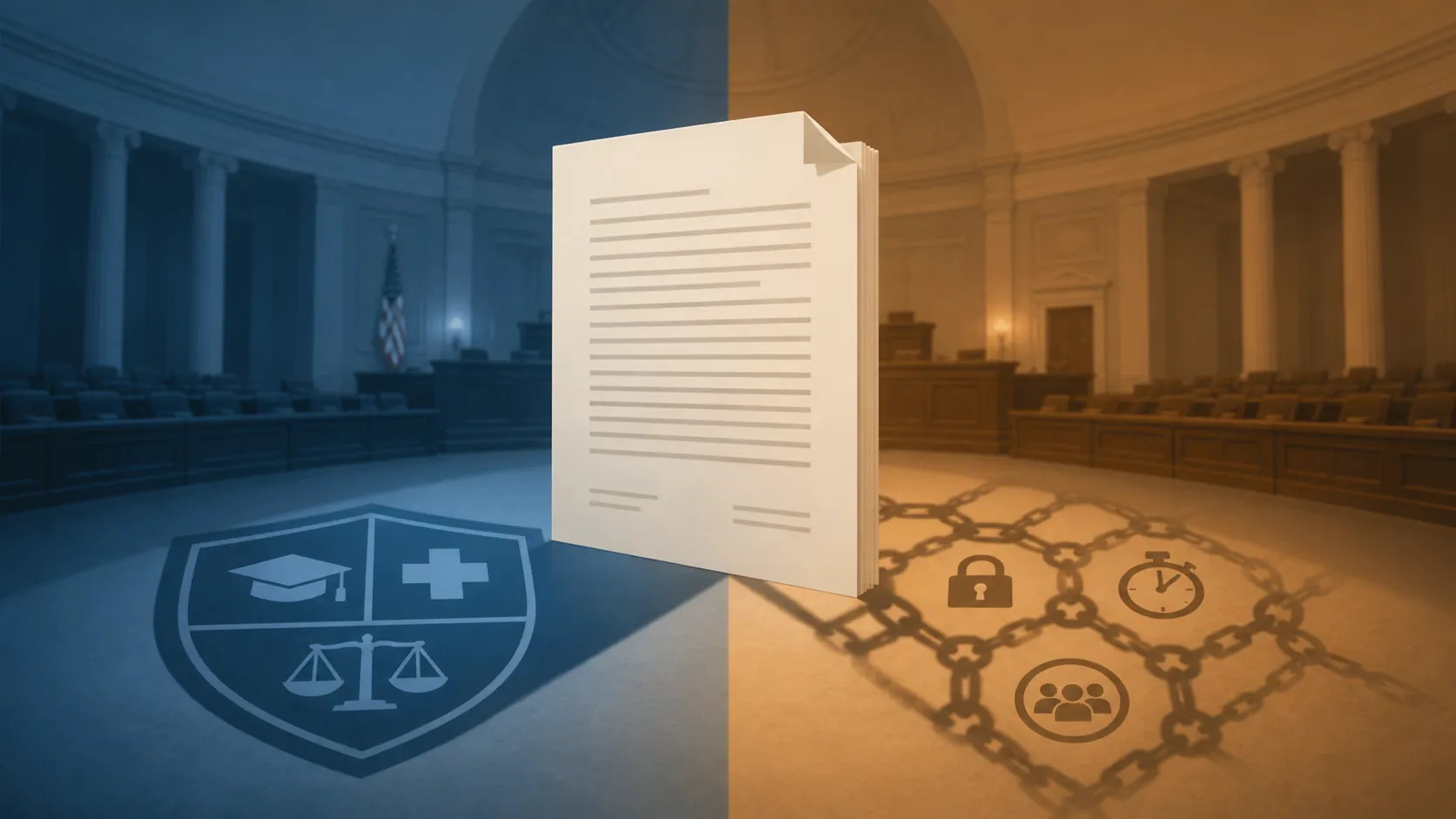
Protect College Sports Act's Net Legal Impact on Athletes
Clause-level analysis of the Protect College Sports Act of 2026: the federal NIL, scholarship, medical, and governance rights it would grant college athletes, the transfer, eligibility, and NIL-value restrictions it would impose, and the enforcement and preemption mechanics that determine the net impact as of Aug 1, 2026.
 Updated
Can an Airline Remove You for Preaching Legal Rights?
An airline can remove a passenger for preaching, but only when the removal rests on safety or cabin disruption — never on the religious or political content of the message. The federal statute, DOT Fly Rights rule, and contract-of-carriage clauses determine when such a removal is lawful and when it crosses into prohibited discrimination.
 Updated
How Three Legal Regimes Govern Ceuta's Border and Asylum Claims
This article maps the three legal regime—Spain's summary-return framework, the Supreme Court's 2026 ruling (STS 814/2026), and the EU Pact on Migration and Asylum—that now define what officers may lawfully do and what asylum procedures are available at the Ceuta border.
 Updated
When Are Ship Attacks in the Strait of Hormuz Lawful
The 2026 conflict in the Strait of Hormuz has raised critical questions about when forcible measures against merchant shipping are lawful. This analysis applies the UN Charter Article 51 threshold, the law of naval warfare, and the San Remo Manual to assess Iranian attacks, US-Israeli strikes, the US blockade, and reported mine warfare.
 Updated
Is there a Texas data center moratorium? Not yet
No statewide Texas data center moratorium or siting ban is in effect as of August 1, 2026. The record separates the political calls and fragile local measures — Hill County's rescinded pause, San Marcos' threatened zoning ban — from the binding obligations of Senate Bill 6 and the governor's June 2026 PUC/ERCOT directives, so legal teams can brief deal risk against what is actually enforceable.
 Updated
DACA renewal delays are now a dated compliance obligation
Renewal delays have turned DACA into a dated compliance obligation: the median renewal wait has roughly quadrupled since FY2025, policy holds froze renewals for nationals of 39 countries, and the 150/120-day filing window now drives exposure. Counsel can separate operative rulings and policies from pending proposals and work the documented escalation ladder for delayed renewals.
 Updated
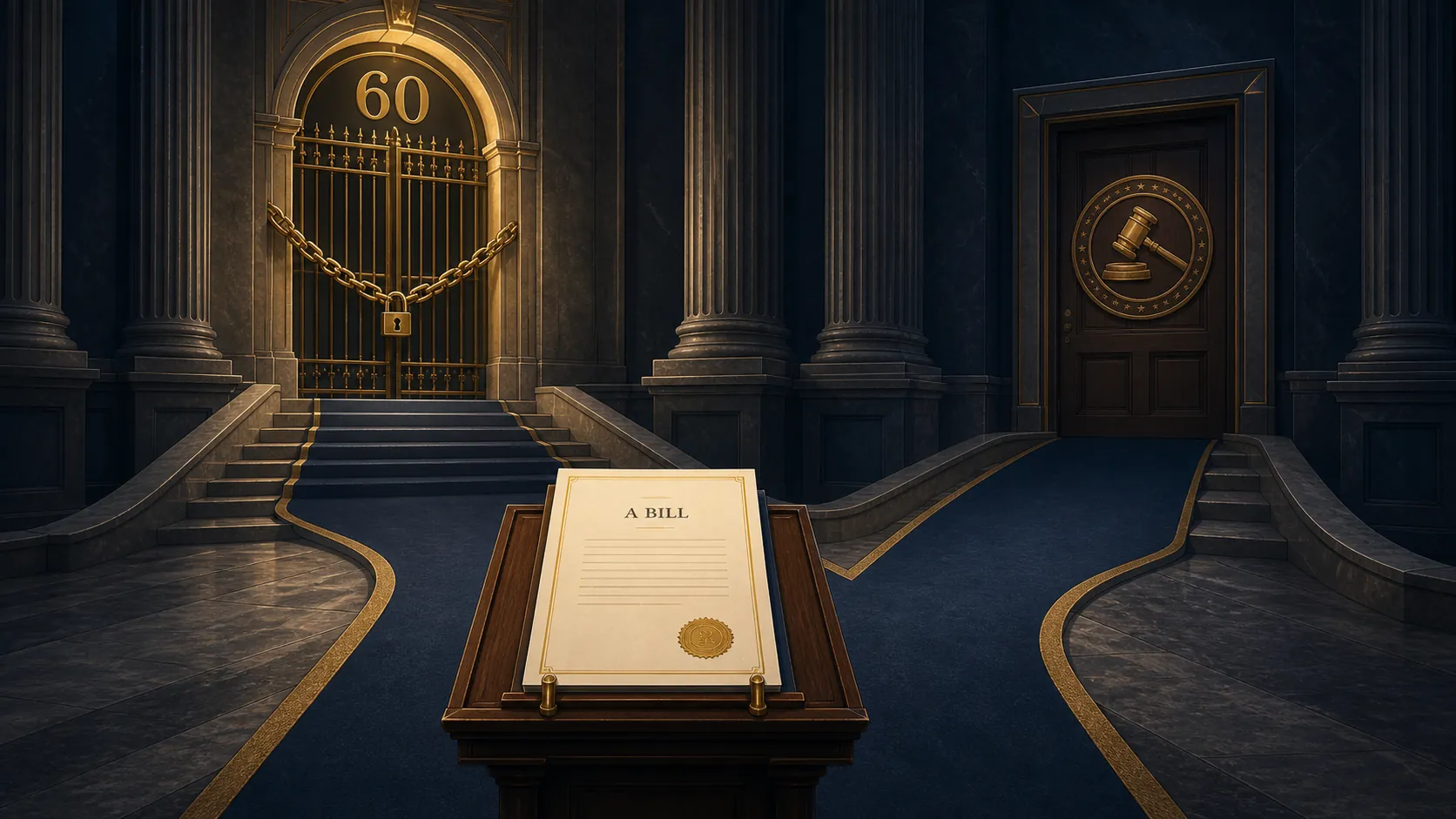
Where the SAVE America Act Senate Vote Stands Now
As of Aug 1, 2026, the SAVE America Act has not passed the Senate and no passage vote is scheduled; the remaining fight is procedural, between the NDAA's 60-vote threshold and a reconciliation route the Byrd ruling blocks. Every roll call is verified against congress.gov and senate.gov, last checked Aug 1, 2026.
 Updated
Sanctions Exposure From Iran's Strait of Hormuz Toll Regime
Gulf trade now carries US sanctions exposure at every stage of Iran's 2026 Strait of Hormuz toll regime: paying in any form is prohibited, and since OFAC's May 29, 2026 expansion of FAQ 1249, even accepting an unpaid safe-passage guarantee can trigger liability. Prohibited payment methods, the PGSA designation, secondary-sanctions exposure for non-US parties, and the vessel-screening duties facing owners, charterers, insurers, and their counsel are grounded in the OFAC alert, FAQ updates, and designation records.
 Updated
Who Can Sue Over the Senate's Iran War Powers Resolution?
Nearly every War Powers Resolution challenge has failed on standing or justiciability, but the 2026 Iran war gives litigants their strongest opening yet. The path to a merits ruling depends on which plaintiff can clear the bar — service members and states more readily than individual legislators — and on whether the Goldwater "constitutional impasse" standard still blocks a post-Zivotofsky court from reaching the statutory question.
 Updated
Is Ticketmaster's selfie ID check a biometric privacy risk?
Ticketmaster's Persona-based selfie+ID verification triggers different biometric privacy obligations by state, and no suit has yet targeted the program itself. The practical read: Illinois BIPA creates the sharpest private-right-of-action exposure, while Texas, Washington, and newer state privacy laws add separate duties—and the disclosed 60-day versus three-year retention gap is the fact most likely to shape a claim.
 Updated
The 2025 DACA Protection Bills, Provision by Provision
No bill titled the 'DACA Protection Act' has been introduced in the 119th Congress. This verified comparison covers the three 2025 bills that actually function as DACA protection legislation — S. 3348, H.R. 1589, and H.R. 4393 — across eligibility, status-ladder length, LPR tracks, coverage, and committee status, so counsel and policymakers can anchor advice in the primary record rather than in advocacy summaries.
EU
No obligations tracked yet in this scope.