
Why the US legal response to Iran's water cyberattacks lags
Not legal advice. Legal-background review: Naomi Ellis, J.D.; last verified Aug. 1, 2026 (UTC). Scope: this is a chronology through July 31, 2026, of public legal and regulatory responses to Iran-linked water-system cyber incidents. Attribution for the July 2026 incidents remains preliminary. For the current status of what binds utilities now, including sanctions exposure, Safe Drinking Water Act duties, and pending CIRCIA reporting, see the companion tracker, Legal Response to Iran-Linked Minnesota Water Cyberattacks.
The latest visible stress point is not a courtroom. It is a water operator locked out of programmable logic controllers, dealing with changed IP addresses, boil-water notices, and manual operations while federal attribution remains cautious. On July 30, 2026, CISA urged water and wastewater systems to protect operational technology against activity targeting PLCs, citing password lockouts, unauthorized IP-address changes, boil-water notices, and sustained manual operations among observed effects.[1] The FBI told NBC News that municipal water systems had been targeted in at least seven states that week.[2] In Minnesota, more than 30 community water systems were reportedly affected simultaneously.[3]
That does not make every July 2026 incident an adjudicated Iranian operation. Al Jazeera reported that U.S. authorities were investigating the Minnesota cyberattack and noted that a false-flag possibility had not been ruled out.[4] Wired, relying on a leaked WaterISAC memo, reported that the activity was tied in that memo to the Iranian campaign CISA had already described.[5] For legal purposes, that distinction matters. A suspected campaign can drive warnings and defensive measures; an enforceable legal response requires a filing, designation, rule, order, or duty that someone can point to.
The first public legal instrument: Bowman Avenue Dam
The legal chronology begins with a small dam in Rye, New York, not with the 2023 Unitronics PLC campaign. In March 2016, federal prosecutors charged seven Iranians over a 2011–2013 campaign that included distributed denial-of-service attacks on 46 U.S. financial institutions and repeated unauthorized access to the Bowman Avenue Dam control system. The FBI’s public account said the defendants were also the subject of Interpol Red Notices.[6]
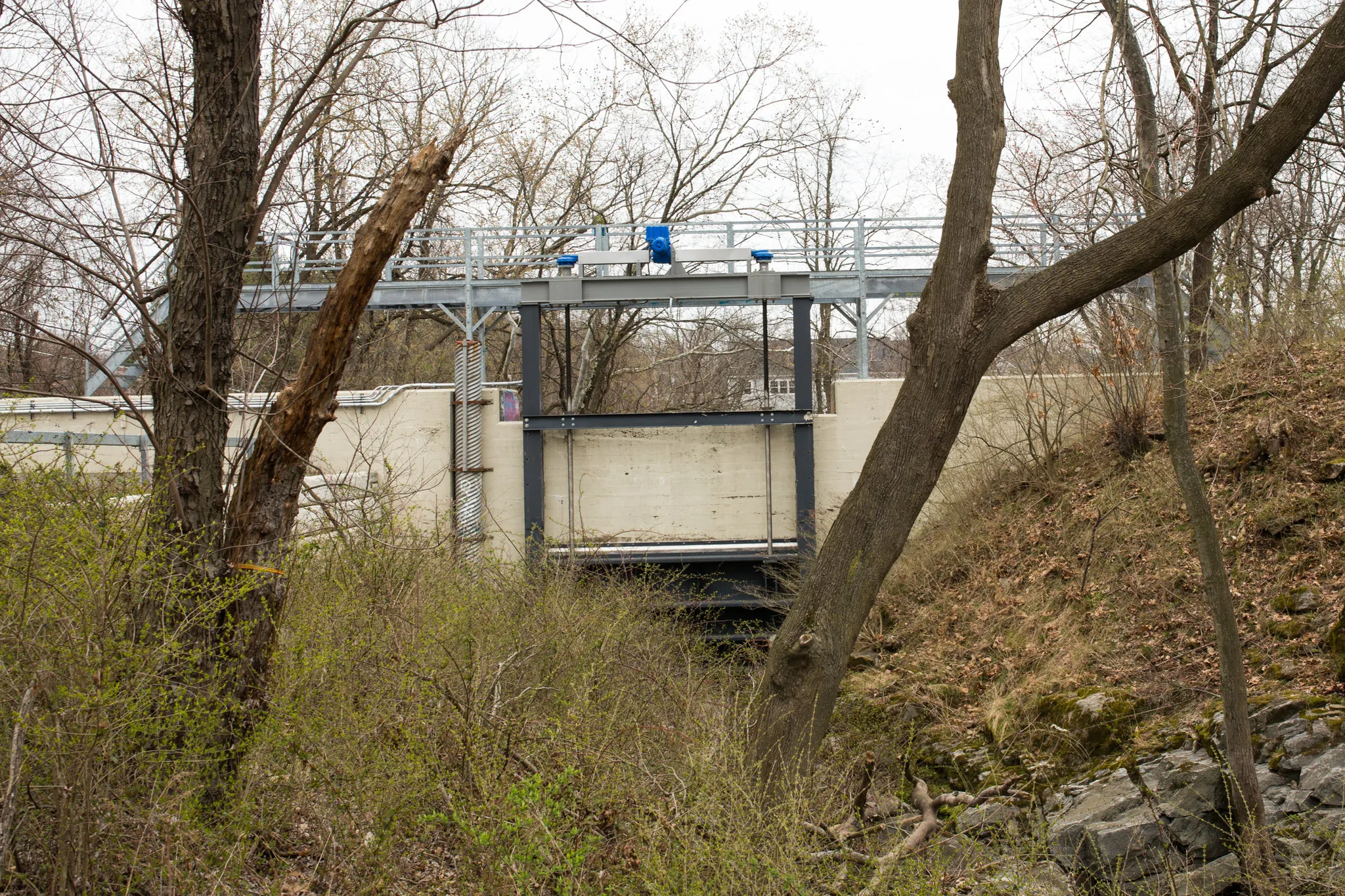
The Bowman Avenue Dam count has acquired a symbolic weight that can obscure what it actually did. It did not create a water-sector cybersecurity regime. It did not solve the problem of small municipal infrastructure exposed to hostile operators. It did something narrower and more concrete: it turned a cyber intrusion into a named federal criminal case.
That distinction is why Bowman still matters in 2026. The indictment converted intelligence and incident response into criminal allegations against identified people. It gave the government a durable public record: names, charges, conduct, victim categories, and an international notice mechanism. Whether the defendants would ever stand in a U.S. courtroom was a separate question. The legal act was the filing itself.
No comparable public indictment appears in the public record for the later 2023–2026 water PLC campaigns as of July 31, 2026. That absence does not prove investigative inaction. It does mark a visible difference in legal posture. In 2016, the federal response to an Iran-linked water-control intrusion included criminal charges. In the later PLC campaigns, the public response has moved through advisories, sanctions, alerts, and contested regulatory authority instead.
What changed after late 2023: CISA documented a broader PLC campaign
The late-2023 record is more operationally specific than Bowman, but less criminally conclusive in public. CISA’s December 2023 advisory attributed activity to CyberAv3ngers, described as affiliated with the Islamic Revolutionary Guard Corps Cyber-Electronic Command, and said the actors had compromised at least 75 Unitronics PLC devices, including at least 34 in U.S. water and wastewater systems. The advisory emphasized default or no passwords as an access pathway.[7]
Those numbers measure documented compromised devices in the CISA advisory, not the full universe of exposed controllers and not the number of legally proven defendants. The legal consequence at that stage was not an indictment. It was a federal cybersecurity advisory: named actor, described methods, affected technology, mitigation steps, and a public warning to operators.
That advisory also helps explain why the small-system story should not be read as a morality play about unsophisticated utilities. A community water system that bought a common controller, left inside a thinly funded compliance structure, and later had to run manually after a lockout is not the same thing as a bank with a mature security department ignoring a bespoke threat report. Default passwords matter technically. Legally, the harder question is who had the duty, money, inspection authority, and enforceable deadline to change the condition before the incident.
February 2024: sanctions arrived, but they were not a substitute for prosecution
On Feb. 2, 2024, the Treasury Department’s Office of Foreign Assets Control designated six officials of the IRGC Cyber-Electronic Command, including Hamid Reza Lashgarian, under Executive Order 13224. Treasury tied the action directly to malicious cyber activity against critical infrastructure, including the compromise of PLCs used in U.S. water systems. The same announcement noted a State Department Rewards for Justice offer of up to $10 million for information on certain malicious cyber activity against U.S. critical infrastructure.[8]
That was a significant legal move. A sanctions designation changes compliance obligations for U.S. persons, financial institutions, vendors, insurers, incident-response firms, and anyone else who might transact with a blocked person or entity. It also creates practical risk for companies responding to an intrusion, a point that sits beside broader sanctions and liability issues discussed in the site’s ransomware negotiation analysis, Ransomware Negotiation Legal Liability.
But sanctions are not the same legal instrument as criminal charges. They can freeze property, prohibit dealings, and raise the cost of operating through the formal financial system. They do not, by themselves, put the PLC campaign into a federal indictment. The February 2024 action therefore narrowed one gap while leaving another one visible: the government publicly named and blocked officials associated with the campaign, but did not publicly charge the later water-system compromises in the way Bowman Avenue Dam had been charged.
| Period | Public record | Legal effect that actually followed |
|---|---|---|
| 2016 Bowman Avenue Dam indictment | Seven Iranians charged over 2011–2013 activity, including repeated access to the Bowman Avenue Dam control system.[6] | Federal criminal indictment and Interpol Red Notices. |
| Late 2023 Unitronics PLC campaign | CISA documented CyberAv3ngers compromises of at least 75 Unitronics PLC devices, including at least 34 in U.S. water and wastewater systems.[7] | Cybersecurity advisory and mitigations; no public indictment identified for that campaign as of July 31, 2026. |
| February 2024 OFAC action | Treasury designated six IRGC-CEC officials and noted a State Department reward offer of up to $10 million.[8] | Sanctions exposure for U.S. persons and related compliance duties; not a criminal filing. |
| 2026 PLC expansion and July water incidents | CISA expanded warnings to additional PLC targets and later described lockouts, IP changes, boil-water notices, and manual operations.[1][9] | Additional alerts and defensive guidance; attribution for July incidents remained preliminary at the article cutoff. |
The 2026 alerts widened the technical target set faster than the legal record widened
CISA’s 2026 advisory record widened the operational picture before the July Minnesota reports became public. An April 7, 2026 advisory, updated July 22, 2026, warned about activity targeting PLCs and expanded the warned target set from Rockwell/Allen-Bradley devices to include Schneider Electric and Siemens PLCs.[9] Eight days later, CISA’s water-sector alert described the operational consequences now attached to that activity: password lockouts, IP-address changes, boil-water notices, and extended manual operation.[1]
This is where the lag becomes concrete. If a system is locked out and operators must keep service running manually, the harm is not waiting for final attribution. The legal system, however, still has to decide what kind of response it can support: criminal process, sanctions, regulatory enforcement, emergency assistance, or some combination of those. By late July 2026, the public legal record showed more warning and more incident reporting, but not a new public criminal case comparable to Bowman.
The seven-state FBI count reported by NBC News and the Minnesota reports are therefore best read as incident scope signals, not as final legal findings.[2][3] The leaked WaterISAC memo reported by Wired may align the Minnesota activity with the previously described Iranian campaign, but a leaked-sector memo is not an indictment, a sanctions designation, or an administrative order.[5]
The regulatory track: EPA warned, but its authority remained disputed
The regulatory story is the part most easily flattened into a demand that utilities “do better.” The record is less tidy. In May 2024, EPA issued an enforcement alert saying that more than 70% of drinking-water systems inspected since September 2023 had failed to comply with Safe Drinking Water Act requirements, and that EPA had taken more than 100 enforcement actions since 2020 to address cybersecurity vulnerabilities in drinking-water systems.[10]
Those figures do not show that cyber controls were uniformly absent across the whole sector. They describe EPA inspections since September 2023 and enforcement actions since 2020. They are still important because they show a federal regulator trying to treat cybersecurity as part of enforceable water-system compliance rather than as a voluntary best-practices pamphlet.
The problem is that EPA’s authority was not settled. GAO reported that EPA had withdrawn its March 2023 memorandum interpreting sanitary-survey requirements to include cybersecurity after legal challenges, and GAO found that EPA lacked authority to require cybersecurity compliance by wastewater systems and small systems not covered by the relevant Safe Drinking Water Act requirements.[11] That is not a technical footnote. It defines who can be compelled before a lockout occurs.
CIRCIA does not close the gap in this chronology. As of the companion tracker’s last verification, covered-incident reporting for this setting remained pending rather than fully operative. That means the public mid-2026 record still had a mismatch: CISA could warn; EPA could enforce within contested and limited boundaries; OFAC could sanction named actors; but the reporting and compliance architecture for many systems remained incomplete or disputed.
Why the lag is legal, not just operational
A decade of public materials shows three different clocks running at different speeds. The operational clock is fastest: exposed controllers can be found, accessed, renamed, locked, or disrupted before a local operator has any reason to believe a foreign campaign has reached a rural plant. The advisory clock is slower but still responsive: CISA can publish indicators, mitigation guidance, and sector alerts as the target set changes. The enforceable-law clock is slowest: a criminal case requires defendants and charges; sanctions require a designation record; regulatory duties require statutory authority, rulemaking, or an enforceable interpretation.
Bowman Avenue Dam shows that the criminal clock can produce a public case. The Unitronics and later PLC campaigns show that public attribution and public warnings can run for years without a new visible indictment. The February 2024 OFAC action shows that economic tools can arrive after an operational campaign has already reached U.S. water systems. EPA’s alert and GAO’s authority findings show why regulatory enforcement cannot simply be assumed into existence for every water or wastewater operator.
That is also why federal name-and-shame designations should be kept in their lane. Criminal naming, sanctions naming, and advisory naming each do different work. A public indictment escalates exposure for identified defendants and creates a prosecutable record, a pattern familiar from other federal criminal designations discussed in How FBI Most Wanted Fraudster Status Escalates Criminal Exposure. A sanctions designation changes transaction risk. A CISA advisory changes defensive knowledge. Treating them as interchangeable makes the legal response look more complete than it is.
Where the record stood on July 31, 2026
By the article cutoff, the public record supported a narrow conclusion. The United States had one public criminal indictment tied to Iran-linked access to a water-control system: Bowman Avenue Dam in 2016. It had one sanctions round tied to the later water-system PLC activity: the February 2024 OFAC designations. It had an active advisory record from CISA and an EPA enforcement posture for drinking-water cybersecurity that remained bounded by statutory authority and affected by the withdrawal of EPA’s 2023 interpretation.
The July 2026 Minnesota and multi-state incidents did not prove final attribution on their own. They did prove that the operational problem had outpaced the public legal settlement around it. Password lockouts, IP-address changes, boil-water notices, and manual operations are not abstract critical-infrastructure risk. They are the point at which warnings meet municipal service. As of mid-2026, the legal architecture had documented that threat for years without catching up to it.
References
- CISA Urges Water and Wastewater Systems Sector to Protect OT Against Activity Targeting PLCs — CISA — July 30, 2026
- Hackers targeted municipal water systems in 7 states this week, FBI says — NBC News — July 31, 2026
- Cyber Attack Downs More Than 30 Water Utilities Simultaneously — National Law Review — July 30, 2026
- US authorities probe cyberattack on water systems in Minnesota — Al Jazeera — July 30, 2026
- A Leaked Memo Ties Cyberattacks on Minnesota Water Utilities to Iran — Wired — July 31, 2026
- Iranians Charged with Hacking U.S. Financial Sector — FBI — March 2016
- IRGC-Affiliated Cyber Actors Exploit PLCs in Multiple Sectors, Including U.S. Water and Wastewater Systems Facilities — CISA — December 2023
- Treasury Sanctions Actors Responsible for Malicious Cyber Activities on Critical Infrastructure — U.S. Department of the Treasury — February 2, 2024
- AA26-097A — CISA — April 7, 2026; updated July 22, 2026
- Enforcement Alert: Drinking Water Systems to Address Cybersecurity Vulnerabilities — EPA — May 2024
- Critical Infrastructure Protection: EPA Urgently Needs a Strategy to Address Cybersecurity Risks to Water and Wastewater Systems — GAO
Operationalizing workflow
No workflow has been explicitly linked to this obligation yet. See Workflows generally.
Illustrative cases
- Anwar Raslan's Life Sentence Stands After German Appeal
- Donna Adelson's Appeal Is Pending. What Is She Arguing?
- What's verified in the Max Miller House Ethics probe
- What's the Status of the Miller-Grisham Social Media Order?
- Clayton Echard–Laura Owens Lawsuit Is Not an AI-Risk Case
- What Laura Owens Actually Alleged Against Clayton Echard
- Where do the Lindsay Clancy jury deliberations stand now?
- The SC 26th Amendment Absentee Voting Case Is Watson v. RNC
- Why the SC mail-in voting age ruling is unsettled law
- Which Southwest PDX Discrimination Suit Facts Are Verified?
- Is the $750,000 California Lottery Prize Denial Verified?
- Are ECT Malpractice Lawsuits Against Psychiatrists Rare?
- Gülistan Doku Investigation Is Not an AI Sanction Case
- Milo Yiannopoulos's Deportation Case Remains Unverified
- What's Confirmed in the Sauce Gardner Contractor Lawsuit?
- Studio City Dog Boarding Death Lawsuit Is Unconfirmed
- Supreme Court’s Mail-In Voting Stay in Trump v. California
- Which Carroll Verdict Did the Supreme Court Reject?
- The Bricen Rivers and Lauren Johansen case timeline
- What is the DC grand jury investigation of public schools?
- What verdict options does Lindsay Clancy's jury have?
- Marius Borg Høiby received a four-year prison sentence
- What's verified in Milo Yiannopoulos's ICE status?
- No AI Found in Mobile Alabama Murder Grand Jury
- Is There a Robin Williams AI Impersonation Lawsuit?
- Trump's hush money conviction appeal is still pending
- What's verified in the Yosemite land transfer controversy
- No court order revoked the Cheluget 5,800-acre Narok title
- Columbia bookkeeper sentenced in $250K wire fraud case
- DOJ appeal keeps Epstein unredaction ruling in force
- Why Eric Hafner Can Stay on Alaska's U.S. House Ballot
- What's Verified in the Evelyn Cheluget RSF Passport Scandal
- What Meta's $17.1B teen social media settlement pays
- The Nevada Colorado River Water Cuts Lawsuit, by the Docket
- Who Was Charged in the Roberts Signature Forgery Case?
- Is Subhash Chandra's NCLT settlement actually final?
- Warr Receives 37 Months for South Carolina Wire Fraud
- Campbell Hall Settles Byron Scott Suit; Trial Still On
- Why Don Lemon Was Indicted Over a St. Paul Church Protest
- Wife's objection in Cher's Elijah Blue Allman conservatorship
- How to file your Google Assistant $68M claim today
- Ketanji Brown Jackson's shadow docket dissents, counted
- Final Witness at Lindsay Clancy Trial Challenges Voice Claim
- Meta's $16.7 billion settlement is not final yet
- Francisco Paulino's pandemic fraud charges, explained
- SEC subpoenas banks over AI hedge fund collapse, reports say
- Where do State Farm's Oklahoma roof claim lawsuits stand?
- How Courts Are Ruling on Fake AI-Generated Evidence
- After Chatrie, Are Flock License Plate Queries a Search?
- When Google Docs Exposes Passwords, What's the Legal Risk?
- Is AI really eliminating legal jobs?
- GEMA v. OpenAI lawsuit update: Munich ruling is on appeal
- Google AI Overviews' legal risk to publishers, case by case
- 15 State AGs Demand OpenAI Evidence in Hugging Face Hack
- Where does the NYT v. OpenAI lawsuit stand now?
- Apa yang Sebenarnya Dikembalikan Ramalan Bazi Gratis?
- Paano naging 'manghuhula online' ang AI sa Sandiganbayan?
- What do Nvidia's earnings mean for legal tech buyers?
- Who answers for NYT's AI-generated search summaries?
- Who are the Billings shooting victims? Alan Smith isn't one
- Judge Denies Lindsay Clancy Mistrial Request
- What's Confirmed in the Billings Family Murder-Suicide
- Sean Grayson–Sonya Massey Case Updates After Custody Death
- What is the psychosis defense in the Lindsay Clancy trial?
- Jed York's no-contest plea ends his disorderly conduct case
- Kai Spears wins $9.25M Alabama defamation verdict
- Who's Actually Sued in the Sofia Vergara AI Deepfake Case
- Can Anyone Predict the Lindsay Clancy Verdict?
- Why Is the Nolan Wells Case Evidence Sealed?
- How the insanity defense works in Lindsay Clancy's trial
- Superpotent Thyroid Tablets Recalled? Symptoms and Rights
- Is the FCC Actually Revoking ABC's Licenses?
- USPS mail carrier check theft penalties beyond five years
- Why Ghislaine Maxwell's grand jury records were unsealed
- How DMCA § 512(h) subpoenas unmask GTA 6 leakers
- AI-fabricated citation confirmed in Bianco ballot case
- Landon Doty's 54-year sentence, verified against the docket
- What Are the Legal Consequences of Police Flock Misuse?
- Why courtroom backlash outran Lindsay Clancy's trial record
- USPS mail carriers face $24M check theft indictment
- Inside the Clancy trial's concession strategy
- USPS Mail Carrier Charged With Mail Theft? What Happens Next
- What the GEMA v. Suno Ruling Holds for AI Music Training
- Jamie Komoroski settlement and sentence outcome by phase
- Every Keffe D bail hearing and why he remains jailed
- Sean Grayson's death investigation has three tracks
- The Grant–McMahon case is now in confidential arbitration
- What Emma Coronel's Docket Says About Life After Prison
- Where the Sara Duterte Impeachment Trial Stands on Day 18
- Did Mike Lindell Withhold His Minnesota Recount Payment?
- Who Can Be Sued After the Vitruvias Thyroid Recall
- Sean Grayson dies serving sentence for Sonya Massey killing
- The legal fallout of the GTA 6 leak site takedown
- When must law firms notify clients after Google Docs hacks?
- Who is Rockstar's parent subpoenaing over the GTA 6 leaks?
- Why the Knox-Kercher Case Is a Legal-AI Hallucination Probe
- Who decides if Kalshi's clinical trial bets are legal?
- Water utility OT cyberattack compliance deadlines for 2026
- Fired FBI agents' class action against Kash Patel, mapped
- Which Hong Kong tokenisation regulation applies to you?
- Summer Dress Code Rules Employers Need to Know
- Verifying Connecticut car accident lawsuit timeline claims
- How to verify a Pima County sheriff wrongful arrest lawsuit
- How the End Government Shutdowns Act changes current law
- Restaurant Dress Codes Under Gender Discrimination Law
- Michigan's AI SNAP Eligibility Screen Under the 2025 Changes
- What Amazon Prime Air complaints can cities act on?
- Who Is Liable in an Alabama Bad-Weather Truck Accident?
- How Liability Shapes Brooklyn Sidewalk Accident Deadlines
- How to Claim the Equifax $600 Settlement Payment
- Where Buc-ee's Trademark Policing Crosses Into Overreach
- The legal plan behind Ken Paxton's Texas AI promise
- Utah ruling keeps Kalshi's sports betting under state law
- What the Social Security 2100 Act's COLA Change Does in Law
- EPA Green Bank En Banc Ruling Leaves Forum Question Open
- New York attorney general's Kalshi lawsuit, explained
- Wisconsin absentee ballot replacement rules just changed
- Why the Jan. 6 Pence Tweet Was an Official Act
- DOL Cites San Antonio Bakery for Child Labor and Wages
- The legal issues with police surveillance AI, explained
- Prosecuting the Minnesota water cyberattack if tied to Iran
- What the en banc court held in the EPA green bank clawback suit
- What legal exposure remains in the Fukuoka assembly scandal?
- What the Blanche DOJ fight means for federal AI enforcement
- Can police stop a car on a Flock camera theft alert alone?
- The PSA Antitrust Lawsuit, Explained
- FBI agents sue Patel for firing in political retaliation
- Which SEC rules require AI capex disclosure?
- The Equifax Class Action Claim Deadline Is Sept. 1, 2026
- Missouri Amendment 4's Actual Legal Impact on Campaigns
- Three arrests in Santa Cruz police shooting, no charges yet
- Google Lens now feeds AI training. Privacy law is split.
- Who faces legal risk when AI fakes satellite images?
- What the Social Security 2100 Act Would Change
- UBS fined a record $125 million for money laundering
- Why Trump's IRS audit immunity was never lawful
- What courts actually decided on Medicaid work requirements
- The DOJ Rule Change Behind the NYT North Korea Subpoena
- Is mail theft of a winning lottery ticket a federal crime?
- What the FDA Compassionate Use Program Legally Requires
- Judge defers dismissal in Trump's $15B NYT defamation case
- The Verified Record of the Joe Felz Fullerton DUI Case
- How to Verify AI Answers on HOA Foreclosure Laws
- States Sue Over Tariffs Again After the Supreme Court Ruling
- Which EU Rules Apply to BlackRock's Tokenized MMFs?
- What's confirmed in Aaron Farinacci's Old Trails Fire case
- Cert denial closes Trump Section 301 tariff challenge
- Three Court Tracks Now Decide Texas THC Ban's Fate
- How to read Aaron Farinacci's manslaughter conviction
- The pied-a-terre tax is splitting Manhattan luxury in two
- How lottery winner anonymity laws vary by state
- What South Korea's property tax increase legally changes
- How to verify viral clips in the Udhayanidhi Stalin arrest
- What's next in the Capital One debanking fallout?
- Why Was Prince Harry's Privacy Lawsuit Dismissed?
- Which states are suing Trump over tariffs?
- Which AI deepfake laws has Congress passed so far?
- Belfast AI art copyright controversy is a legal misreading
- UBS Fined $125M for Money Laundering Violations
- What Will the 2027 Social Security COLA Be?
- Why Talarico's 'murdered' remark likely isn't actionable
- Four legal gates remain for Gwangju's semiconductor cluster
- Which Ksi Lisims LNG legal gates remain open
- Verify Kansas City Wrongful Death Lawyer's Trial Experience
- How to Verify the Maple Leaf Bacon Recall List in OR/WA
- Was F1 made by AI? The legal obligations behind the claim
- What Legal Obligations Valley Forge Owes Transfer Students?
- What must happen before Grant Thornton-CBIZ can close?
- How Japanese drug law treats Hiroshima Carp home searches
- Why Does Diddy's Release Date Keep Changing?
- What the '1933 double' Reveals About ChatGPT Benchmarks
- Which laws apply to the Fukuoka cash-for-post scandal?
- Brij Bhushan Sharan Singh's acquittal leaves the case open
- Legal issues behind Yerington's Monarch Data Center protest
- What Microsoft's AI spending means for legal tech buyers
- Can governments stop Microsoft's AI data center buildout?
- FBI agent Patrick Yaroch charged with stealing Bitcoin
- Investor legal considerations for the CBIZ acquisition
- What charges does the FBI agent face for crypto theft?
- FBI agent cryptocurrency theft case, explained
- Is your college on the $23 billion settlement list?
- Verify Max Miller abuse allegations against docket records
- Why the Grisham TRO Against Miller Can't Be Confirmed Yet
- How to Verify the Moreno–Miller Abuse Allegations
- Is 7-OH Kratom Legal After the DEA Schedule I Order?
- Federal judge upholds EPA air standard — deadlines now bind
- Is the Sweet v. McMahon Class Action Settlement Final?
- Federal judge lets ICE agents mask up, keeps NY 287(g) ban
- Who Qualifies for the Sweet v. McMahon Settlement
- Federal judge denies Illinois voter data request
- Where the Trump DOJ interference cases stand now
- What the Clancy Duxbury jury tour reveals about view law
- A witness-by-witness recap of Lindsay Clancy trial week 2
- Is Alibaba's Qwen 3.8 Max Safe for Legal Work?
- Why Jeanine Pirro's Reflecting Pool Case Collapsed
- How AI facial reconstruction fails in 1982-era cold cases
- What Jeanine Pirro's Reflecting Pool decision left open
Report a correction or tip
Spotted an outdated figure, a misstated fact, or a ruling this regulation entry should reflect? Public comments are disabled for this content given the professional cost of a misreported case outcome, penalty amount, or rule text — use the structured correction channel instead.
Report a correction or tip for this record →