
When Are Ship Attacks in the Strait of Hormuz Lawful
For Strait of Hormuz ship attacks, international law first asks a prosaic question: what exactly was done to which ship, and under which legal regime? A warning, a visit-and-search operation, a capture, a blockade, a missile strike, and a minefield do not carry the same legal consequences. The strongest dated verification point in the 2026 record is UN Security Council Resolution 2817, adopted on 11 March 2026 by a 13-0-2 vote, condemning obstruction of navigation through the Strait and Iran’s attacks. [1] Last verified: 1 August 2026.
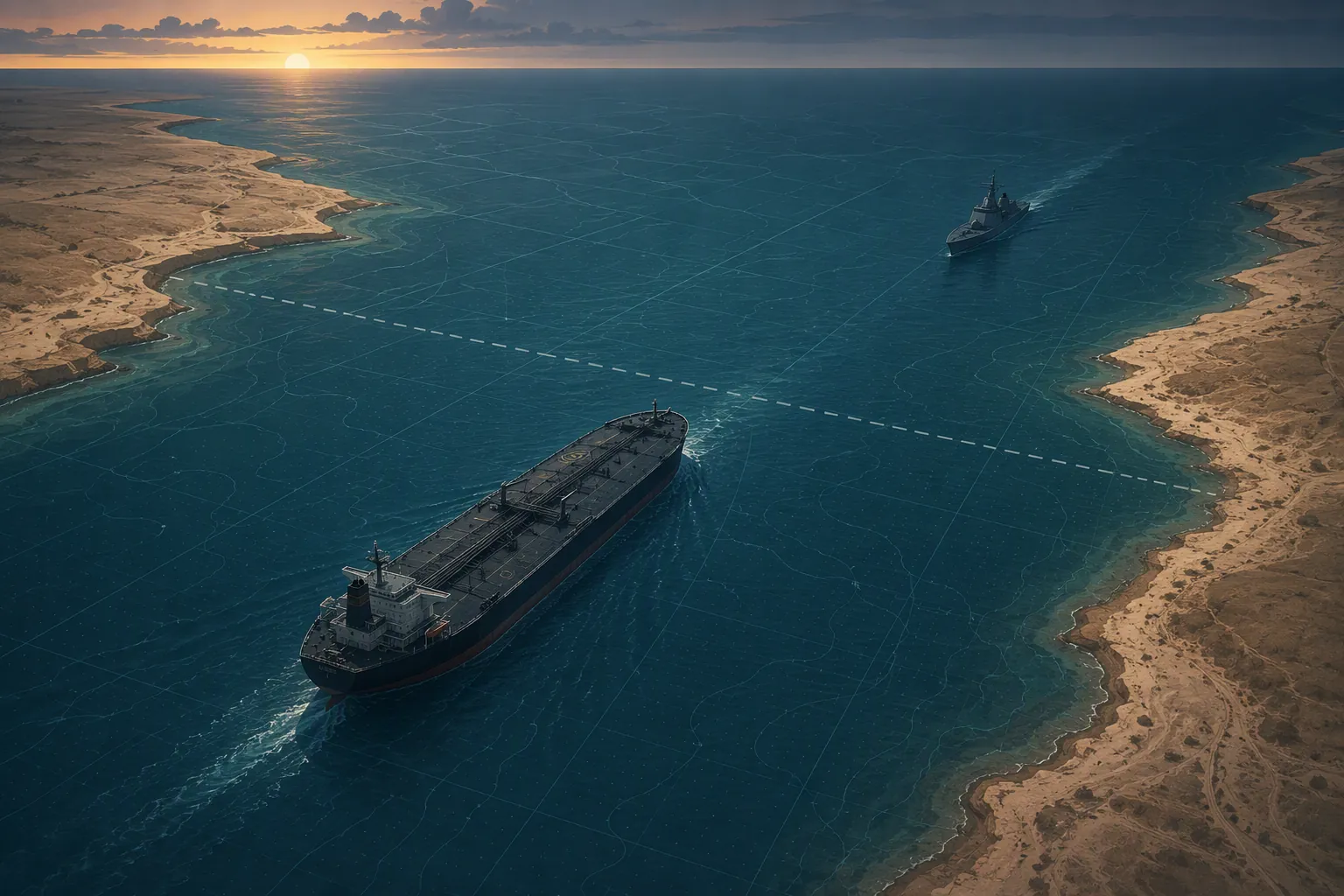
The short answer is that force against merchant shipping is lawful only when the vessel has become a lawful military objective, or when a narrower naval-warfare measure such as capture or blockade satisfies its own conditions. A neutral merchant crew does not become targetable because a state wants to send a signal. A commercial ship does not become immune because its hull is civilian if it is in fact making an effective contribution to military action and attacking it offers a definite military advantage. The law turns on classification, proof, and precautions.
No ICJ or ITLOS judgment has adjudicated the 2026 Hormuz attacks or seizures. That matters. Oil Platforms is an analogy, not a decision on this conflict; Chatham House, Opinio Juris, Lieber Institute, EJIL:Talk!, and Lawfare are expert interpretations, not judgments. The San Remo Manual is influential in naval-warfare analysis, but it is not a treaty. Those limits do not make the law useless. They do mean that confident one-line answers should be distrusted.
Three legal frames, not one
Before the February 2026 escalation, the baseline for ordinary merchant passage through Hormuz was transit passage: coastal states could not simply use force against passing ships because they disliked the cargo, the flag, or the political destination. That background is covered more fully in the site’s Hormuz tanker-attacks regime map. Here, the point is narrower: the peacetime rule is the starting line, not the whole race.
Article 51 self-defense is the second frame. It does not automatically authorize a navy to strike back whenever one merchant ship is hit. In Oil Platforms, the ICJ rejected the United States’ self-defense justification for attacks connected to the Sea Isle City and related incidents, while leaving open the possibility that mining a single military vessel could, in the right circumstances, amount to an armed attack. [2]
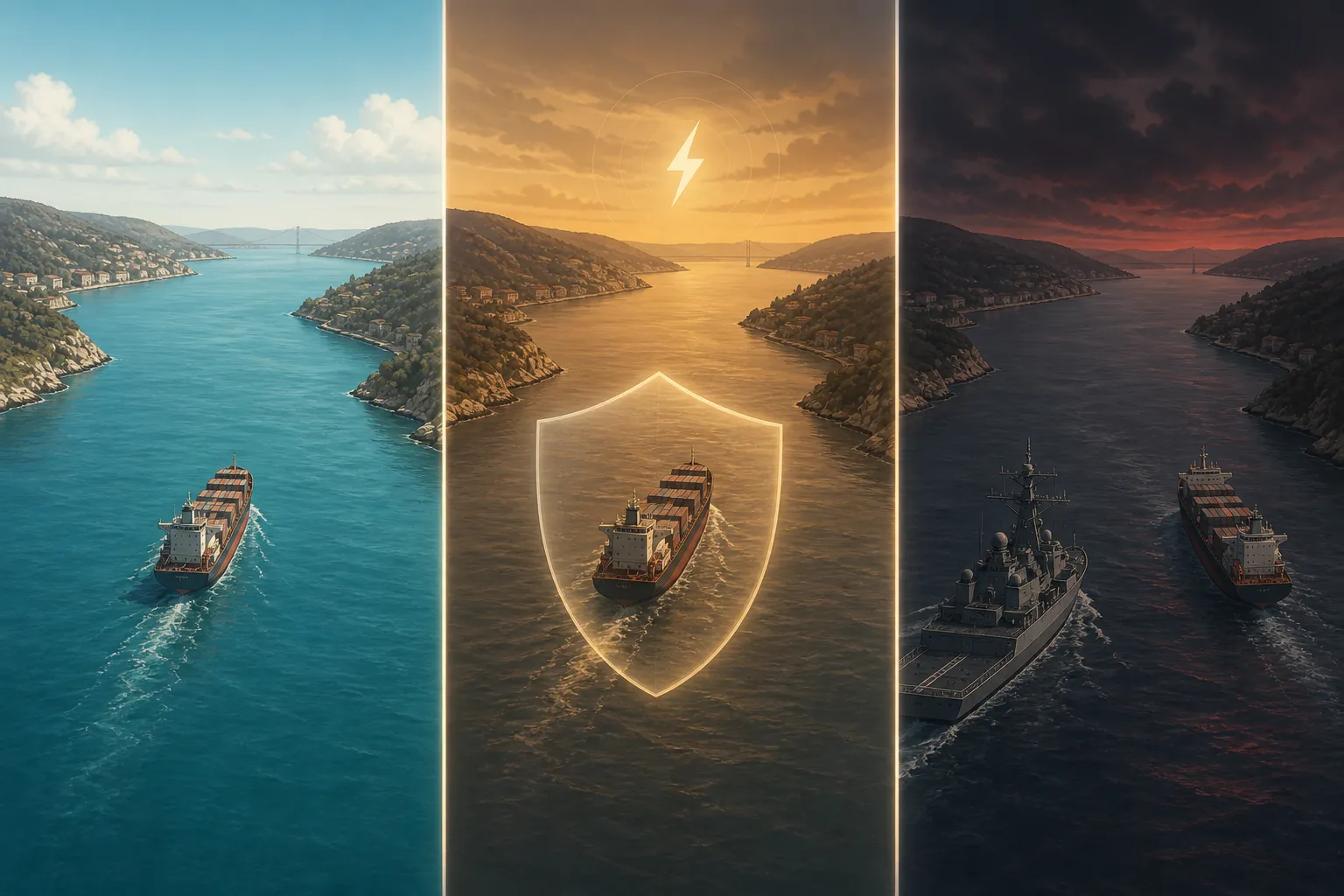
The third frame is the law of naval warfare. Chatham House and Opinio Juris commentary treated the 28 February 2026 US-Israeli strikes as creating an international armed conflict, shifting Hormuz from a purely peacetime transit-passage problem into a belligerent-strait problem. [3][4] That shift is important, but it does not turn every tanker into a target. It changes the available legal tools; it does not erase distinction, neutrality, proportionality, or precautions.
Article 51 after Oil Platforms
Oil Platforms is awkward for anyone who wants Article 51 to do all the work. The Court’s approach makes individual attacks on commercial vessels a poor shortcut to self-defense unless the scale and effects, or the accumulated pattern properly attributable to a state, satisfy the armed-attack threshold. EJIL:Talk! and Lieber Institute commentary both emphasize that attacks on merchant shipping raise hard questions about which state, if any, has the right to respond in self-defense, especially where the victim is a privately operated vessel, the flag state is neutral, and the cargo interests are dispersed. [5][6]
UN General Assembly Resolution 3314 Article 3(d) treats attacks on a state’s “marine fleets” as aggression. That phrase helps where a state’s fleet is being attacked as such. It is a weaker fit for one isolated merchant vessel. The better reading is that a single commercial ship is not automatically a fleet, although repeated attacks on vessels of a state, or an attack embedded in a larger military operation, may alter the analysis. [5][6]
The Article 51 threshold is contested. Some lawyers put heavier weight on a gravity threshold drawn from Nicaragua and Oil Platforms: only the most grave forms of force qualify as armed attacks. Others focus more flexibly on scale and effects, asking whether the incident, even if limited, has consequences comparable to an armed attack. Both approaches leave room for self-defense in serious cases. Neither supports the claim that every attack on a merchant vessel authorizes forcible retaliation against the coastal state’s naval or port infrastructure.
Merchant vessels under naval-warfare rules
Once an international armed conflict exists, the vocabulary changes. The first question is no longer only whether transit passage was interfered with. It is whether the vessel is enemy or neutral, whether it is a military objective, whether capture rather than attack is the lawful measure, and whether precautions were feasible.
Under the San Remo framework, neutral merchant vessels are not attackable merely because they are in a dangerous strait. They may lose protection if they engage in belligerent acts, act as auxiliaries, resist lawful visit and search, or carry contraband in circumstances that make capture or diversion lawful. Enemy merchant vessels may be captured, but that is not the same as saying they may simply be sunk. Opinio Juris’s 2026 analysis treats these rules as central to Hormuz after the February strikes. [4]
This is where many public accounts become legally careless. “Seized” is not “attacked.” “Warned” is not “closed.” “Targeted” is not “visited and searched.” If Iran boards a neutral merchant vessel under a genuine visit-and-search claim, the legality question is one thing: contraband, destination, resistance, treatment of the crew, and prize consequences. If Iran fires on a neutral merchant vessel that has not engaged in belligerent conduct, resisted visit and search, or carried contraband in a way that changes its status, the analysis is much shorter. That attack is unlawful.
The Stena Imperative is the hard case
The Stena Imperative strike at Bahrain on 2 March 2026 is the most useful case because it resists tidy slogans. Opinio Juris treated the vessel as an arguable military objective under the Additional Protocol I Article 52(2) test, while also identifying serious precaution issues under Article 57. [4] That is the right place to pause. “Arguable military objective” is not the end of the legal inquiry; it is the door into the next inquiry.
Article 52(2) asks whether the object, by its nature, location, purpose, or use, makes an effective contribution to military action, and whether its destruction, capture, or neutralization offers a definite military advantage. For a merchant ship, the answer depends on facts that cannot be supplied by label. A tanker under charter, a vessel carrying ordinary commercial cargo, and a ship integrated into a belligerent supply operation do not stand in the same place.
Even if the Stena Imperative met the military-objective test, the attacker still had to take feasible precautions: verify the target, choose means and timing that reduce civilian harm, warn where circumstances permit, and avoid attacks expected to cause excessive incidental loss to the crew or nearby civilian objects. If later-confirmed facts show that those precautions failed, the strike fails the lawfulness test even if the vessel’s status was debatable. On the present record, that is the most careful classification: arguable target status, unresolved but serious precaution defect.
Iranian attacks on neutral shipping
For Iranian attacks on neutral merchant vessels, the presumption runs against lawfulness unless the vessel’s conduct changes the legal picture. A neutral ship carrying ordinary commerce through Hormuz is not a lawful object of attack. It may be stopped or diverted only under the applicable visit-and-search, contraband, blockade, or belligerent-rights rules; it may be attacked only in the narrower circumstances recognized by naval-warfare law, such as resisting lawful control measures in a way that changes the military assessment.
Resolution 2817’s condemnation of obstruction and attacks is therefore legally significant but not self-executing. [1] It does not adjudicate each incident. It does, however, record the Security Council’s institutional assessment that the 2026 pattern of interference with navigation was not a neutral regulatory program or ordinary maritime policing. A flag-state lawyer still has to classify the particular act: was the vessel attacked, captured, diverted, warned, mined, or held? The answer determines the rule.
The April blockade: total closure fails, narrowed blockade is different
The reported 12 April 2026 US blockade is strongest only in its narrowed form. Chatham House’s analysis treats a blockade directed at vessels entering or exiting Iranian ports as defensible if it is declared, effective, and applied impartially. It also treats a total closure of the Strait as unlawful. [3]
That distinction is not cosmetic. A blockade of Iranian ports aims at the enemy’s maritime access. A total closure of Hormuz reaches neutral commerce as such and treats the strait itself as the prize. The first measure can be tested against blockade law. The second collides with the rights of neutral shipping and the requirement that belligerent measures not indiscriminately shut a strategic waterway to vessels with no sufficient connection to the conflict.
“Effective” also has legal work to do. A paper blockade announced at a podium is not enough. Nor is a selective interdiction campaign that exempts favored neutral shipping while stopping comparable vessels under other flags. The defensible version is the disciplined version: declared scope, actual enforcement capacity, equal application, and a target limited to Iranian port traffic rather than the whole strait.
Mines in Hormuz
Reported mining deserves separate treatment because mines are not just another kind of attack. Hague Convention VIII restricts mine warfare and requires precautions to protect peaceful navigation. Lawfare’s 2026 analysis emphasizes the practical problem in Hormuz: without safe alternative routes through or around the Strait, mining does not merely create strategic pressure; it threatens neutral shipping in a way the mine-warfare rules are designed to prevent. [7]
If mines are laid without effective notice, charting, control, or a safe passage option for neutral vessels, the defect is legal, not just operational. A state cannot cure that problem by saying the mines are meant to deter an enemy navy when the predictable victim class includes neutral merchant crews using the only practical route.
Classification of the main 2026 measures
| Measure | Governing test | Best classification on the present record |
|---|---|---|
| Attack on a neutral merchant vessel not engaged in belligerent conduct | Naval-warfare distinction and neutral merchant-vessel protection | Unlawful |
| Seizure, visit, or search of a neutral merchant vessel | Visit-and-search, contraband, blockade, and prize rules | Potentially lawful only if grounded in a recognized belligerent right and conducted with proper treatment of the crew |
| Strike on the Stena Imperative | Military-objective test plus feasible precautions | Arguable target status, but unlawful if precaution failures are confirmed |
| Total closure of the Strait of Hormuz | Blockade law, neutral rights, and transit-navigation protections | Unlawful |
| Blockade narrowed to vessels entering or exiting Iranian ports | Declared, effective, and impartial blockade directed at enemy ports | Defensible if the narrowing and enforcement conditions are actually met |
| Mine warfare without safe alternative routes | Hague Convention VIII mine-warfare precautions | Unlawful |
What later reporting can and cannot change
July 2026 reporting makes a timestamp essential because new facts may change the application: a vessel’s cargo, charter, routing, warning history, resistance, or connection to military operations can alter the legal classification. New facts cannot change the governing questions. Was the vessel a military objective? Was capture available instead of attack? Were feasible precautions taken? Was the blockade narrowed, declared, effective, and impartial? Were mines controlled in a way that protected neutral passage?
On the record last checked for publication, most attacks on neutral merchant vessels in Hormuz fail the lawfulness test. The Stena Imperative strike remains the hard case, but if the precaution failures identified in the current commentary are confirmed, it fails as well. A blockade narrowed to vessels entering or exiting Iranian ports is the strongest defensible forcible measure. A total closure of the Strait and mine warfare without safe alternative routes are unlawful.
References
- Security Council Condemns Obstruction of Navigation through Strait of Hormuz, Attacks by Iran, Adopting Resolution 2817 (2026) by 13 Votes in Favour, 2 Abstentions — United Nations, 11 March 2026.
- Oil Platforms (Islamic Republic of Iran v. United States of America) — International Court of Justice, 2003.
- The Strait of Hormuz, shipping and the law — Chatham House, April 2026.
- The Closure of the Strait of Hormuz by Iran: Considerations over the Law of the Sea and Law of Naval Warfare — Opinio Juris, 6 May 2026.
- How International Law Restricts the Use of Military Force in Hormuz — EJIL:Talk!.
- Attacks on Merchant Shipping: Which State Has the Right to Respond in Self-Defence? — Lieber Institute.
- The Strait of Hormuz and the Limits of Maritime Law — Lawfare.
Operationalizing workflow
No workflow has been explicitly linked to this obligation yet. See Workflows generally.
Illustrative cases
- Anwar Raslan's Life Sentence Stands After German Appeal
- Donna Adelson's Appeal Is Pending. What Is She Arguing?
- What's verified in the Max Miller House Ethics probe
- What's the Status of the Miller-Grisham Social Media Order?
- Clayton Echard–Laura Owens Lawsuit Is Not an AI-Risk Case
- What Laura Owens Actually Alleged Against Clayton Echard
- Where do the Lindsay Clancy jury deliberations stand now?
- The SC 26th Amendment Absentee Voting Case Is Watson v. RNC
- Why the SC mail-in voting age ruling is unsettled law
- Which Southwest PDX Discrimination Suit Facts Are Verified?
- Is the $750,000 California Lottery Prize Denial Verified?
- Are ECT Malpractice Lawsuits Against Psychiatrists Rare?
- Gülistan Doku Investigation Is Not an AI Sanction Case
- Milo Yiannopoulos's Deportation Case Remains Unverified
- What's Confirmed in the Sauce Gardner Contractor Lawsuit?
- Studio City Dog Boarding Death Lawsuit Is Unconfirmed
- Supreme Court’s Mail-In Voting Stay in Trump v. California
- Which Carroll Verdict Did the Supreme Court Reject?
- The Bricen Rivers and Lauren Johansen case timeline
- What is the DC grand jury investigation of public schools?
- What verdict options does Lindsay Clancy's jury have?
- Marius Borg Høiby received a four-year prison sentence
- What's verified in Milo Yiannopoulos's ICE status?
- No AI Found in Mobile Alabama Murder Grand Jury
- Is There a Robin Williams AI Impersonation Lawsuit?
- Trump's hush money conviction appeal is still pending
- What's verified in the Yosemite land transfer controversy
- No court order revoked the Cheluget 5,800-acre Narok title
- Columbia bookkeeper sentenced in $250K wire fraud case
- DOJ appeal keeps Epstein unredaction ruling in force
- Why Eric Hafner Can Stay on Alaska's U.S. House Ballot
- What's Verified in the Evelyn Cheluget RSF Passport Scandal
- What Meta's $17.1B teen social media settlement pays
- The Nevada Colorado River Water Cuts Lawsuit, by the Docket
- Who Was Charged in the Roberts Signature Forgery Case?
- Is Subhash Chandra's NCLT settlement actually final?
- Warr Receives 37 Months for South Carolina Wire Fraud
- Campbell Hall Settles Byron Scott Suit; Trial Still On
- Why Don Lemon Was Indicted Over a St. Paul Church Protest
- Wife's objection in Cher's Elijah Blue Allman conservatorship
- How to file your Google Assistant $68M claim today
- Ketanji Brown Jackson's shadow docket dissents, counted
- Final Witness at Lindsay Clancy Trial Challenges Voice Claim
- Meta's $16.7 billion settlement is not final yet
- Francisco Paulino's pandemic fraud charges, explained
- SEC subpoenas banks over AI hedge fund collapse, reports say
- Where do State Farm's Oklahoma roof claim lawsuits stand?
- How Courts Are Ruling on Fake AI-Generated Evidence
- After Chatrie, Are Flock License Plate Queries a Search?
- When Google Docs Exposes Passwords, What's the Legal Risk?
- Is AI really eliminating legal jobs?
- GEMA v. OpenAI lawsuit update: Munich ruling is on appeal
- Google AI Overviews' legal risk to publishers, case by case
- 15 State AGs Demand OpenAI Evidence in Hugging Face Hack
- Where does the NYT v. OpenAI lawsuit stand now?
- Apa yang Sebenarnya Dikembalikan Ramalan Bazi Gratis?
- Paano naging 'manghuhula online' ang AI sa Sandiganbayan?
- What do Nvidia's earnings mean for legal tech buyers?
- Who answers for NYT's AI-generated search summaries?
- Who are the Billings shooting victims? Alan Smith isn't one
- Judge Denies Lindsay Clancy Mistrial Request
- What's Confirmed in the Billings Family Murder-Suicide
- Sean Grayson–Sonya Massey Case Updates After Custody Death
- What is the psychosis defense in the Lindsay Clancy trial?
- Jed York's no-contest plea ends his disorderly conduct case
- Kai Spears wins $9.25M Alabama defamation verdict
- Who's Actually Sued in the Sofia Vergara AI Deepfake Case
- Can Anyone Predict the Lindsay Clancy Verdict?
- Why Is the Nolan Wells Case Evidence Sealed?
- How the insanity defense works in Lindsay Clancy's trial
- Superpotent Thyroid Tablets Recalled? Symptoms and Rights
- Is the FCC Actually Revoking ABC's Licenses?
- USPS mail carrier check theft penalties beyond five years
- Why Ghislaine Maxwell's grand jury records were unsealed
- How DMCA § 512(h) subpoenas unmask GTA 6 leakers
- AI-fabricated citation confirmed in Bianco ballot case
- Landon Doty's 54-year sentence, verified against the docket
- What Are the Legal Consequences of Police Flock Misuse?
- Why courtroom backlash outran Lindsay Clancy's trial record
- USPS mail carriers face $24M check theft indictment
- Inside the Clancy trial's concession strategy
- USPS Mail Carrier Charged With Mail Theft? What Happens Next
- What the GEMA v. Suno Ruling Holds for AI Music Training
- Jamie Komoroski settlement and sentence outcome by phase
- Every Keffe D bail hearing and why he remains jailed
- Sean Grayson's death investigation has three tracks
- The Grant–McMahon case is now in confidential arbitration
- What Emma Coronel's Docket Says About Life After Prison
- Where the Sara Duterte Impeachment Trial Stands on Day 18
- Did Mike Lindell Withhold His Minnesota Recount Payment?
- Who Can Be Sued After the Vitruvias Thyroid Recall
- Sean Grayson dies serving sentence for Sonya Massey killing
- The legal fallout of the GTA 6 leak site takedown
- When must law firms notify clients after Google Docs hacks?
- Who is Rockstar's parent subpoenaing over the GTA 6 leaks?
- Why the Knox-Kercher Case Is a Legal-AI Hallucination Probe
- Who decides if Kalshi's clinical trial bets are legal?
- Water utility OT cyberattack compliance deadlines for 2026
- Fired FBI agents' class action against Kash Patel, mapped
- Which Hong Kong tokenisation regulation applies to you?
- Summer Dress Code Rules Employers Need to Know
- Verifying Connecticut car accident lawsuit timeline claims
- How to verify a Pima County sheriff wrongful arrest lawsuit
- How the End Government Shutdowns Act changes current law
- Restaurant Dress Codes Under Gender Discrimination Law
- Michigan's AI SNAP Eligibility Screen Under the 2025 Changes
- What Amazon Prime Air complaints can cities act on?
- Who Is Liable in an Alabama Bad-Weather Truck Accident?
- How Liability Shapes Brooklyn Sidewalk Accident Deadlines
- How to Claim the Equifax $600 Settlement Payment
- Where Buc-ee's Trademark Policing Crosses Into Overreach
- The legal plan behind Ken Paxton's Texas AI promise
- Utah ruling keeps Kalshi's sports betting under state law
- What the Social Security 2100 Act's COLA Change Does in Law
- EPA Green Bank En Banc Ruling Leaves Forum Question Open
- New York attorney general's Kalshi lawsuit, explained
- Wisconsin absentee ballot replacement rules just changed
- Why the Jan. 6 Pence Tweet Was an Official Act
- DOL Cites San Antonio Bakery for Child Labor and Wages
- The legal issues with police surveillance AI, explained
- Prosecuting the Minnesota water cyberattack if tied to Iran
- What the en banc court held in the EPA green bank clawback suit
- What legal exposure remains in the Fukuoka assembly scandal?
- What the Blanche DOJ fight means for federal AI enforcement
- Can police stop a car on a Flock camera theft alert alone?
- The PSA Antitrust Lawsuit, Explained
- FBI agents sue Patel for firing in political retaliation
- Which SEC rules require AI capex disclosure?
- The Equifax Class Action Claim Deadline Is Sept. 1, 2026
- Missouri Amendment 4's Actual Legal Impact on Campaigns
- Three arrests in Santa Cruz police shooting, no charges yet
- Google Lens now feeds AI training. Privacy law is split.
- Who faces legal risk when AI fakes satellite images?
- What the Social Security 2100 Act Would Change
- UBS fined a record $125 million for money laundering
- Why Trump's IRS audit immunity was never lawful
- What courts actually decided on Medicaid work requirements
- The DOJ Rule Change Behind the NYT North Korea Subpoena
- Is mail theft of a winning lottery ticket a federal crime?
- What the FDA Compassionate Use Program Legally Requires
- Judge defers dismissal in Trump's $15B NYT defamation case
- The Verified Record of the Joe Felz Fullerton DUI Case
- How to Verify AI Answers on HOA Foreclosure Laws
- States Sue Over Tariffs Again After the Supreme Court Ruling
- Which EU Rules Apply to BlackRock's Tokenized MMFs?
- What's confirmed in Aaron Farinacci's Old Trails Fire case
- Cert denial closes Trump Section 301 tariff challenge
- Three Court Tracks Now Decide Texas THC Ban's Fate
- How to read Aaron Farinacci's manslaughter conviction
- The pied-a-terre tax is splitting Manhattan luxury in two
- How lottery winner anonymity laws vary by state
- What South Korea's property tax increase legally changes
- How to verify viral clips in the Udhayanidhi Stalin arrest
- What's next in the Capital One debanking fallout?
- Why Was Prince Harry's Privacy Lawsuit Dismissed?
- Which states are suing Trump over tariffs?
- Which AI deepfake laws has Congress passed so far?
- Belfast AI art copyright controversy is a legal misreading
- UBS Fined $125M for Money Laundering Violations
- What Will the 2027 Social Security COLA Be?
- Why Talarico's 'murdered' remark likely isn't actionable
- Four legal gates remain for Gwangju's semiconductor cluster
- Which Ksi Lisims LNG legal gates remain open
- Verify Kansas City Wrongful Death Lawyer's Trial Experience
- How to Verify the Maple Leaf Bacon Recall List in OR/WA
- Was F1 made by AI? The legal obligations behind the claim
- What Legal Obligations Valley Forge Owes Transfer Students?
- What must happen before Grant Thornton-CBIZ can close?
- How Japanese drug law treats Hiroshima Carp home searches
- Why Does Diddy's Release Date Keep Changing?
- What the '1933 double' Reveals About ChatGPT Benchmarks
- Which laws apply to the Fukuoka cash-for-post scandal?
- Brij Bhushan Sharan Singh's acquittal leaves the case open
- Legal issues behind Yerington's Monarch Data Center protest
- What Microsoft's AI spending means for legal tech buyers
- Can governments stop Microsoft's AI data center buildout?
- FBI agent Patrick Yaroch charged with stealing Bitcoin
- Investor legal considerations for the CBIZ acquisition
- What charges does the FBI agent face for crypto theft?
- FBI agent cryptocurrency theft case, explained
- Is your college on the $23 billion settlement list?
- Verify Max Miller abuse allegations against docket records
- Why the Grisham TRO Against Miller Can't Be Confirmed Yet
- How to Verify the Moreno–Miller Abuse Allegations
- Is 7-OH Kratom Legal After the DEA Schedule I Order?
- Federal judge upholds EPA air standard — deadlines now bind
- Is the Sweet v. McMahon Class Action Settlement Final?
- Federal judge lets ICE agents mask up, keeps NY 287(g) ban
- Who Qualifies for the Sweet v. McMahon Settlement
- Federal judge denies Illinois voter data request
- Where the Trump DOJ interference cases stand now
- What the Clancy Duxbury jury tour reveals about view law
- A witness-by-witness recap of Lindsay Clancy trial week 2
- Is Alibaba's Qwen 3.8 Max Safe for Legal Work?
- Why Jeanine Pirro's Reflecting Pool Case Collapsed
- How AI facial reconstruction fails in 1982-era cold cases
- What Jeanine Pirro's Reflecting Pool decision left open
Report a correction or tip
Spotted an outdated figure, a misstated fact, or a ruling this regulation entry should reflect? Public comments are disabled for this content given the professional cost of a misreported case outcome, penalty amount, or rule text — use the structured correction channel instead.
Report a correction or tip for this record →