
Is Ticketmaster's selfie ID check a biometric privacy risk?
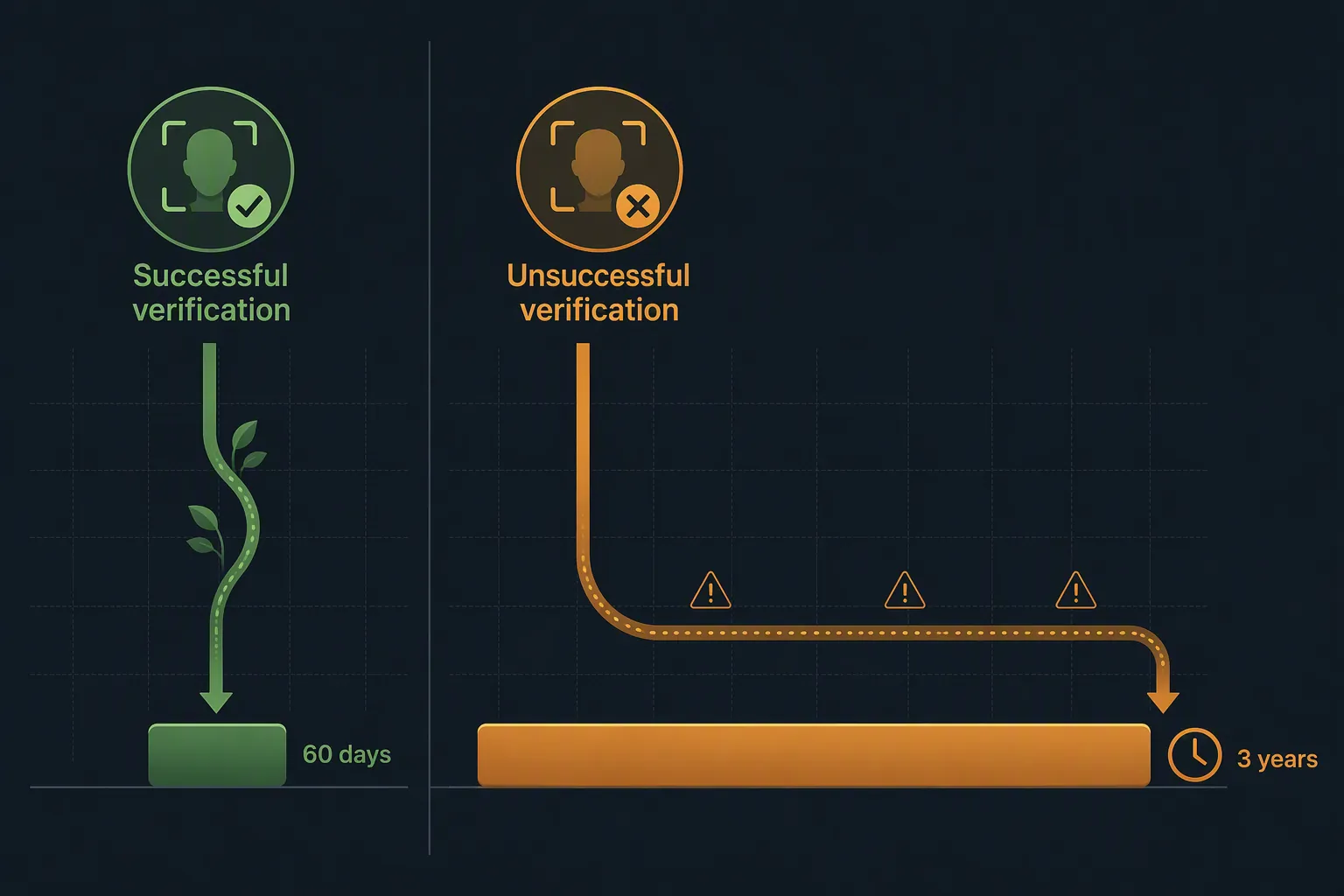
The privacy question around Ticketmaster’s selfie ID verification is not, on the present record, a clean yes-or-no violation call. As of August 1, 2026, the materials reviewed do not show a filed class action aimed specifically at Ticketmaster’s current Persona-based selfie-plus-ID program. The more useful answer is narrower: the program creates different biometric privacy exposure depending on state law, with Illinois presenting the clearest private-litigation danger zone, and the most important disclosed fact is Persona’s retention split—biometric data retained no more than 60 days after a successful verification, but up to three years after an unsuccessful one for fraud prevention.[1]
That asymmetry matters because the failed user is the one who gets the worst bargain. The person does not receive the smooth-access benefit that identity verification is supposed to provide, yet may fall into the longer-retention category. If a privacy claim is ever brought against this flow, that is the fact plaintiffs and regulators are most likely to press first: what exactly was collected, what notice authorized it, why the unsuccessful record needed years rather than weeks, and whether the deletion policy actually matches the promise.
Start with the forum, because the same scan does not create the same case
A face scan attached to a ticketing account may feel like the same event everywhere. Legally, it is not. The claim changes when the user is in Illinois rather than Texas, Washington, Colorado, Oregon, Louisiana, New York City, or a state without a biometric-specific statute.
| Jurisdiction or regime | Primary legal lever | Why it matters for a selfie-plus-ID flow |
|---|---|---|
| Illinois | BIPA private right of action and statutory damages | This is the sharpest private-litigation forum because individuals can sue directly rather than waiting for a regulator.[2] |
| Texas | Capture or Use of Biometric Identifier Act enforcement by the state attorney general | Texas is serious enforcement territory, but it is not the same class-action posture as Illinois. CUBI carries civil penalties up to $25,000 per violation, and Texas has obtained $1.4 billion settlements from Google and Meta over unauthorized facial data capture.[3] |
| Washington | State consent and retention duties | The key questions are notice, consent, retention, and destruction, but the enforcement posture should not be collapsed into Illinois BIPA. |
| Colorado, Oregon, Louisiana, and New York City | Newer state privacy and local biometric rules | These regimes add consent, deletion, or venue-facing biometric obligations that may matter even where BIPA does not apply.[4] |
| States without biometric-specific statutes | General consumer-protection, FTC Act, contract, misrepresentation, and breach theories | The claim is usually less direct. Counsel should separate discomfort with face scanning from a statute that creates a usable cause of action or enforcement hook. |
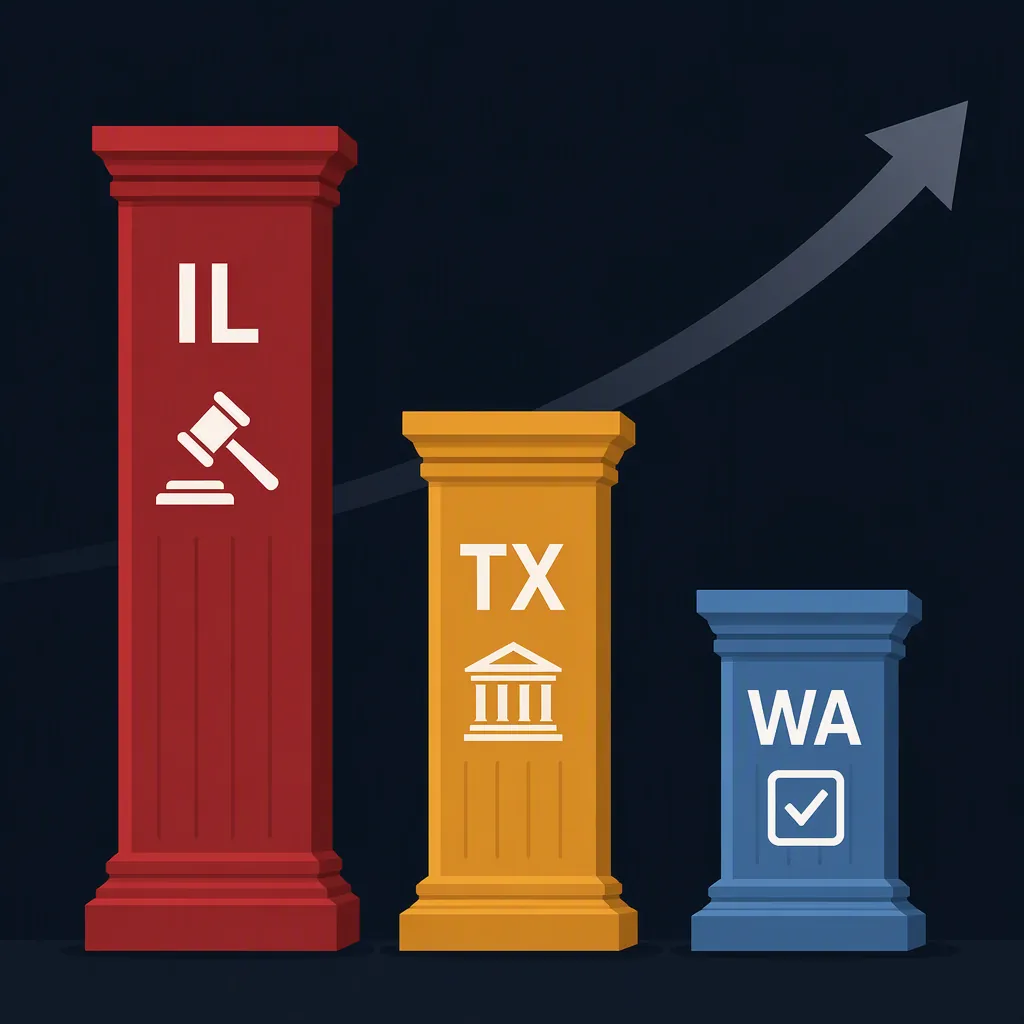
Illinois deserves the most attention because it changes who can move first. Under an attorney-general-only model, a company’s immediate risk depends heavily on regulator priorities, resources, and settlement posture. Under a private-right statute with statutory damages, the failed verification user does not need to persuade an agency to care. That does not mean every biometric verification flow violates Illinois law. It means the notice, consent, retention schedule, and destruction practice need to be defensible before a plaintiff’s lawyer asks for them.
Texas should not be treated as a soft jurisdiction simply because the enforcement path is different. The Google and Meta settlements show that facial data capture can draw very large state enforcement consequences, but those matters do not predict an identical Ticketmaster outcome. They show seriousness, not inevitability.[3]
The failed-verification bucket is where the program becomes sticky
Ticketmaster’s reported disclosure draws a bright line between successful and unsuccessful checks: no more than 60 days for biometric data associated with successful verifications, and up to three years for unsuccessful verifications for fraud prevention.[1] From a fraud-control perspective, the longer period is easy to understand. A rejected identity attempt may be more relevant to repeat abuse, bot activity, account takeovers, chargeback patterns, or attempted resale manipulation than a clean pass.
But “fraud prevention” is not a magic eraser for biometric retention duties. It is a reason that has to be translated into a policy: what field is retained, whether a biometric template or face geometry is kept, whether the ID image is retained separately, who can access the record, when deletion is triggered, and whether a failed user can request deletion before the outer retention period expires.
A hypothetical Illinois user makes the issue plain. Suppose a fan is prompted to complete a selfie-plus-ID check, submits the materials, fails verification, and never gets the ticketing benefit the check was designed to unlock. If the vendor then retains biometric data for a multi-year fraud-prevention period, the legal dispute is unlikely to turn on whether face scanning is creepy in the abstract. It will turn on whether the user received the required biometric notice, gave the required consent or release, was told the retention and destruction schedule with enough clarity, and can point to a mismatch between the disclosed policy and the actual retention practice.
That same fact pattern looks different in Texas. The potential theory may still focus on unauthorized capture or retention, but the enforcement mechanism belongs to the attorney general, and penalties are framed through the statute’s civil enforcement model rather than an Illinois-style private class action.[3] In Washington and newer state privacy regimes, the analysis moves again: consent, purpose limitation, retention, and deletion rights may matter, but the available remedy and plaintiff posture are not automatically the same.
Notice language needs live verification, not snippet lawyering
The available reporting supports the existence of a Ticketmaster-Persona selfie ID flow and the 60-day-versus-three-year retention split.[1] It does not eliminate the need to pull the current live notice. Ticketmaster’s biometric privacy notice and Persona help materials did not fully render in crawl, and exact language about consent, face geometry analysis, biometric templates, and deletion should be re-verified directly before anyone quotes it in a client alert, complaint memo, or business approval document.
That caution is not cosmetic. In biometric litigation, the difference between “we use a selfie to verify identity” and “we collect and process face geometry” can matter. So can the difference between “deleted after verification” and “retained for fraud prevention.” A search snippet can identify the issue, but it should not be treated as the operative notice.
The same discipline applies to vendor materials. Persona may be the processor operating the verification interface, but Ticketmaster remains the consumer-facing company prompting the fan through the flow. Counsel needs the vendor contract, the data-processing terms, the biometric notice, the user-consent screen, the retention schedule, and evidence of actual deletion behavior. A tidy vendor FAQ is not enough if the production logs show a different lifecycle.
Comparison cases are signals, not substitutes for a Ticketmaster complaint
It is tempting to fill the empty space left by the absence of a program-specific Ticketmaster lawsuit with nearby disputes: ID.me litigation, authID retention claims, a reported Washington v. Persona docket lead involving driver verification, 2024 breach suits, and FTC biometric enforcement. Those comparisons are useful for issue spotting. They are not proof that Ticketmaster’s Persona program has already crossed the same legal line.
The comparison should be kept functional. ID-verification cases help identify what plaintiffs ask for: the consent screen, the biometric definition, the retention period, the deletion trigger, the role of the vendor, and the benefit denied to users who fail. Breach cases help with injury and standing analysis, especially where the alleged harm is future misuse rather than a completed identity theft event; the standing framework is a separate question from whether biometric collection was lawful in the first place. For that distinction, the site’s broader guide to data breach class action eligibility is the more relevant cross-reference than a generalized alarm about facial recognition.
Ticketmaster also operates in a broader enforcement environment that is not limited to biometrics. State investigations and ticketing-market cases can affect how regulators view the company, but they should not be blended into the selfie ID analysis unless they involve the same data practice. For that separate context, see the site’s coverage of the California AG Ticketmaster verdict. Likewise, facial-recognition harms in enforcement contexts raise different public-power concerns, as discussed in the site’s account of ICE facial recognition risks. Those comparisons may sharpen policy instincts, but they do not replace the statutory analysis for a ticketing identity check.
The legal landscape is wider than it was when venue facial recognition first drew attention
The state-law map has changed materially since Ticketmaster first piloted facial-recognition technology in 2018. Current reporting cites National Conference of State Legislatures data showing that 23 states now restrict biometric data collection, compared with roughly three states when that earlier pilot drew privacy objections.[3][5]
That expansion does not mean every state now has a BIPA equivalent. It means a national ticketing platform cannot safely approve one biometric verification workflow and assume the same notice, retention, and deletion logic works everywhere. Even where the core consumer interaction looks identical—a selfie, an ID image, a pass-or-fail result—the legal obligations may be driven by the user’s location, the venue’s location, the company collecting the data, and the vendor retaining it.
For entertainment venues, the newer local and state rules are especially relevant because the business case for verification is strongest during high-pressure events: limited inventory, bot activity, fraud risk, resale abuse, and account disputes. That is precisely when product teams tend to want faster identity checks and fewer manual exceptions. Privacy law does not forbid that business need from existing. It requires the company to document why the chosen collection and retention practice is proportionate to it.
How to frame the risk today
The safest legal framing is comparative. Do not say the Ticketmaster selfie ID check is illegal everywhere; the present record does not support that. Do not say there is no meaningful risk because the program is aimed at fraud; that ignores the retention and consent questions that biometric statutes were built to test.
- For Illinois users, treat the flow as the highest-priority review because BIPA allows private suits and statutory damages.[2]
- For Texas users, evaluate attorney-general enforcement exposure, not private class-action exposure, and remember that civil penalties can reach up to $25,000 per violation.[3]
- For Washington and newer state or local regimes, test the consent, retention, deletion, and purpose-limitation language against the specific statute or code provision.
- For states without biometric-specific statutes, look at representations, unfair-practice theories, vendor security, breach risk, and whether the company’s actual data lifecycle matches its privacy notice.
- Across all states, separate successful and unsuccessful verifications. A single retention answer may miss the most important disclosed split.
The open diligence item is not whether selfie verification can ever be justified for live-event ticketing. It can be, especially where fraud controls would otherwise push more users into slow manual review. The open item is whether the biometric notice, consent flow, vendor contract, and deletion practice justify keeping failed-verification biometric data for up to three years while successful verifications are capped at 60 days. Until the live notice and actual retention implementation are verified, any stronger liability claim outruns the evidence.
References
- Ticketmaster selfie ID checks raise privacy concerns — WBAL, July 31, 2026
- Biometric Data in Focus: What Businesses Need — Venable, July 9, 2026
- Biometrics, facial recognition laws and privacy — NPR, August 28, 2025
- Privacy vs. Security: The Legal Implications of Using Facial Recognition Technology at Entertainment Venues — New York State Bar Association, June 10, 2025
- New Ticketmaster Facial Recognition Raises Privacy Concerns — Identity Theft Resource Center, 2018
Operationalizing workflow
No workflow has been explicitly linked to this obligation yet. See Workflows generally.
Illustrative cases
- Anwar Raslan's Life Sentence Stands After German Appeal
- Donna Adelson's Appeal Is Pending. What Is She Arguing?
- What's verified in the Max Miller House Ethics probe
- What's the Status of the Miller-Grisham Social Media Order?
- Clayton Echard–Laura Owens Lawsuit Is Not an AI-Risk Case
- What Laura Owens Actually Alleged Against Clayton Echard
- Where do the Lindsay Clancy jury deliberations stand now?
- The SC 26th Amendment Absentee Voting Case Is Watson v. RNC
- Why the SC mail-in voting age ruling is unsettled law
- Which Southwest PDX Discrimination Suit Facts Are Verified?
- Is the $750,000 California Lottery Prize Denial Verified?
- Are ECT Malpractice Lawsuits Against Psychiatrists Rare?
- Gülistan Doku Investigation Is Not an AI Sanction Case
- Milo Yiannopoulos's Deportation Case Remains Unverified
- What's Confirmed in the Sauce Gardner Contractor Lawsuit?
- Studio City Dog Boarding Death Lawsuit Is Unconfirmed
- Supreme Court’s Mail-In Voting Stay in Trump v. California
- Which Carroll Verdict Did the Supreme Court Reject?
- The Bricen Rivers and Lauren Johansen case timeline
- What is the DC grand jury investigation of public schools?
- What verdict options does Lindsay Clancy's jury have?
- Marius Borg Høiby received a four-year prison sentence
- What's verified in Milo Yiannopoulos's ICE status?
- No AI Found in Mobile Alabama Murder Grand Jury
- Is There a Robin Williams AI Impersonation Lawsuit?
- Trump's hush money conviction appeal is still pending
- What's verified in the Yosemite land transfer controversy
- No court order revoked the Cheluget 5,800-acre Narok title
- Columbia bookkeeper sentenced in $250K wire fraud case
- DOJ appeal keeps Epstein unredaction ruling in force
- Why Eric Hafner Can Stay on Alaska's U.S. House Ballot
- What's Verified in the Evelyn Cheluget RSF Passport Scandal
- What Meta's $17.1B teen social media settlement pays
- The Nevada Colorado River Water Cuts Lawsuit, by the Docket
- Who Was Charged in the Roberts Signature Forgery Case?
- Is Subhash Chandra's NCLT settlement actually final?
- Warr Receives 37 Months for South Carolina Wire Fraud
- Campbell Hall Settles Byron Scott Suit; Trial Still On
- Why Don Lemon Was Indicted Over a St. Paul Church Protest
- Wife's objection in Cher's Elijah Blue Allman conservatorship
- How to file your Google Assistant $68M claim today
- Ketanji Brown Jackson's shadow docket dissents, counted
- Final Witness at Lindsay Clancy Trial Challenges Voice Claim
- Meta's $16.7 billion settlement is not final yet
- Francisco Paulino's pandemic fraud charges, explained
- SEC subpoenas banks over AI hedge fund collapse, reports say
- Where do State Farm's Oklahoma roof claim lawsuits stand?
- How Courts Are Ruling on Fake AI-Generated Evidence
- After Chatrie, Are Flock License Plate Queries a Search?
- When Google Docs Exposes Passwords, What's the Legal Risk?
- Is AI really eliminating legal jobs?
- GEMA v. OpenAI lawsuit update: Munich ruling is on appeal
- Google AI Overviews' legal risk to publishers, case by case
- 15 State AGs Demand OpenAI Evidence in Hugging Face Hack
- Where does the NYT v. OpenAI lawsuit stand now?
- Apa yang Sebenarnya Dikembalikan Ramalan Bazi Gratis?
- Paano naging 'manghuhula online' ang AI sa Sandiganbayan?
- What do Nvidia's earnings mean for legal tech buyers?
- Who answers for NYT's AI-generated search summaries?
- Who are the Billings shooting victims? Alan Smith isn't one
- Judge Denies Lindsay Clancy Mistrial Request
- What's Confirmed in the Billings Family Murder-Suicide
- Sean Grayson–Sonya Massey Case Updates After Custody Death
- What is the psychosis defense in the Lindsay Clancy trial?
- Jed York's no-contest plea ends his disorderly conduct case
- Kai Spears wins $9.25M Alabama defamation verdict
- Who's Actually Sued in the Sofia Vergara AI Deepfake Case
- Can Anyone Predict the Lindsay Clancy Verdict?
- Why Is the Nolan Wells Case Evidence Sealed?
- How the insanity defense works in Lindsay Clancy's trial
- Superpotent Thyroid Tablets Recalled? Symptoms and Rights
- Is the FCC Actually Revoking ABC's Licenses?
- USPS mail carrier check theft penalties beyond five years
- Why Ghislaine Maxwell's grand jury records were unsealed
- How DMCA § 512(h) subpoenas unmask GTA 6 leakers
- AI-fabricated citation confirmed in Bianco ballot case
- Landon Doty's 54-year sentence, verified against the docket
- What Are the Legal Consequences of Police Flock Misuse?
- Why courtroom backlash outran Lindsay Clancy's trial record
- USPS mail carriers face $24M check theft indictment
- Inside the Clancy trial's concession strategy
- USPS Mail Carrier Charged With Mail Theft? What Happens Next
- What the GEMA v. Suno Ruling Holds for AI Music Training
- Jamie Komoroski settlement and sentence outcome by phase
- Every Keffe D bail hearing and why he remains jailed
- Sean Grayson's death investigation has three tracks
- The Grant–McMahon case is now in confidential arbitration
- What Emma Coronel's Docket Says About Life After Prison
- Where the Sara Duterte Impeachment Trial Stands on Day 18
- Did Mike Lindell Withhold His Minnesota Recount Payment?
- Who Can Be Sued After the Vitruvias Thyroid Recall
- Sean Grayson dies serving sentence for Sonya Massey killing
- The legal fallout of the GTA 6 leak site takedown
- When must law firms notify clients after Google Docs hacks?
- Who is Rockstar's parent subpoenaing over the GTA 6 leaks?
- Why the Knox-Kercher Case Is a Legal-AI Hallucination Probe
- Who decides if Kalshi's clinical trial bets are legal?
- Water utility OT cyberattack compliance deadlines for 2026
- Fired FBI agents' class action against Kash Patel, mapped
- Which Hong Kong tokenisation regulation applies to you?
- Summer Dress Code Rules Employers Need to Know
- Verifying Connecticut car accident lawsuit timeline claims
- How to verify a Pima County sheriff wrongful arrest lawsuit
- How the End Government Shutdowns Act changes current law
- Restaurant Dress Codes Under Gender Discrimination Law
- Michigan's AI SNAP Eligibility Screen Under the 2025 Changes
- What Amazon Prime Air complaints can cities act on?
- Who Is Liable in an Alabama Bad-Weather Truck Accident?
- How Liability Shapes Brooklyn Sidewalk Accident Deadlines
- How to Claim the Equifax $600 Settlement Payment
- Where Buc-ee's Trademark Policing Crosses Into Overreach
- The legal plan behind Ken Paxton's Texas AI promise
- Utah ruling keeps Kalshi's sports betting under state law
- What the Social Security 2100 Act's COLA Change Does in Law
- EPA Green Bank En Banc Ruling Leaves Forum Question Open
- New York attorney general's Kalshi lawsuit, explained
- Wisconsin absentee ballot replacement rules just changed
- Why the Jan. 6 Pence Tweet Was an Official Act
- DOL Cites San Antonio Bakery for Child Labor and Wages
- The legal issues with police surveillance AI, explained
- Prosecuting the Minnesota water cyberattack if tied to Iran
- What the en banc court held in the EPA green bank clawback suit
- What legal exposure remains in the Fukuoka assembly scandal?
- What the Blanche DOJ fight means for federal AI enforcement
- Can police stop a car on a Flock camera theft alert alone?
- The PSA Antitrust Lawsuit, Explained
- FBI agents sue Patel for firing in political retaliation
- Which SEC rules require AI capex disclosure?
- The Equifax Class Action Claim Deadline Is Sept. 1, 2026
- Missouri Amendment 4's Actual Legal Impact on Campaigns
- Three arrests in Santa Cruz police shooting, no charges yet
- Google Lens now feeds AI training. Privacy law is split.
- Who faces legal risk when AI fakes satellite images?
- What the Social Security 2100 Act Would Change
- UBS fined a record $125 million for money laundering
- Why Trump's IRS audit immunity was never lawful
- What courts actually decided on Medicaid work requirements
- The DOJ Rule Change Behind the NYT North Korea Subpoena
- Is mail theft of a winning lottery ticket a federal crime?
- What the FDA Compassionate Use Program Legally Requires
- Judge defers dismissal in Trump's $15B NYT defamation case
- The Verified Record of the Joe Felz Fullerton DUI Case
- How to Verify AI Answers on HOA Foreclosure Laws
- States Sue Over Tariffs Again After the Supreme Court Ruling
- Which EU Rules Apply to BlackRock's Tokenized MMFs?
- What's confirmed in Aaron Farinacci's Old Trails Fire case
- Cert denial closes Trump Section 301 tariff challenge
- Three Court Tracks Now Decide Texas THC Ban's Fate
- How to read Aaron Farinacci's manslaughter conviction
- The pied-a-terre tax is splitting Manhattan luxury in two
- How lottery winner anonymity laws vary by state
- What South Korea's property tax increase legally changes
- How to verify viral clips in the Udhayanidhi Stalin arrest
- What's next in the Capital One debanking fallout?
- Why Was Prince Harry's Privacy Lawsuit Dismissed?
- Which states are suing Trump over tariffs?
- Which AI deepfake laws has Congress passed so far?
- Belfast AI art copyright controversy is a legal misreading
- UBS Fined $125M for Money Laundering Violations
- What Will the 2027 Social Security COLA Be?
- Why Talarico's 'murdered' remark likely isn't actionable
- Four legal gates remain for Gwangju's semiconductor cluster
- Which Ksi Lisims LNG legal gates remain open
- Verify Kansas City Wrongful Death Lawyer's Trial Experience
- How to Verify the Maple Leaf Bacon Recall List in OR/WA
- Was F1 made by AI? The legal obligations behind the claim
- What Legal Obligations Valley Forge Owes Transfer Students?
- What must happen before Grant Thornton-CBIZ can close?
- How Japanese drug law treats Hiroshima Carp home searches
- Why Does Diddy's Release Date Keep Changing?
- What the '1933 double' Reveals About ChatGPT Benchmarks
- Which laws apply to the Fukuoka cash-for-post scandal?
- Brij Bhushan Sharan Singh's acquittal leaves the case open
- Legal issues behind Yerington's Monarch Data Center protest
- What Microsoft's AI spending means for legal tech buyers
- Can governments stop Microsoft's AI data center buildout?
- FBI agent Patrick Yaroch charged with stealing Bitcoin
- Investor legal considerations for the CBIZ acquisition
- What charges does the FBI agent face for crypto theft?
- FBI agent cryptocurrency theft case, explained
- Is your college on the $23 billion settlement list?
- Verify Max Miller abuse allegations against docket records
- Why the Grisham TRO Against Miller Can't Be Confirmed Yet
- How to Verify the Moreno–Miller Abuse Allegations
- Is 7-OH Kratom Legal After the DEA Schedule I Order?
- Federal judge upholds EPA air standard — deadlines now bind
- Is the Sweet v. McMahon Class Action Settlement Final?
- Federal judge lets ICE agents mask up, keeps NY 287(g) ban
- Who Qualifies for the Sweet v. McMahon Settlement
- Federal judge denies Illinois voter data request
- Where the Trump DOJ interference cases stand now
- What the Clancy Duxbury jury tour reveals about view law
- A witness-by-witness recap of Lindsay Clancy trial week 2
- Is Alibaba's Qwen 3.8 Max Safe for Legal Work?
- Why Jeanine Pirro's Reflecting Pool Case Collapsed
- How AI facial reconstruction fails in 1982-era cold cases
- What Jeanine Pirro's Reflecting Pool decision left open
Report a correction or tip
Spotted an outdated figure, a misstated fact, or a ruling this regulation entry should reflect? Public comments are disabled for this content given the professional cost of a misreported case outcome, penalty amount, or rule text — use the structured correction channel instead.
Report a correction or tip for this record →