
Flagship tracker
Risk Digest
The flagship, near-daily updated database of documented AI hallucination and sanction incidents in legal proceedings worldwide. Each entry is a structured record, not a news article: jurisdiction, court, judge (if named), the AI tool implicated, penalty amount, ruling date, a confirmed-vs-reported status flag, and a link to the primary court order. Serves the 'check risk' and 'track regulation' tasks: a lawyer, risk manager, or journalist scanning for new sanctions, a specific jurisdiction, or a specific tool. Excludes narrative commentary, procedural how-to guidance (belongs in Workflows), and rule text summaries (belongs in Regulation). This group is the site's differentiation engine: freshness and per-record sourcing are the moat, so every record must carry a last-verified timestamp distinct from the ruling date.
Confirmed
A court order or docket entry has been independently verified.
Reported — unverified
Still pending independent verification against a primary source.
 REPORTED — UNVERIFIEDUpdatedJurisdictionMassachusettsCourtMassachusetts Superior CourtToolNoneRuling dateJul 27, 2026
How the Lindsay Clancy trial tests insanity defense standards
The Lindsay Clancy trial tests the boundaries of Massachusetts's insanity defense standard in a national landscape where four states have abolished the defense post-Kahler v. Kansas. This article compares those jurisdictional differences and examines the viability of postpartum-psychosis defenses under the McHoul standard.
Last verified
 Updated
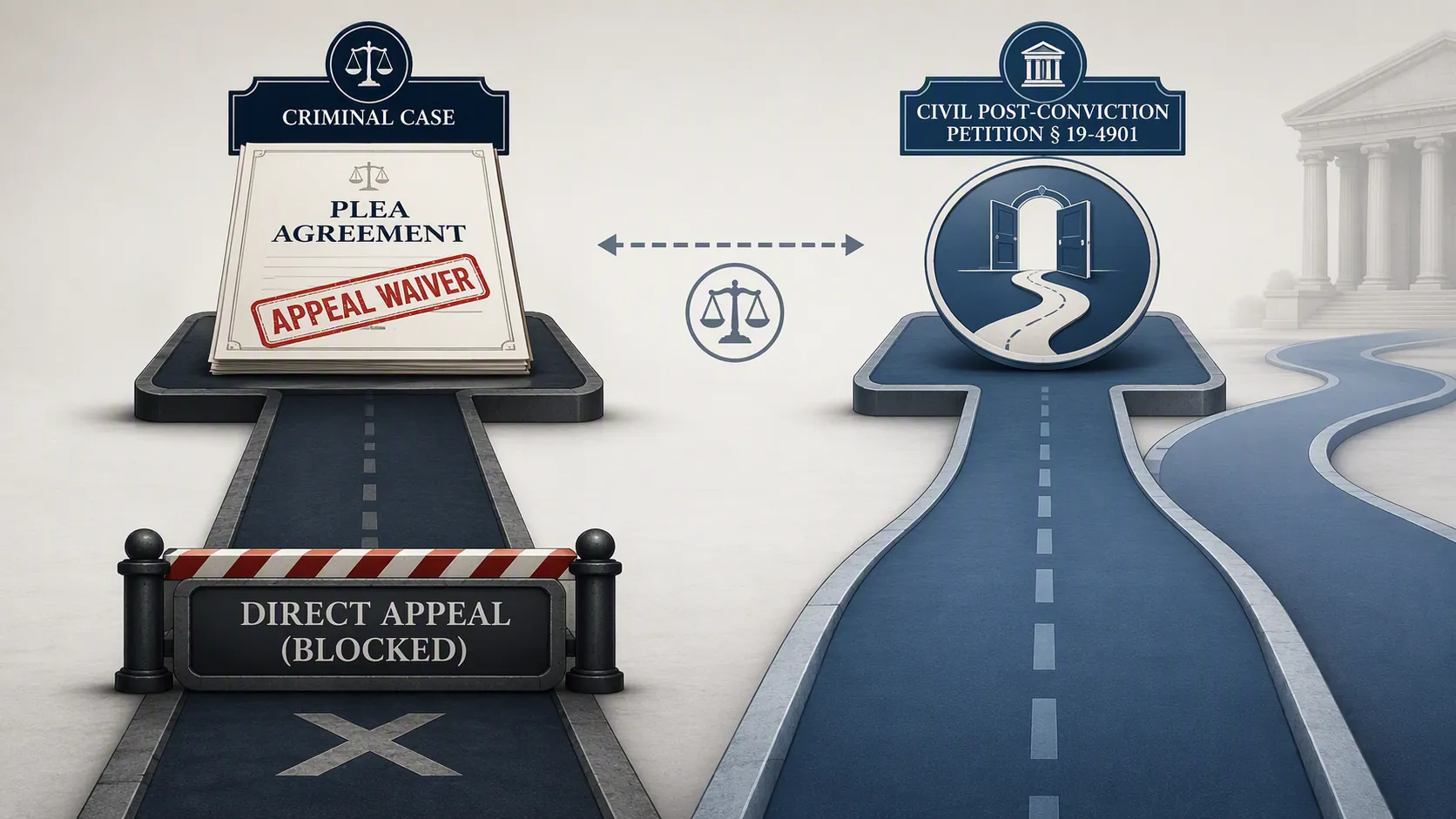
Does Kohberger's plea waiver bar his post-conviction petition?
Bryan Kohberger's post-conviction petition raises a key procedural question: can a criminal defendant challenge their plea after signing an appeal waiver? This article explains the legal distinction between waived direct appeals and preserved collateral attacks under Garza v. Idaho, and why Kohberger's petition does not violate his plea agreement.
 REPORTED — UNVERIFIEDUpdatedJurisdictionUS FederalCourtNHTSAToolTesla Full Self-Driving (FSD)Ruling dateMar 19, 2026
What NHTSA's Three Tesla FSD Probes Mean for Litigators
This article examines how NHTSA's three concurrent investigations into Tesla's Full Self-Driving system—spanning an engineering analysis, a preliminary evaluation, and a remote-driving probe—create a federal regulatory record that litigators can use to strengthen design defect, failure to warn, and negligent marketing claims in product liability litigation.
Last verified
 REPORTED — UNVERIFIEDUpdatedJurisdictionWisconsinCourtMilwaukee County Circuit CourtToolNoneRuling dateJul 23, 2026
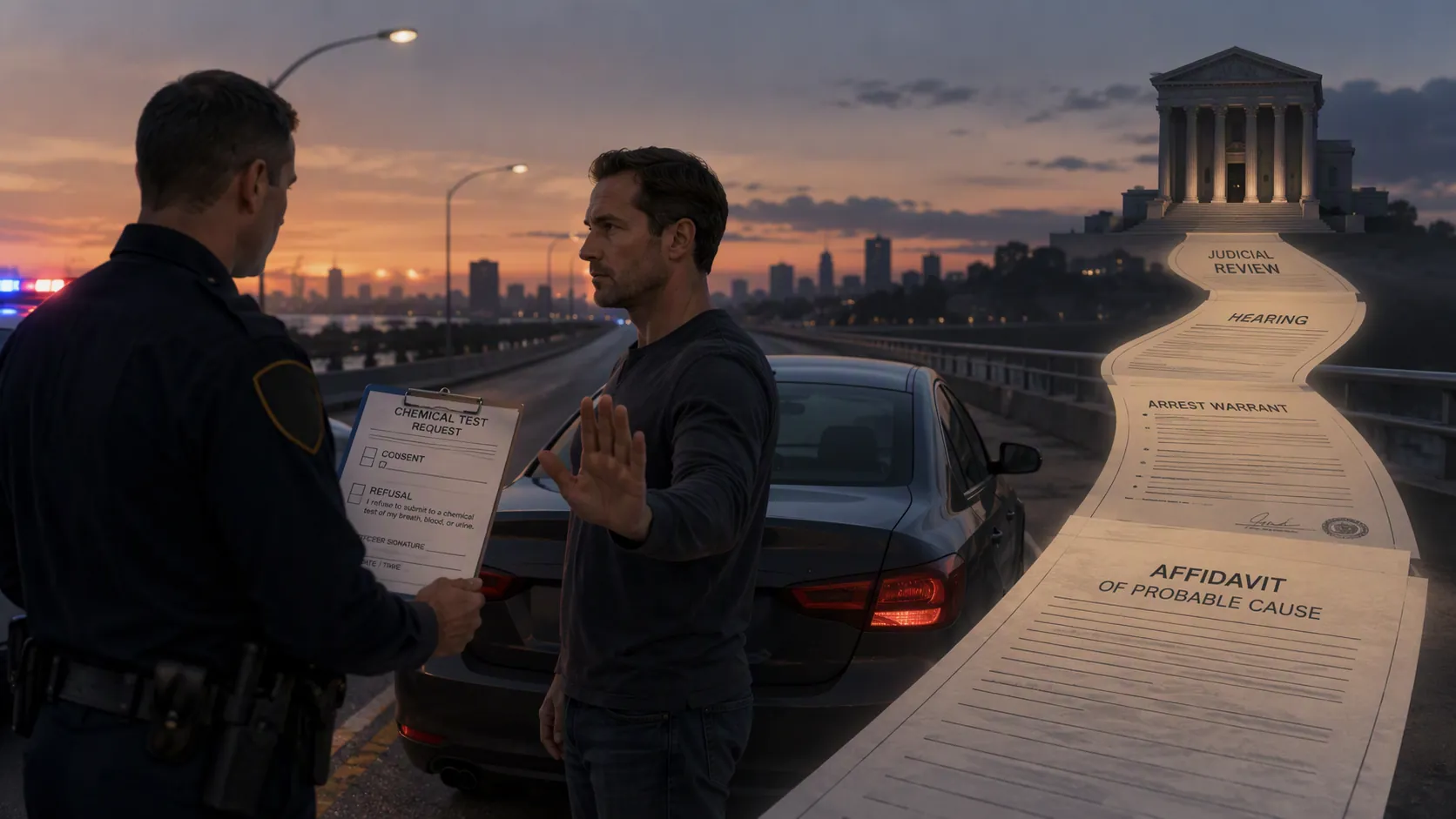
How Tony Romo's Refusal Led to a Blood-Draw Warrant
When a driver refuses a chemical test during an OWI stop, law enforcement must follow specific procedural steps to obtain a blood-draw warrant. This article traces that pathway through Tony Romo's July 2026 arrest, covering Wisconsin's statutory requirements, bodycam documentation, and the warrant application process.
Last verified
 REPORTED — UNVERIFIEDUpdatedJurisdictionVirginia, United StatesCourtLoudoun County General District CourtToolNoneRuling dateAug 31, 2026
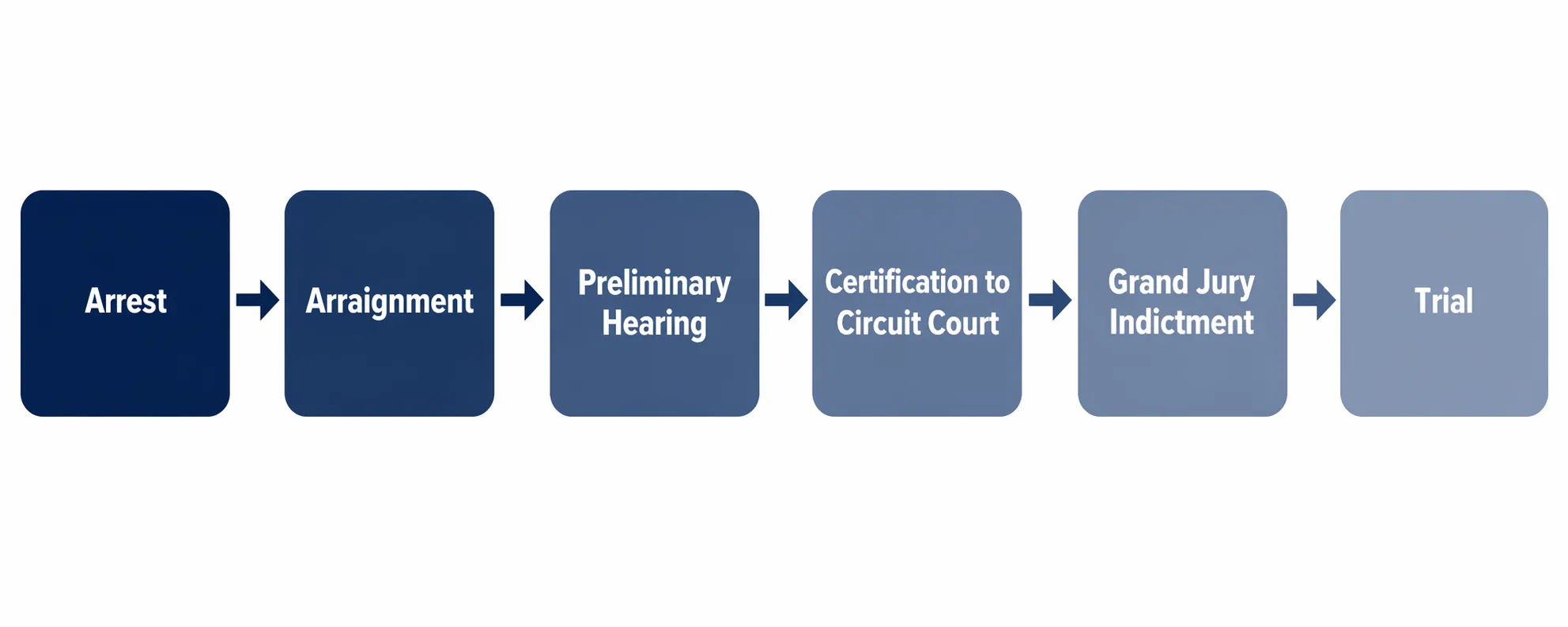
Virginia Felony Procedure: Elijah Bieniemy Case Timeline
A procedural-reference article using the live Elijah Bieniemy prosecution as a date-anchored illustration of Virginia's felony criminal process, mapping each step from arrest through preliminary hearing to Circuit Court trial timeline.
Last verified
 REPORTED — UNVERIFIEDUpdatedJurisdictionVirginiaCourtLoudoun County Juvenile and Domestic Relations District CourtToolNo AI toolRuling dateJul 28, 2026
Four risk factors in the Eric Bieniemy son shooting case
This article examines the pretrial management challenges raised by the Elijah Bieniemy prosecution — including celebrity-nexus publicity, intrafamily victim-offender dynamics, stacked firearm felonies with mandatory minimums, and national sports-media coverage — to help defense counsel and court administrators anticipate similar risk factors in high-profile cases.
Last verified
 REPORTED — UNVERIFIEDUpdatedJurisdictionMassachusettsCourtMassachusetts Superior CourtToolApple MapsRuling dateJul 28, 2026
Patrick Clancy Testimony: Digital Footprint as Premeditation Evidence
Prosecutors in the Lindsay Clancy trial are using Apple Maps routing data, iPhone search history, prescription records, and text notes to establish premeditation. This article examines how each category of digital evidence is presented and how the defense rebuts it as consistent with psychosis rather than planning.
Last verified
 REPORTED — UNVERIFIEDUpdatedJurisdictionMassachusettsCourtMassachusetts Superior CourtToolNoneRuling dateJul 28, 2026
Where Lindsay Clancy Falls on the Postpartum Psychosis Precedent Map
The peer-reviewed JAAPL precedent reveals that command auditory hallucinations predict NGRI, but planning and concealment do not. This article applies that framework to Lindsay Clancy's case and explains why the overmedication variable makes her defense a test of uncharted precedent.
Last verified
 REPORTED — UNVERIFIEDUpdatedJurisdictionUS FederalCourtUnited States District Court for the Eastern District of PennsylvaniaToolNoneRuling dateNov 1, 2024
Ford Bronco Recall Cascade and Its Legal Implications
Ford Bronco's four overlapping recall campaigns, combined with a 2024 NHTSA consent order requiring re-review of past recalls, create a cumulative litigation risk that weakens Ford's standard prudential mootness defense. This cascade makes class-action claims harder to dismiss and increases exposure for Ford and its dealers.
Last verified
 REPORTED — UNVERIFIEDUpdatedJurisdictionUS FederalCourtU.S. District CourtToolNoneRuling dateJul 28, 2026
CPSC's legal authority to compel hospital records is contested
The Consumer Product Safety Commission's new NEISS-R program demands identifiable hospital ER records under contested legal theories. This analysis examines the three pillars of CPSC's claimed authority and the legal defenses available to hospitals that refuse, including the HIPAA public-health-authority distinction, the Information Blocking Rule's Privacy Exception, and the missing Paperwork Reduction Act clearance.
Last verified
 REPORTED — UNVERIFIEDUpdatedJurisdictionUS FederalCourtU.S. Consumer Product Safety CommissionToolKonza HealthRuling dateFeb 27, 2025
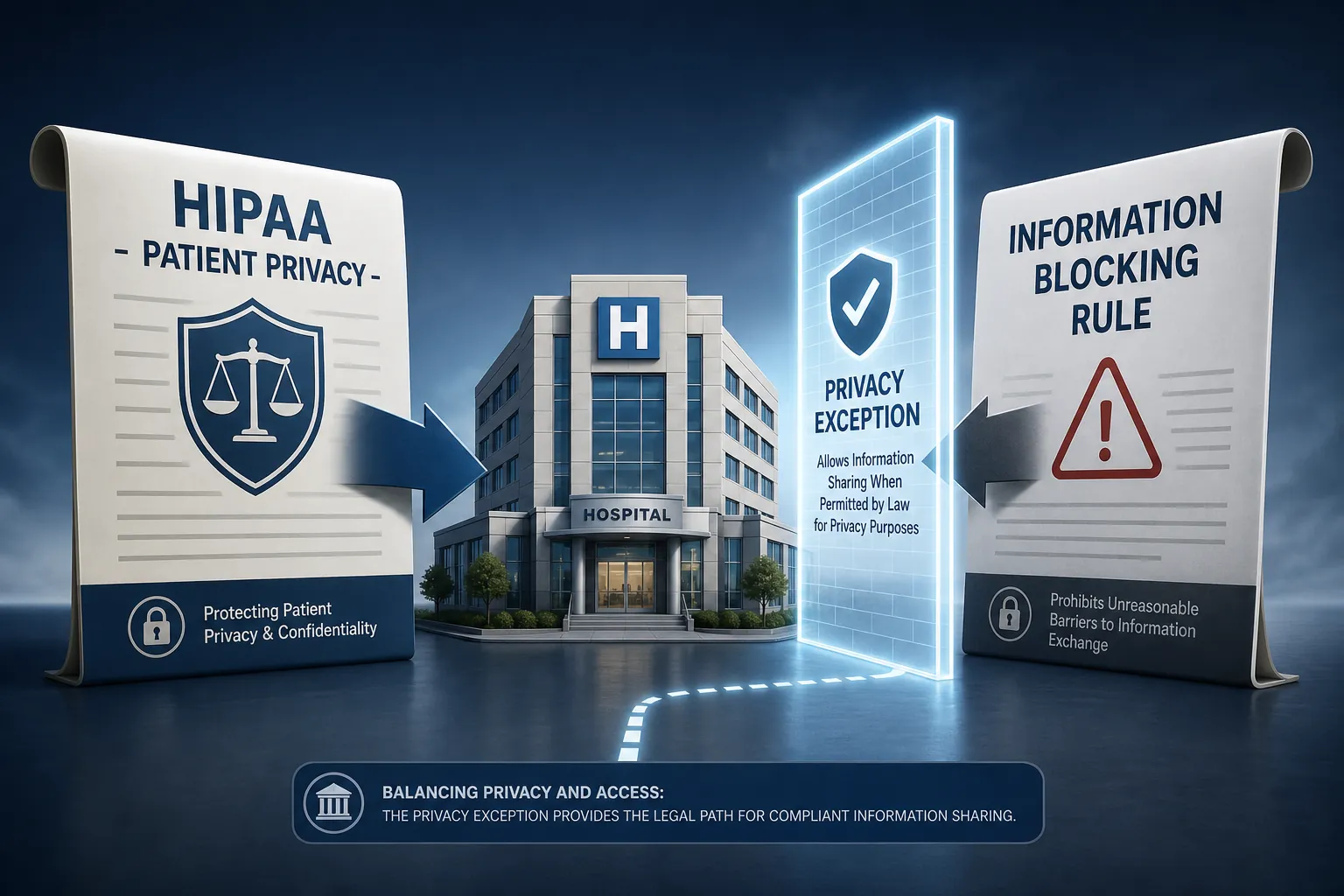
CPSC Emergency Room Data Requests Threaten Patient Privacy Rights
Hospitals caught between HIPAA and the Information Blocking Rule face a legal paradox when the CPSC demands emergency room records. This analysis explains how the Privacy Exception resolves the conflict and what patient privacy rights are at stake.
Last verified
 REPORTED — UNVERIFIEDUpdatedJurisdictionVirginia, United StatesCourtLoudoun County Circuit CourtToolNoneRuling dateJul 26, 2026
Eric Bieniemy's son faces up to 35 years on Virginia felonies
The three Virginia felony charges filed against Elijah Bieniemy after the July 26, 2026 shooting carry a combined statutory maximum of approximately 35 years and a mandatory consecutive minimum of 3 years. This breakdown covers the statutory citations, the charge selection decision, and the practical sentencing floor based on Loudoun County patterns.
Last verified
 REPORTED — UNVERIFIEDUpdatedJurisdictionUS-FederalCourtCPSCToolNEISS-RRuling dateJul 22, 2026
The CPSC Emergency Room Privacy Backlash and New Litigation Risks
The CPSC's expanded NEISS-R emergency room surveillance program, revealed to include private health data accessed without patient consent, creates three novel litigation risks for product manufacturers: plaintiffs gain real-time injury-pattern data, manufacturers face the burden of correcting unverified EHR records, and the agency's history of mishandling confidential business information raises acute CBI exposure concerns.
Last verified
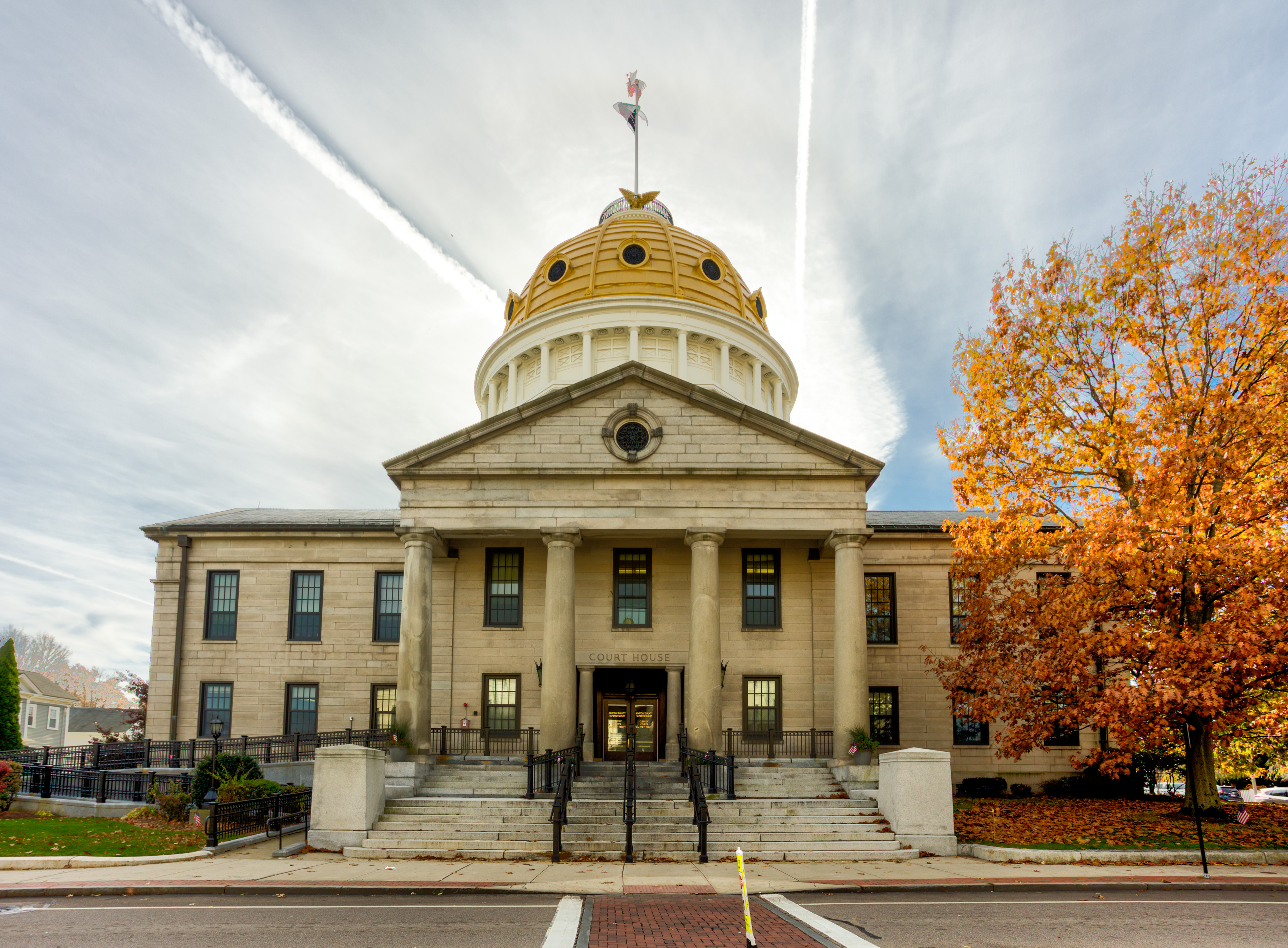 REPORTED — UNVERIFIEDUpdatedJurisdictionMassachusetts, United StatesCourtNorfolk County Superior CourtToolNo AI tool implicatedRuling dateJul 27, 2026
Prosecution and defense clash in Lindsay Clancy trial opening statements
A Day 1 recap of the Lindsay Clancy trial's opening statements and Patrick Clancy's testimony, detailing the prosecution's calculation theory versus the defense's postpartum psychosis claim, and the medication-compliance gap that complicates both narratives as the case moves to expert witnesses.
Last verified
 REPORTED — UNVERIFIEDUpdatedJurisdictionUS FederalCourtVarious US District CourtsToolNoneRuling dateJul 26, 2026
Buc-ee's Trademark Record That Led to John Oliver's Buc-Off
This record covers every confirmed Buc-ee's federal trademark action from 2007 through John Oliver's July 2026 Buc-Off segment, documenting the enforcement pattern, win rates, and the first direct challenge from a defendant with litigation resources. Litigators can use this docket to assess the real risk of receiving a Buc-ee's demand letter and the likely outcomes.
Last verified
 REPORTED — UNVERIFIEDUpdatedJurisdictionIdahoCourtLatah County District CourtToolNot applicableRuling dateJul 23, 2025
Why Kohberger filed to undo his guilty plea
This article examines the legal basis behind Bryan Kohberger's July 2026 petition to withdraw his guilty plea in the University of Idaho murder case, and explains why the 'manifest injustice' standard and his own sworn allocution present near-insurmountable barriers to relief under Idaho law.
Last verified
 REPORTED — UNVERIFIEDUpdatedJurisdictionUnited StatesCourtNo case filedToolNo AI toolRuling dateJul 28, 2026
Buc-Off Parody Tests Trademark Law After Bad Spaniels
An analysis of the trademark parody defense for John Oliver's Buc-Off merchandise after the Supreme Court's Bad Spaniels decision, weighing likelihood-of-confusion factors and explaining why the outcome remains uncertain despite Oliver's strong transformative-use and charitable-donation arguments.
Last verified
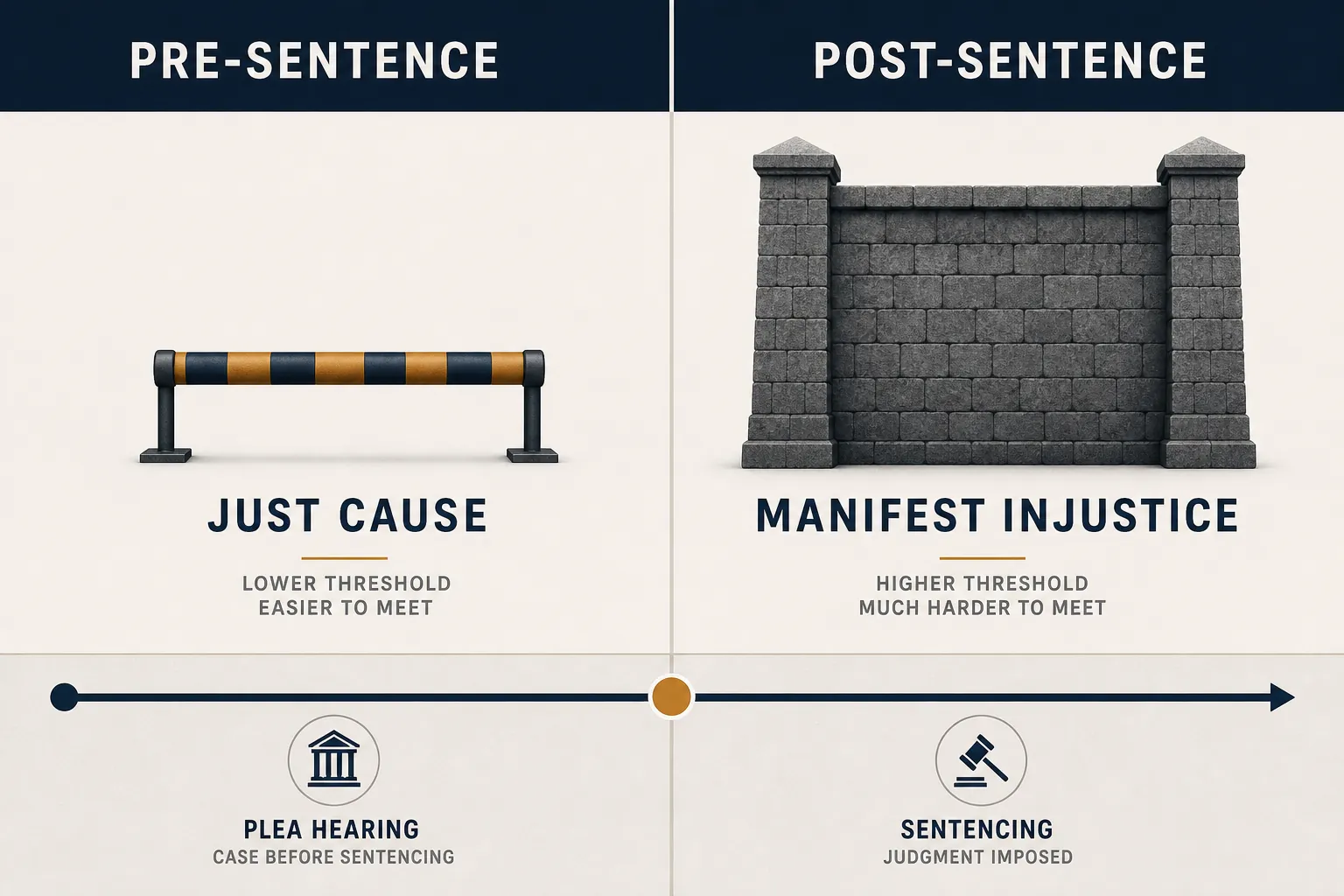 REPORTED — UNVERIFIEDUpdatedJurisdictionIdaho, United StatesCourtAda County District CourtToolNoneRuling dateJul 23, 2025
Kohberger's Guilty Plea Withdrawal Under Idaho Rule 33(c)
This article explains the two-tier standard of Idaho Criminal Rule 33(c)—pre-sentence 'just cause' versus post-sentence 'manifest injustice'—using Bryan Kohberger's pro se withdrawal petition as a live case study. Readers will learn why his sworn admissions and the Strickland/Hill test create a steep evidentiary bar despite the one-year statute of limitations not yet having run.
Last verified
 REPORTED — UNVERIFIEDUpdatedJurisdictionIdahoCourtIdaho District Court (Latah County)ToolnoneRuling dateJul 27, 2026
Why Kohberger's Post-Conviction Relief Motion Likely Fails
Bryan Kohberger's July 2026 pro se post-conviction relief petition seeks to withdraw his guilty plea to four murders, but faces an extraordinarily high 'manifest injustice' bar under Idaho Criminal Rule 33(c) and must overcome his own sworn in-court admissions. This analysis examines the legal standards, the Strickland test for ineffective assistance, and expert assessments that the petition is very unlikely to succeed.
Last verified
 CONFIRMEDUpdatedJurisdictionUS FederalCourtU.S. District CourtToolnoneRuling dateJul 2, 2026
FBI's Ransom-Note Test in Savannah Guthrie Mother Case
Explains how the FBI used a cryptocurrency-deposit test and forensic analysis to authenticate ransom notes in Nancy Guthrie's kidnapping, and details the prosecution of Derrick Callella for sending a false interstate ransom demand, with implications for evidence authentication in criminal proceedings.
Last verified