
What Are the Legal Requirements to Start a 501(c)(3)?
The first legal requirement to start a 501(c)(3) is not choosing between Form 1023 and Form 1023-EZ. It is filing an organizing document that can survive IRS review. A nonprofit corporation can exist under state law and still fail the federal organizational test if its Articles of Incorporation do not limit the organization to 501(c)(3) purposes and do not dedicate its assets properly on dissolution.[1]
That makes 501(c)(3) recognition a two-gate process. Gate one is the state-filed organizing document, usually the Articles of Incorporation for a nonprofit corporation. Gate two is the IRS application. If the Articles are defective, the application form becomes an expensive way to discover a problem that should have been corrected before filing.

This article is general compliance information, not legal advice. State nonprofit law, tax exemption strategy, charitable solicitation rules, and governance documents should be checked against the organization’s facts and the law of the filing state.
The Articles must do federal work, not just satisfy the state
State filing offices often accept very short nonprofit Articles. Acceptance by the secretary of state only means the entity was formed under state law. It does not mean the IRS will recognize the organization as tax-exempt under section 501(c)(3).
For 501(c)(3), the organizing document must limit the organization’s purposes to one or more exempt purposes and must not expressly empower the organization to engage, other than insubstantially, in activities that do not further those exempt purposes.[1] A generic state-law purpose such as “any lawful nonprofit purpose” may be acceptable to the state, but it is not the same thing as a federal charitable, religious, educational, scientific, literary, testing-for-public-safety, amateur sports, or cruelty-prevention purpose.
The Articles also need a dissolution clause that sends remaining assets, after debts are paid, to one or more 501(c)(3) organizations or to a qualifying governmental purpose. This is not a footnote. It is one of the clauses that tells the IRS the assets have been permanently dedicated to exempt purposes rather than left available for private distribution.[1]
The May 2024 Rev. Proc. 82-2 change matters
For years, some applicants and advisers treated state default dissolution provisions as a backstop. That assumption is no longer safe. In May 2024, the IRS obsoleted Rev. Proc. 82-2, which had allowed applicants in certain states to rely on state law to satisfy the dissolution requirement; the practical result is that the dissolution clause needs to be written into the organizing document itself.[2]
The preventable mistake is familiar: the founder files bare-bones Articles, then places a good 501(c)(3) dissolution clause in the bylaws because the bylaws feel like the place where internal rules belong. Bylaws matter, but the IRS organizational test is aimed at the organizing document. If the Articles do not contain the required limitation and dedication language, the organization may have to amend the Articles with the state before the federal application can be approved.[1]
That delay is avoidable. Before the IRS user fee is paid, someone should read the filed Articles themselves, not a draft mission statement, not a board packet, and not the bylaws alone.
The operational test starts before approval
The organizational test is document-focused. The operational test is conduct-focused. A 501(c)(3) must be operated exclusively for exempt purposes, and no part of its net earnings may inure to the benefit of a private shareholder or individual. It also cannot devote a substantial part of its activities to lobbying, and it cannot participate or intervene in political campaigns for or against candidates for public office.[1]
Those limits should shape early decisions: who controls the organization, whether insiders are paid, how conflicts are reviewed, what fundraising promises are made, and whether advocacy activity is being confused with campaign activity. They are not merely promises typed into an application. They are conditions of recognition and continued exemption.
The denial record is not theoretical. Terri Lynn Helge’s study of denied 501(c)(3) applications documents how applicants can fail because the organization’s documents or proposed activities do not satisfy the statutory requirements for exemption.[3] The useful lesson is narrow: the IRS does look past the label “nonprofit” and asks whether the legal documents and the planned operations match the federal exemption category.
Form 1023 or Form 1023-EZ is the second gate
Once the Articles can pass the organizational test, the next filing decision is which IRS application fits the organization. Form 1023 is the standard application. Form 1023-EZ is the streamlined application for eligible smaller organizations. The EZ route is faster and cheaper, but it is not a cure for defective Articles, and it is not available to every applicant.
| Question | Form 1023-EZ | Form 1023 |
|---|---|---|
| Who uses it | Eligible smaller organizations that satisfy the EZ eligibility screens, including the current $50,000 gross-receipts and $250,000 asset thresholds | Organizations that are not eligible for EZ or whose facts require the full application |
| Current federal user fee | $275, nonrefundable even if the application is denied or closed incomplete [4] | $600, nonrefundable even if the application is denied or closed incomplete [4] |
| Recent IRS-published processing benchmark | 80% of determinations within 22 days [5] | 80% of applications within 191 days [5] |
| What to re-check before filing | Eligibility worksheet, user fee, and current IRS instructions | User fee, required schedules, narratives, financial data, and current IRS instructions |
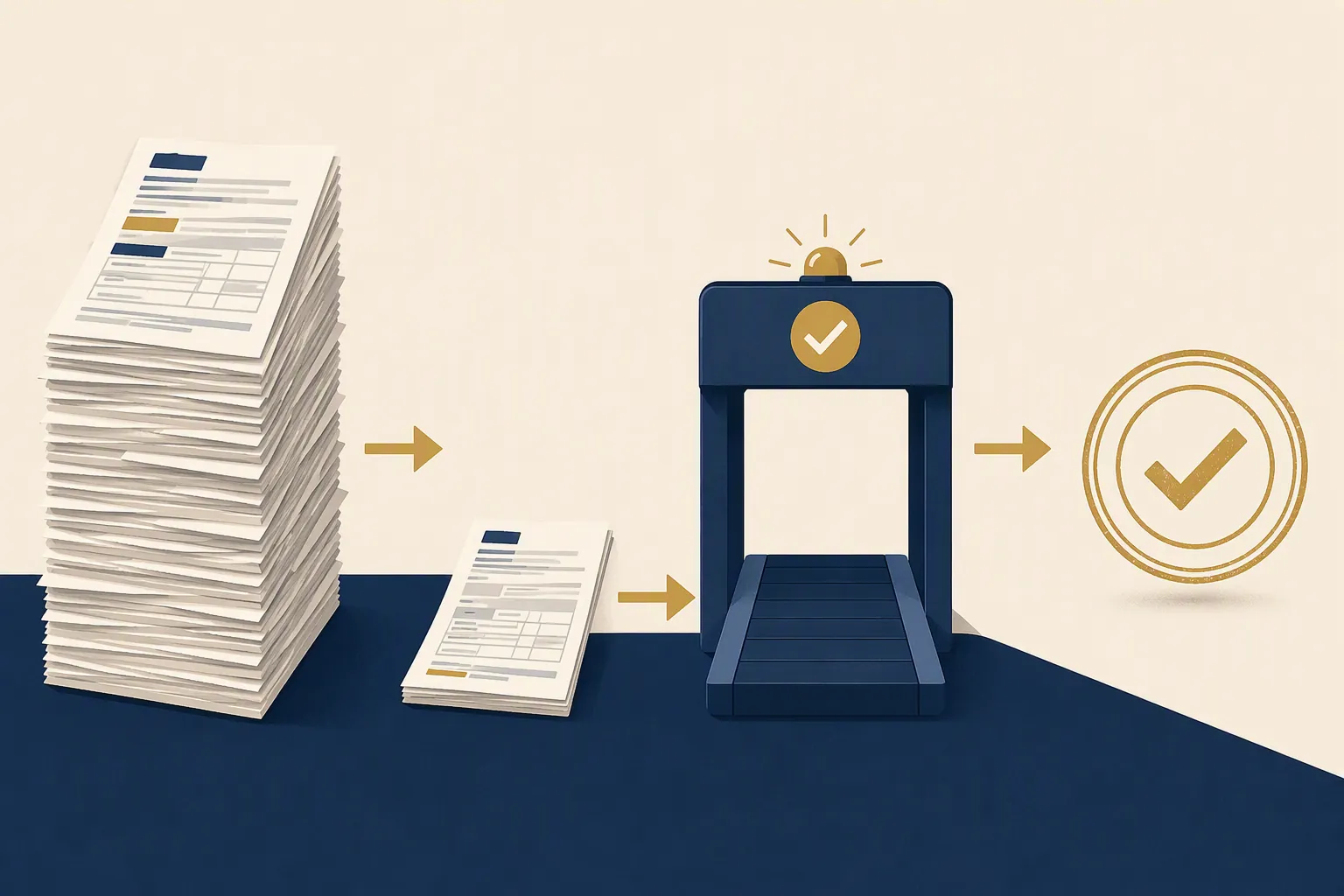
The IRS reported processing more than 115,000 tax-exempt status applications per year, and its published timing page gives recent 80% benchmarks rather than guaranteed deadlines.[5] A clean EZ application may move quickly, but a defective organizing document, missing attachment, inconsistent activity description, or ineligible EZ filer can turn the “short form” into a longer repair project.
As verified in June 2026, the user fees were $275 for Form 1023-EZ and $600 for Form 1023, and the IRS states that the fee is not refundable if the application is denied or closed as incomplete.[4] Because the IRS updates fee and timing pages, those figures should be re-verified at the moment of filing, especially if filing later than Q3 2026.
State law is a separate map over the federal path
The federal exemption application does not replace state formation law. A nonprofit corporation still has to be formed under the law of its state, usually by filing Articles of Incorporation, appointing a registered agent, paying state fees, and meeting state governance requirements. Director minimums, annual corporate reports, state tax exemptions, and amendment procedures vary by state, so there is no reliable national director-count rule or one-size filing sequence.
Charitable solicitation rules are another state layer. The IRS directs charities to state officials for solicitation requirements because registration is governed outside the federal exemption process.[6] The National Council of Nonprofits describes charitable solicitation registration as required in roughly 40 states, though counts vary by source and depend on how exemptions and local rules are counted.[7]
That means a new 501(c)(3) may be legally formed and federally recognized but still not ready to ask for donations in every state where it plans to solicit. Online fundraising makes this especially easy to overlook. A website donation button, email campaign, event page, or social media appeal can create state-registration questions before the first major grant arrives.
Approval is not the finish line
After recognition, the organization has to maintain the exemption. Small exempt organizations that are eligible to file Form 990-N generally must submit the e-Postcard by the 15th day of the fifth month after the close of the tax year. The IRS automatically revokes exempt status after an organization fails to file a required annual return or notice for three consecutive years.[8]
Even organizations below a filing threshold need records. IRS exempt-organization recordkeeping guidance points to the need to keep books and records showing sources of receipts, expenditures, assets, liabilities, and activities.[9] Without those records, the board cannot reliably prepare the Form 990 series filing, support donor acknowledgments, monitor private benefit, or explain how funds were used.
The volunteer treasurer who inherits a shoebox of receipts is not dealing with a clerical inconvenience. They may be the first person asked to reconstruct whether the organization operated for exempt purposes, whether insiders were paid appropriately, and whether public support or grant restrictions were tracked accurately enough to file.
Errors that most often become expensive later
The mistakes that do the most damage are usually not dramatic. They are small filing choices made early, when everyone is focused on opening a bank account or getting the first donation.
- Filing Articles with a broad “any lawful purpose” clause instead of limiting the organization to 501(c)(3) exempt purposes.
- Putting the dissolution clause in the bylaws or board minutes, but not in the Articles themselves.
- Assuming state default dissolution law will satisfy the IRS after the May 2024 obsolescence of Rev. Proc. 82-2.
- Using Form 1023-EZ because it is cheaper, without confirming eligibility and without checking whether the organization’s facts need the fuller Form 1023 explanation.
- Treating IRS recognition as permission to solicit nationally, without checking state charitable-registration rules.
- Missing annual Form 990-series filings, including Form 990-N, until automatic revocation becomes the first notice anyone takes seriously.
None of these errors requires bad faith. Most come from treating incorporation, exemption, fundraising permission, and annual compliance as one event. They are separate legal systems that touch the same small organization at different moments.
Before paying the IRS fee
Before paying a nonrefundable IRS user fee, confirm three things in order: the filed Articles themselves contain an adequate 501(c)(3) purpose clause; the filed Articles themselves contain an adequate dissolution clause; and the organization has chosen the correct IRS application form for its size, activities, and eligibility.
After that, map the state obligations that the federal application does not solve: incorporation rules, charitable solicitation registration, state renewals, annual IRS filings, and records that show the organization is still operating for exempt purposes. That is the legal path to starting a usable 501(c)(3), not merely a nonprofit corporation with a hopeful application in progress.
References
- Exemption requirements - 501(c)(3) organizations, IRS.
- Why IRS Rejected 501c3 Application, Next Level Nonprofits, July 20, 2026.
- Rejecting Charity: Why the IRS Denies Tax Exemption to 501(C)(3) Applicants, Pittsburgh Tax Review.
- Form 1023 and 1023-EZ: Amount of user fee, IRS.
- Where's my application for tax-exempt status?, IRS.
- Charitable solicitation - state requirements, IRS.
- Charitable Solicitation Registration, National Council of Nonprofits.
- Annual electronic filing requirement for small exempt organizations — Form 990-N (e-Postcard), IRS.
- EO operational requirements: Recordkeeping requirements for Exempt Organizations, IRS.
Operationalizing workflow
No workflow has been explicitly linked to this obligation yet. See Workflows generally.
Illustrative cases
- Anwar Raslan's Life Sentence Stands After German Appeal
- Donna Adelson's Appeal Is Pending. What Is She Arguing?
- What's verified in the Max Miller House Ethics probe
- What's the Status of the Miller-Grisham Social Media Order?
- Clayton Echard–Laura Owens Lawsuit Is Not an AI-Risk Case
- What Laura Owens Actually Alleged Against Clayton Echard
- Where do the Lindsay Clancy jury deliberations stand now?
- The SC 26th Amendment Absentee Voting Case Is Watson v. RNC
- Why the SC mail-in voting age ruling is unsettled law
- Which Southwest PDX Discrimination Suit Facts Are Verified?
- Is the $750,000 California Lottery Prize Denial Verified?
- Are ECT Malpractice Lawsuits Against Psychiatrists Rare?
- Gülistan Doku Investigation Is Not an AI Sanction Case
- Milo Yiannopoulos's Deportation Case Remains Unverified
- What's Confirmed in the Sauce Gardner Contractor Lawsuit?
- Studio City Dog Boarding Death Lawsuit Is Unconfirmed
- Supreme Court’s Mail-In Voting Stay in Trump v. California
- Which Carroll Verdict Did the Supreme Court Reject?
- The Bricen Rivers and Lauren Johansen case timeline
- What is the DC grand jury investigation of public schools?
- What verdict options does Lindsay Clancy's jury have?
- Marius Borg Høiby received a four-year prison sentence
- What's verified in Milo Yiannopoulos's ICE status?
- No AI Found in Mobile Alabama Murder Grand Jury
- Is There a Robin Williams AI Impersonation Lawsuit?
- Trump's hush money conviction appeal is still pending
- What's verified in the Yosemite land transfer controversy
- No court order revoked the Cheluget 5,800-acre Narok title
- Columbia bookkeeper sentenced in $250K wire fraud case
- DOJ appeal keeps Epstein unredaction ruling in force
- Why Eric Hafner Can Stay on Alaska's U.S. House Ballot
- What's Verified in the Evelyn Cheluget RSF Passport Scandal
- What Meta's $17.1B teen social media settlement pays
- The Nevada Colorado River Water Cuts Lawsuit, by the Docket
- Who Was Charged in the Roberts Signature Forgery Case?
- Is Subhash Chandra's NCLT settlement actually final?
- Warr Receives 37 Months for South Carolina Wire Fraud
- Campbell Hall Settles Byron Scott Suit; Trial Still On
- Why Don Lemon Was Indicted Over a St. Paul Church Protest
- Wife's objection in Cher's Elijah Blue Allman conservatorship
- How to file your Google Assistant $68M claim today
- Ketanji Brown Jackson's shadow docket dissents, counted
- Final Witness at Lindsay Clancy Trial Challenges Voice Claim
- Meta's $16.7 billion settlement is not final yet
- Francisco Paulino's pandemic fraud charges, explained
- SEC subpoenas banks over AI hedge fund collapse, reports say
- Where do State Farm's Oklahoma roof claim lawsuits stand?
- How Courts Are Ruling on Fake AI-Generated Evidence
- After Chatrie, Are Flock License Plate Queries a Search?
- When Google Docs Exposes Passwords, What's the Legal Risk?
- Is AI really eliminating legal jobs?
- GEMA v. OpenAI lawsuit update: Munich ruling is on appeal
- Google AI Overviews' legal risk to publishers, case by case
- 15 State AGs Demand OpenAI Evidence in Hugging Face Hack
- Where does the NYT v. OpenAI lawsuit stand now?
- Apa yang Sebenarnya Dikembalikan Ramalan Bazi Gratis?
- Paano naging 'manghuhula online' ang AI sa Sandiganbayan?
- What do Nvidia's earnings mean for legal tech buyers?
- Who answers for NYT's AI-generated search summaries?
- Who are the Billings shooting victims? Alan Smith isn't one
- Judge Denies Lindsay Clancy Mistrial Request
- What's Confirmed in the Billings Family Murder-Suicide
- Sean Grayson–Sonya Massey Case Updates After Custody Death
- What is the psychosis defense in the Lindsay Clancy trial?
- Jed York's no-contest plea ends his disorderly conduct case
- Kai Spears wins $9.25M Alabama defamation verdict
- Who's Actually Sued in the Sofia Vergara AI Deepfake Case
- Can Anyone Predict the Lindsay Clancy Verdict?
- Why Is the Nolan Wells Case Evidence Sealed?
- How the insanity defense works in Lindsay Clancy's trial
- Superpotent Thyroid Tablets Recalled? Symptoms and Rights
- Is the FCC Actually Revoking ABC's Licenses?
- USPS mail carrier check theft penalties beyond five years
- Why Ghislaine Maxwell's grand jury records were unsealed
- How DMCA § 512(h) subpoenas unmask GTA 6 leakers
- AI-fabricated citation confirmed in Bianco ballot case
- Landon Doty's 54-year sentence, verified against the docket
- What Are the Legal Consequences of Police Flock Misuse?
- Why courtroom backlash outran Lindsay Clancy's trial record
- USPS mail carriers face $24M check theft indictment
- Inside the Clancy trial's concession strategy
- USPS Mail Carrier Charged With Mail Theft? What Happens Next
- What the GEMA v. Suno Ruling Holds for AI Music Training
- Jamie Komoroski settlement and sentence outcome by phase
- Every Keffe D bail hearing and why he remains jailed
- Sean Grayson's death investigation has three tracks
- The Grant–McMahon case is now in confidential arbitration
- What Emma Coronel's Docket Says About Life After Prison
- Where the Sara Duterte Impeachment Trial Stands on Day 18
- Did Mike Lindell Withhold His Minnesota Recount Payment?
- Who Can Be Sued After the Vitruvias Thyroid Recall
- Sean Grayson dies serving sentence for Sonya Massey killing
- The legal fallout of the GTA 6 leak site takedown
- When must law firms notify clients after Google Docs hacks?
- Who is Rockstar's parent subpoenaing over the GTA 6 leaks?
- Why the Knox-Kercher Case Is a Legal-AI Hallucination Probe
- Who decides if Kalshi's clinical trial bets are legal?
- Water utility OT cyberattack compliance deadlines for 2026
- Fired FBI agents' class action against Kash Patel, mapped
- Which Hong Kong tokenisation regulation applies to you?
- Summer Dress Code Rules Employers Need to Know
- Verifying Connecticut car accident lawsuit timeline claims
- How to verify a Pima County sheriff wrongful arrest lawsuit
- How the End Government Shutdowns Act changes current law
- Restaurant Dress Codes Under Gender Discrimination Law
- Michigan's AI SNAP Eligibility Screen Under the 2025 Changes
- What Amazon Prime Air complaints can cities act on?
- Who Is Liable in an Alabama Bad-Weather Truck Accident?
- How Liability Shapes Brooklyn Sidewalk Accident Deadlines
- How to Claim the Equifax $600 Settlement Payment
- Where Buc-ee's Trademark Policing Crosses Into Overreach
- The legal plan behind Ken Paxton's Texas AI promise
- Utah ruling keeps Kalshi's sports betting under state law
- What the Social Security 2100 Act's COLA Change Does in Law
- EPA Green Bank En Banc Ruling Leaves Forum Question Open
- New York attorney general's Kalshi lawsuit, explained
- Wisconsin absentee ballot replacement rules just changed
- Why the Jan. 6 Pence Tweet Was an Official Act
- DOL Cites San Antonio Bakery for Child Labor and Wages
- The legal issues with police surveillance AI, explained
- Prosecuting the Minnesota water cyberattack if tied to Iran
- What the en banc court held in the EPA green bank clawback suit
- What legal exposure remains in the Fukuoka assembly scandal?
- What the Blanche DOJ fight means for federal AI enforcement
- Can police stop a car on a Flock camera theft alert alone?
- The PSA Antitrust Lawsuit, Explained
- FBI agents sue Patel for firing in political retaliation
- Which SEC rules require AI capex disclosure?
- The Equifax Class Action Claim Deadline Is Sept. 1, 2026
- Missouri Amendment 4's Actual Legal Impact on Campaigns
- Three arrests in Santa Cruz police shooting, no charges yet
- Google Lens now feeds AI training. Privacy law is split.
- Who faces legal risk when AI fakes satellite images?
- What the Social Security 2100 Act Would Change
- UBS fined a record $125 million for money laundering
- Why Trump's IRS audit immunity was never lawful
- What courts actually decided on Medicaid work requirements
- The DOJ Rule Change Behind the NYT North Korea Subpoena
- Is mail theft of a winning lottery ticket a federal crime?
- What the FDA Compassionate Use Program Legally Requires
- Judge defers dismissal in Trump's $15B NYT defamation case
- The Verified Record of the Joe Felz Fullerton DUI Case
- How to Verify AI Answers on HOA Foreclosure Laws
- States Sue Over Tariffs Again After the Supreme Court Ruling
- Which EU Rules Apply to BlackRock's Tokenized MMFs?
- What's confirmed in Aaron Farinacci's Old Trails Fire case
- Cert denial closes Trump Section 301 tariff challenge
- Three Court Tracks Now Decide Texas THC Ban's Fate
- How to read Aaron Farinacci's manslaughter conviction
- The pied-a-terre tax is splitting Manhattan luxury in two
- How lottery winner anonymity laws vary by state
- What South Korea's property tax increase legally changes
- How to verify viral clips in the Udhayanidhi Stalin arrest
- What's next in the Capital One debanking fallout?
- Why Was Prince Harry's Privacy Lawsuit Dismissed?
- Which states are suing Trump over tariffs?
- Which AI deepfake laws has Congress passed so far?
- Belfast AI art copyright controversy is a legal misreading
- UBS Fined $125M for Money Laundering Violations
- What Will the 2027 Social Security COLA Be?
- Why Talarico's 'murdered' remark likely isn't actionable
- Four legal gates remain for Gwangju's semiconductor cluster
- Which Ksi Lisims LNG legal gates remain open
- Verify Kansas City Wrongful Death Lawyer's Trial Experience
- How to Verify the Maple Leaf Bacon Recall List in OR/WA
- Was F1 made by AI? The legal obligations behind the claim
- What Legal Obligations Valley Forge Owes Transfer Students?
- What must happen before Grant Thornton-CBIZ can close?
- How Japanese drug law treats Hiroshima Carp home searches
- Why Does Diddy's Release Date Keep Changing?
- What the '1933 double' Reveals About ChatGPT Benchmarks
- Which laws apply to the Fukuoka cash-for-post scandal?
- Brij Bhushan Sharan Singh's acquittal leaves the case open
- Legal issues behind Yerington's Monarch Data Center protest
- What Microsoft's AI spending means for legal tech buyers
- Can governments stop Microsoft's AI data center buildout?
- FBI agent Patrick Yaroch charged with stealing Bitcoin
- Investor legal considerations for the CBIZ acquisition
- What charges does the FBI agent face for crypto theft?
- FBI agent cryptocurrency theft case, explained
- Is your college on the $23 billion settlement list?
- Verify Max Miller abuse allegations against docket records
- Why the Grisham TRO Against Miller Can't Be Confirmed Yet
- How to Verify the Moreno–Miller Abuse Allegations
- Is 7-OH Kratom Legal After the DEA Schedule I Order?
- Federal judge upholds EPA air standard — deadlines now bind
- Is the Sweet v. McMahon Class Action Settlement Final?
- Federal judge lets ICE agents mask up, keeps NY 287(g) ban
- Who Qualifies for the Sweet v. McMahon Settlement
- Federal judge denies Illinois voter data request
- Where the Trump DOJ interference cases stand now
- What the Clancy Duxbury jury tour reveals about view law
- A witness-by-witness recap of Lindsay Clancy trial week 2
- Is Alibaba's Qwen 3.8 Max Safe for Legal Work?
- Why Jeanine Pirro's Reflecting Pool Case Collapsed
- How AI facial reconstruction fails in 1982-era cold cases
- What Jeanine Pirro's Reflecting Pool decision left open
Report a correction or tip
Spotted an outdated figure, a misstated fact, or a ruling this regulation entry should reflect? Public comments are disabled for this content given the professional cost of a misreported case outcome, penalty amount, or rule text — use the structured correction channel instead.
Report a correction or tip for this record →